
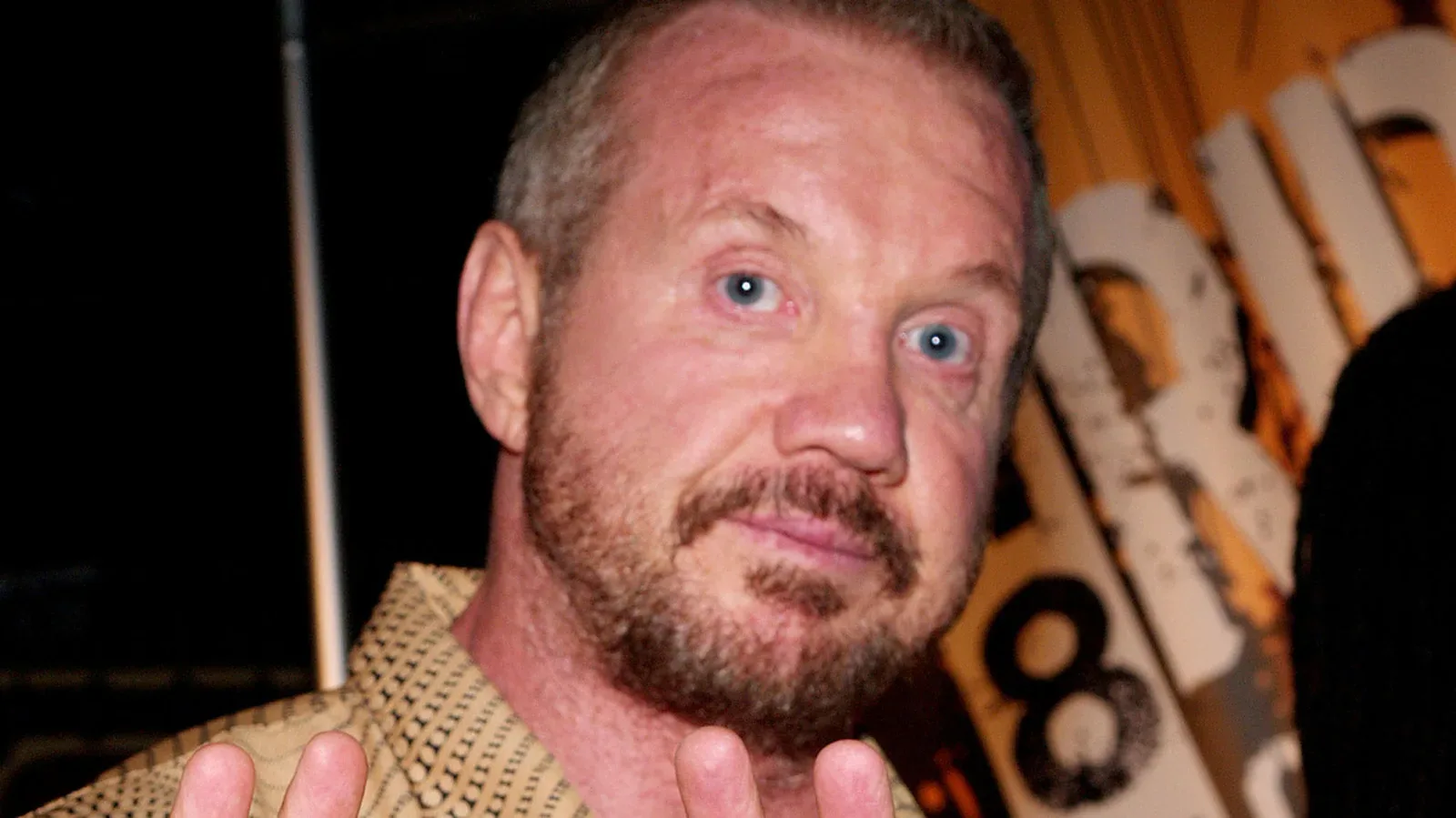
Eric Bischoff has offered a different perspective on one of the most recognizable rises of the WCW era, arguing that Diamond Dallas Page’s breakthrough was not primarily driven by the Diamond Cutter.
The Diamond Cutter became inseparable from Page’s wrestling identity and remains one of the most memorable finishing moves associated with WCW. Its suddenness, versatility, and ability to be delivered from seemingly any position made it a major attraction for audiences. For many viewers, the move was a clear part of why Page became such a popular figure.
Bischoff, however, sees the order of events differently. Speaking on 83 Weeks, the WWE Hall of Famer said he believes the move grew more powerful because Page had already begun connecting with the crowd on a more personal level.
“I know, for Page, that finish, in his mind, is what made him; I disagree,” Bischoff said on 83 Weeks.
For more background on this topic, read Mayu Iwatani Wins Marigold Triple Crown at Grand Destiny 2026.
Bischoff was not dismissing the Diamond Cutter itself. He acknowledged the spectacle and appeal of the move, which could turn a match in an instant and gave audiences a dramatic moment to anticipate. Instead, his point was that a finishing move can be enhanced by the wrestler using it. In Bischoff’s view, the audience’s investment in Page was what made the Diamond Cutter feel especially significant.
Bischoff Points to Page Falkinburg
Bischoff’s central argument was that Page became more compelling once his on-screen presentation moved closer to his real personality. He identified the shift toward “Page Falkinburg,” Page’s real name, as the key to the wrestler’s rise.
“It’s not what got him over,” Bischoff said of the finish. “What got him over was when he became Page Falkinburg; when he allowed himself to go out and be authentic.”
That distinction goes to the heart of how Bischoff views star-making in professional wrestling. A flashy catchphrase, entrance, costume, or finishing move can all help create a presentation, but they do not necessarily establish the emotional bond that turns a wrestler into a genuine fan favorite. For Bischoff, Page succeeded because viewers eventually saw a version of him that felt natural rather than constructed.
Page’s WCW journey featured character elements that were designed to make him stand out. Yet Bischoff suggested those earlier layers were not what audiences most remembered or responded to. He believes Page’s popularity increased after he shed more of the overtly larger-than-life presentation and allowed his own personality to take the lead.
That is not an argument that a wrestler must abandon every aspect of a gimmick to become successful. Professional wrestling has always relied on heightened personalities and distinctive visual identities. Bischoff’s point was more specific: Page’s strongest presentation, in his estimation, came when the character and the person behind it were more closely aligned.
The Diamond Cutter’s Place in Page’s Popularity
The Diamond Cutter still occupied an important place in Page’s act. A signature move can give fans a moment of recognition, create suspense late in a match, and offer a satisfying payoff when it lands. The move was particularly effective because it was capable of arriving without much warning, allowing Page to turn momentum quickly.
Bischoff’s assessment does not deny any of those qualities. Rather, he said the finish became more meaningful once fans were already responding to Page himself.
“Once he started losing all that, then he started getting over, and I think because he was getting over, the Diamond Cutter became more effective as a finish,” Bischoff explained on 83 Weeks.
That reading reverses a common way of looking at a wrestler’s rise. It is easy to identify a famous finishing move as the reason a performer became popular because the move is so visible in matches and so closely tied to the wrestler’s legacy. Bischoff believes Page’s case was different: the crowd first bought into the man, and then the Diamond Cutter benefited from that investment.
In other words, the move was a vital tool, but not necessarily the foundation. By the time Page was resonating with audiences, a Diamond Cutter could feel like the natural conclusion to a story the match had built. Fans were not only reacting to the mechanics of the maneuver; they were reacting to a performer they had come to care about.
Bischoff said Page had moved out of what he described as an “I want to be someone else’s gimmick” phase. He saw the resulting authenticity as the element that made the audience connect.
“So it probably feels like the Diamond Cutter was responsible; it was really Page shifting out of the ‘I want to be someone else’s gimmick’ phase, and finally allowing himself to become authentic, because that’s what the audience connected with,” Bischoff said on 83 Weeks.
A Finisher Can Be a Symbol Rather Than the Cause
The discussion highlights a broader truth about wrestling finishers. The most iconic moves often become symbols of a wrestler’s success, which can make it difficult to separate the move from the full presentation that made it work. A finishing move may be visually excellent and still require the right performer, character, timing, and crowd reaction to become truly unforgettable.
For Page, the Diamond Cutter ultimately became a defining part of his legacy. Its influence was also felt beyond his own career. John Laurinaitis used the move before Page, and Randy Orton has said he borrowed the maneuver from Laurinaitis before making it his own as the RKO.
That lineage underscores why the Diamond Cutter is often discussed as an important move in modern wrestling. It is not merely a technique; it has been adapted by prominent performers and has remained familiar to generations of fans. But the existence of that lineage also supports Bischoff’s larger point that no move has exactly the same impact in every wrestler’s hands.
Page made the Diamond Cutter his calling card, while Orton made a variation of it central to his own identity. The move’s adaptability is part of its appeal. Still, each version is defined by the wrestler delivering it, the character surrounding it, and the relationship that performer has built with the audience.
Bischoff’s View of What Made Page Work
Bischoff’s comments amount to a strong endorsement of Page’s ability to evolve. He did not frame Page’s success as an accident of one dramatic move. Instead, he credited Page for reaching a point where the audience could recognize and embrace a more authentic version of him.
That is a meaningful distinction in a business where performers are frequently judged by their most visible traits. The Diamond Cutter was easy to identify, easy to remember, and exciting to watch. It naturally became a major piece of the Page story. Bischoff believes it was the result of Page’s connection with the audience, rather than the original cause of that connection.
There can be room for both ideas. The Diamond Cutter was undoubtedly a memorable weapon and an essential component of Page’s presentation. Bischoff’s position is that Page’s rise required something deeper: a character that felt genuine enough for fans to believe in.
For Bischoff, that is why Page’s most successful period stood apart from what came before it. The finisher became more effective once it belonged to a performer who had found the version of himself audiences wanted to see. In that sense, the Diamond Cutter did not create Diamond Dallas Page’s popularity on its own. It became the exclamation point on a connection that Page had already earned.
In pictures

Darryl Polo
Darryl Polo is a passionate wrestling fan covering WWE, AEW, TNA and beyond. He loves great rivalries, breakout stars and the moments that keep fans talking long after the bell. How we work.