
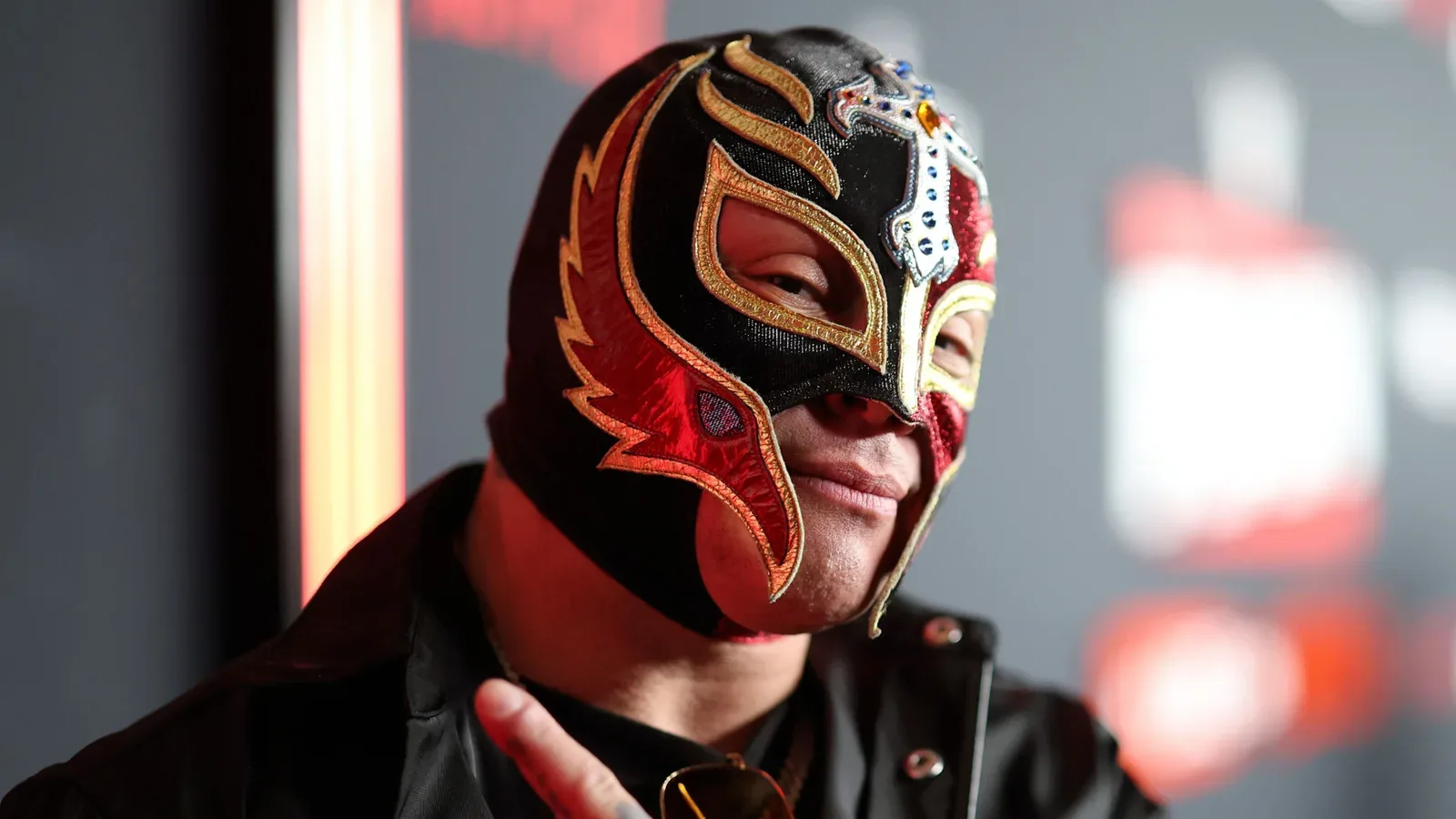
Rey Mysterio’s place among the most recognizable stars in professional wrestling is secure, but his rise in the United States required the right setting, the right opponents and the right opportunity. Eric Bischoff believes Dean Malenko was a vital part of that equation when Mysterio arrived in WCW in 1996.
Speaking on 83 Weeks, Bischoff looked back at Mysterio’s early WCW program with Malenko and emphasized the value of having such a polished technical performer across the ring from an emerging lucha libre standout. Mysterio had already built a reputation before joining WCW, but the Cruiserweight division gave him a nationally visible showcase at a critical point in his career.
“Dean [Malenko] helped Rey be the best Rey [he] could be, and make the biggest impression Rey could make,” Bischoff said on 83 Weeks. “Rey couldn’t have done that without somebody as good as Dean.”
The assessment speaks to a rivalry that remains a defining piece of WCW’s early Cruiserweight era. Mysterio made his WCW roster debut at Great American Bash 1996, entering the promotion at a time when the company was assembling a distinct division around high-level international talent. His pursuit of the Cruiserweight Championship against Malenko became one of the first major stories built around that group.
For more background on this topic, read Hyperactive Name Bayley and Mercedes Moné as Their Dream Tag Opponents.
For Mysterio, the WCW run represented an enormous change in scale. He was a young performer entering American television with an explosive, fast-paced style that looked different from much of what mainstream wrestling audiences were accustomed to seeing. Malenko, meanwhile, offered a contrasting approach. Known for his precise grappling, methodical control and credibility as a serious competitor, he was positioned as an ideal opponent for wrestlers who needed a compelling competitive framework.
A Rivalry That Defined An Early WCW Showcase
The first portion of Mysterio and Malenko’s WCW rivalry ran from Great American Bash in June 1996 through Halloween Havoc later that year. Those matches helped establish both men as important pieces of a division that would become one of WCW’s most consistently celebrated attractions.
Their chemistry was rooted in contrast without sacrificing competitiveness. Mysterio’s offense brought urgency, speed and aerial creativity. Malenko’s style brought structure, resistance and a grounded intensity that made every opening feel harder to earn. The result was a series of bouts that could introduce viewers to Mysterio’s extraordinary athleticism while also presenting him as someone who had to fight through a formidable champion and wrestler.
That is the point behind Bischoff’s comments. Great opponents do not merely allow another wrestler to perform their best-known moves. They create the conditions for those moves, reactions and turning points to carry greater meaning. A performer as technically sound as Malenko could keep a match tightly organized, make Mysterio’s comebacks feel earned and ensure that the cruiserweight action had the seriousness needed to draw viewers in.
WCW’s Cruiserweight Championship was therefore more than a title in an undercard division. It was a vehicle for presenting a new style to a large television audience. Mysterio and Malenko were central figures in establishing what that presentation could be: athletic, competitive, international in flavor and distinct from the heavyweight rivalries that dominated much of American wrestling at the time.
While Mysterio’s charisma and physical ability were always his own, Bischoff’s view is that Malenko’s contribution should be considered essential to how effectively those qualities translated during Mysterio’s first major WCW push.
Bischoff Says The Cruiserweight Pioneers Deserve More Recognition
Bischoff also expanded the discussion beyond Malenko and Mysterio. He argued that the wrestlers involved in WCW’s early Cruiserweight initiative collectively deserve substantial credit for influencing the modern industry and proving that there was a major audience for their style of wrestling.
“I think Dean, and Eddie — everybody involved in that early Cruiserweight initiative — deserves so much credit for so many of the matches and the talent that we see in the industry today,” Bischoff said on 83 Weeks. “They created a market in a way that had never been created before because of their unique ability and skills. Those guys all just deserve a s*** ton of credit.”
The mention of Eddie Guerrero underlines the depth of talent associated with that period. WCW’s Cruiserweight division featured wrestlers with varied backgrounds and approaches, yet the group shared an ability to deliver matches that expanded what many viewers expected from televised wrestling. The division did not simply present smaller athletes doing faster moves. Its best performers used pacing, character, technique and risk to make their rivalries feel important.
That legacy remains easy to recognize in the broader evolution of the business. High-speed offense, international wrestling influences and technically intricate bouts are no longer confined to one specialized division or one promotion. Elements that once felt novel to many American television viewers have become familiar parts of the wrestling landscape.
Bischoff’s remarks do not reduce Mysterio’s success to a single feud or opponent. Mysterio developed into a major star through his own talent, longevity and ability to connect with audiences over multiple eras. Still, the early Malenko rivalry was an important stage in that development, particularly because it occurred as WCW was making a deliberate effort to establish the Cruiserweight division as a meaningful attraction.
Malenko’s Believability And Mysterio’s Respect
Bischoff has previously discussed the two WCW standouts and made clear that, between the pair, he personally preferred Malenko. His reasoning was centered on believability. To Bischoff, Malenko came across as the more believable wrestler in the WCW environment.
That preference is not a dismissal of Mysterio’s impact or accomplishments. Instead, it reflects the different traits each performer brought to the screen. Mysterio’s appeal was deeply tied to his remarkable explosiveness and the sense that anything could happen once he found space to move. Malenko’s appeal was in his restraint, his precision and his ability to make his work feel legitimate. In their rivalry, those strengths served one another.
Mysterio has also expressed respect for Malenko in the past, reinforcing the idea that the veteran technician was an important in-ring partner during a consequential stage of Mysterio’s WCW career. That mutual professional regard is especially significant given what the program accomplished. The feud was not simply a memorable series of Cruiserweight Championship matches; it helped show audiences why both wrestlers mattered.
For Malenko, the role required more than executing holds and controlling pace. He had to be a credible obstacle for a newcomer whose offense was designed to amaze. For Mysterio, the task was to show that his spectacular style could thrive against a disciplined, highly skilled opponent rather than exist as a collection of highlights. Their matches offered both.
The Importance Of The 1996 Moment
Looking back, it is difficult to separate Mysterio’s WCW breakthrough from the larger story of the Cruiserweight division. The division became a major part of the promotion’s identity during an era filled with high-profile storylines and major personalities. Its wrestlers routinely gave audiences a different kind of match, one that could feel fast and innovative while retaining a strong sporting edge.
Malenko versus Mysterio stood near the foundation of that identity. Their 1996 work established a standard for what viewers could expect from the Cruiserweight Championship scene, and it gave Mysterio a powerful introduction on a larger platform. The program also illustrated why an opponent’s contribution can be just as important as the breakout performer’s individual brilliance.
Bischoff’s comments place Malenko in that proper context. Mysterio had the rare ability to become a transformative star, but Malenko helped provide the ideal opposition at the moment Mysterio was making his first sustained impression in WCW. In Bischoff’s view, that is a contribution deserving of greater appreciation.
Nearly three decades later, Mysterio’s influence is unmistakable, while Malenko remains widely respected for the technical excellence and credibility he brought to every major setting of his career. Their Cruiserweight Championship rivalry in 1996 endures because it captured both strengths at once: Mysterio’s emergence and Malenko’s ability to help make that emergence resonate.
In pictures

Darryl Polo
Darryl Polo is a passionate wrestling fan covering WWE, AEW, TNA and beyond. He loves great rivalries, breakout stars and the moments that keep fans talking long after the bell. How we work.