
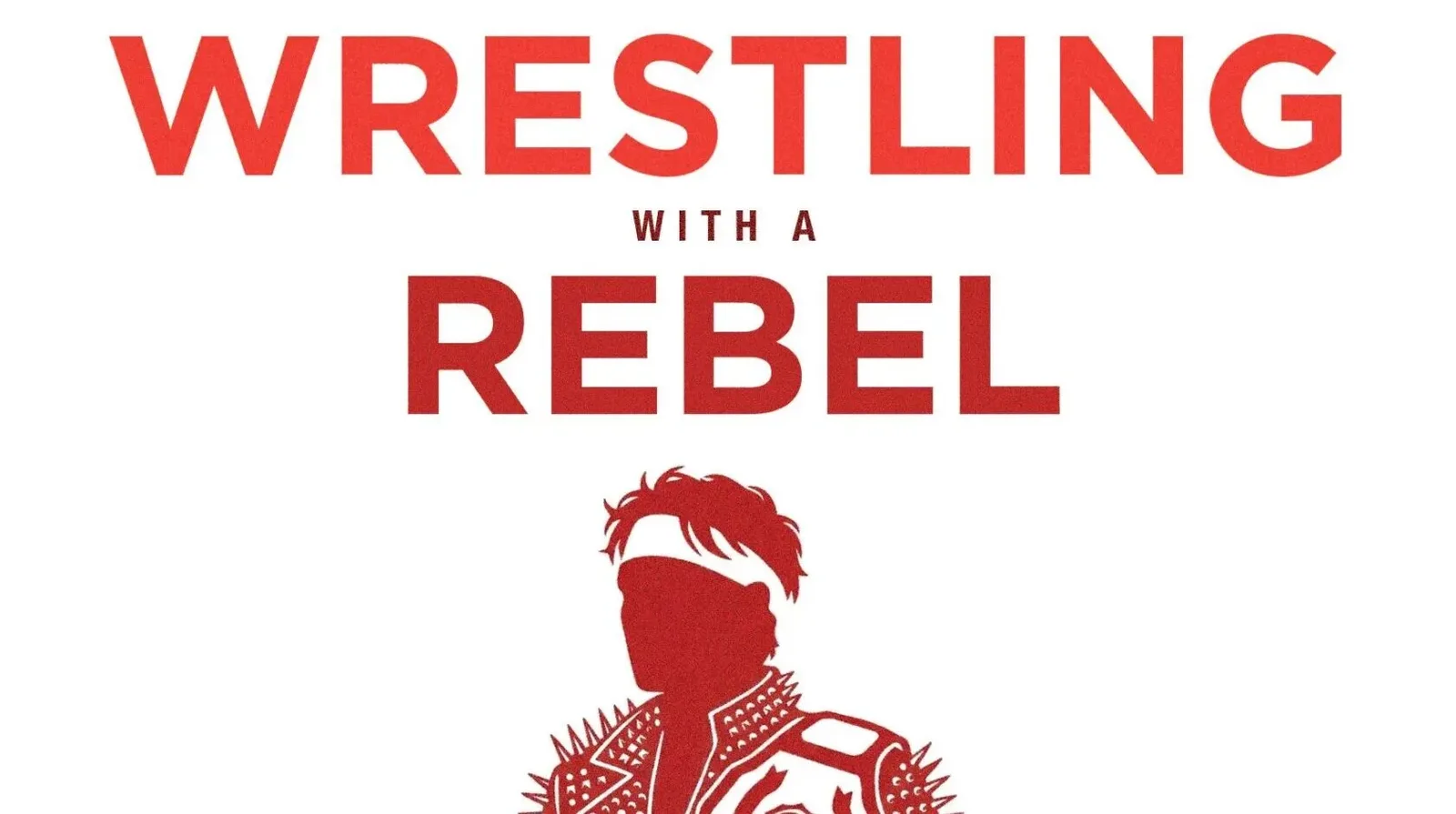
Krista Colle Gibson, the mother of professional wrestler Effy, is preparing to release a memoir titled Wrestling With a Rebel on October 1.
The book centers on Gibson’s life as the daughter of a Baptist minister and the ways those early religious traditions shaped her approach to family, faith, acceptance, and motherhood. Its central story follows her relationship with her son Taylor—known to wrestling fans as Effy—as he moves through rebellion, addiction, coming out as gay, and ultimately building a career in professional wrestling.
Wrestling With a Rebel presents that journey from Gibson’s perspective. Rather than positioning the story strictly as a wrestling memoir, its description frames the sport as one part of a much broader family account involving belief, fear, survival, and the changing understanding of what it means to love someone without conditions.
A Mother’s Story Behind the Wrestler
Gibson’s memoir is introduced as the story of a woman raised to value compliance and peace above confrontation. As the child of a minister, she learned that remaining within expectations and keeping others comfortable could feel safer than challenging the standards around her.
For more background on this topic, read TWE Chattanooga 13 Years Strong Night Two Results: Two Championships Change Hands.
Those values carried into her own adulthood and the family life she built. The book describes a mother who initially sought to raise Taylor within the same traditions that had defined her own upbringing. What began as apparent teenage rebellion, however, developed into something far more serious when addiction brought Taylor close to death.
The book’s description recalls a particularly devastating night in which Gibson sat with her son’s head in her lap and prayed as she confronted what she saw as a palpable darkness in the room. That episode is presented as a turning point in a story that does not avoid the gravity of addiction or the fear experienced by family members trying to help someone in crisis.
From there, the memoir follows the continuing evolution of their relationship. Taylor’s decision to tell his mother that he was gay, along with his pursuit of a life in professional wrestling, forced Gibson to confront questions for which she felt her church background had not prepared her.
“A minister’s daughter who followed all the rules raises a son who breaks every rule she ever gave him,” the book’s description states.
That line establishes the conflict at the heart of Wrestling With a Rebel: a mother attempting to reconcile the worldview she inherited with the lived reality of the son she loves. The memoir’s premise suggests that its focus will be on that reconciliation rather than on presenting a simple or uncomplicated version of either person’s experience.
Faith, Acceptance, and a Changing Relationship
The book’s published summary makes clear that Gibson’s story is deeply rooted in faith. But it also describes a process in which certainty is challenged by lived experience. Her son’s path pushes her beyond the assumptions she had carried from childhood and adulthood alike.
Gibson’s journey is framed as one in which Taylor becomes a teacher to his mother. The memoir returns to the idea that love has a cost, particularly when a person’s understanding of love requires them to reconsider long-held rules, expectations, and the approval of the communities around them.
That is a notable element of the book’s presentation. The title may invoke both the literal world of wrestling and the emotional struggle within a family, but the description places its greatest emphasis on the latter. Gibson is not simply writing about watching her son enter an unconventional profession. She is writing about the personal distance between the life she expected for him and the life he came to claim for himself.
The professional wrestling component is therefore part of a larger story of identity and independence. Taylor’s career is described alongside his coming out, making it one of the major developments that challenged the traditions in which Gibson raised him. The memoir’s framing does not suggest that those conversations were easy. Instead, it presents them as essential moments in the growth of their relationship.
Professional Wrestling as Part of Taylor’s Life
For wrestling audiences, the release offers a rare opportunity to see part of Effy’s personal history through the eyes of a close family member. In-ring personas and public appearances can tell fans a great deal about a performer’s creative voice, but family memoirs provide a distinctly different kind of perspective.
Gibson’s book will address Taylor’s life before and around his emergence in wrestling, including the challenges that came before he built a professional future in the industry. Its announced description does not lay out a detailed wrestling timeline, specific match history, or career milestones. Instead, it identifies professional wrestling as one of the defining choices that took Taylor outside the boundaries of the life Gibson had imagined for him.
That distinction is important to the memoir’s apparent purpose. Wrestling With a Rebel is not being presented as a conventional account of how a wrestler broke into the business. It is a mother’s recollection of learning to understand a son whose life diverged sharply from her own expectations and religious formation.
The title works on multiple levels in that sense. “Wrestling” speaks to Taylor’s profession, while “rebel” reflects the way Gibson once understood his refusal to follow the rules that had guided her. The book’s description indicates that her perspective changes over time, as she comes to see that her son’s choices and identity cannot be reduced to rebellion alone.
An Intimate Memoir With a Wrestling Connection
Stories about professional wrestling often focus on championship pursuits, rivalries, promotions, and life on the road. Wrestling With a Rebel appears positioned differently. The announced memoir places a family relationship at the center, with wrestling serving as a meaningful chapter in a wider account of recovery, identity, and faith.
The book also addresses subjects that can be difficult for families to discuss publicly: addiction, religious pressure, sexuality, fear, and the tension between parental hopes and a child’s self-determined future. Gibson’s willingness to place those topics within the book’s central description indicates that the memoir intends to be candid about the emotional stakes involved.
At the same time, its message is ultimately one of connection. The summary emphasizes that Gibson’s understanding of love expands as she learns from her son. Her initial instincts were shaped by the desire to fit in and preserve harmony. The memoir, however, suggests that real love sometimes requires accepting discomfort and bearing a personal cost.
The book’s description says Gibson learns that “sometimes there is a cost” to love.
That theme may resonate beyond wrestling readers. Although Effy’s connection to the industry gives the release immediate relevance to fans, the memoir’s stated concerns are universal ones: how families survive difficult periods, how parents revise inherited beliefs, and how people find a way back to each other after fear and misunderstanding.
Release Date Set for October 1
Wrestling With a Rebel is scheduled for release on October 1. The memoir is written by Krista Colle Gibson and focuses on her experience raising Taylor, including the events that preceded and accompanied his path into professional wrestling.
Pre-order availability had not been detailed in the announcement. Readers interested in the book should watch for additional purchasing information as the release date approaches.
For Effy’s supporters, the memoir promises a more personal look at the family history behind one of wrestling’s distinctive modern performers. For Gibson, it represents an opportunity to tell a story that begins with rules and tradition but arrives at a hard-won understanding of acceptance, survival, and a mother’s enduring love for her son.

Darryl Polo
Darryl Polo is a passionate wrestling fan covering WWE, AEW, TNA and beyond. He loves great rivalries, breakout stars and the moments that keep fans talking long after the bell. How we work.