
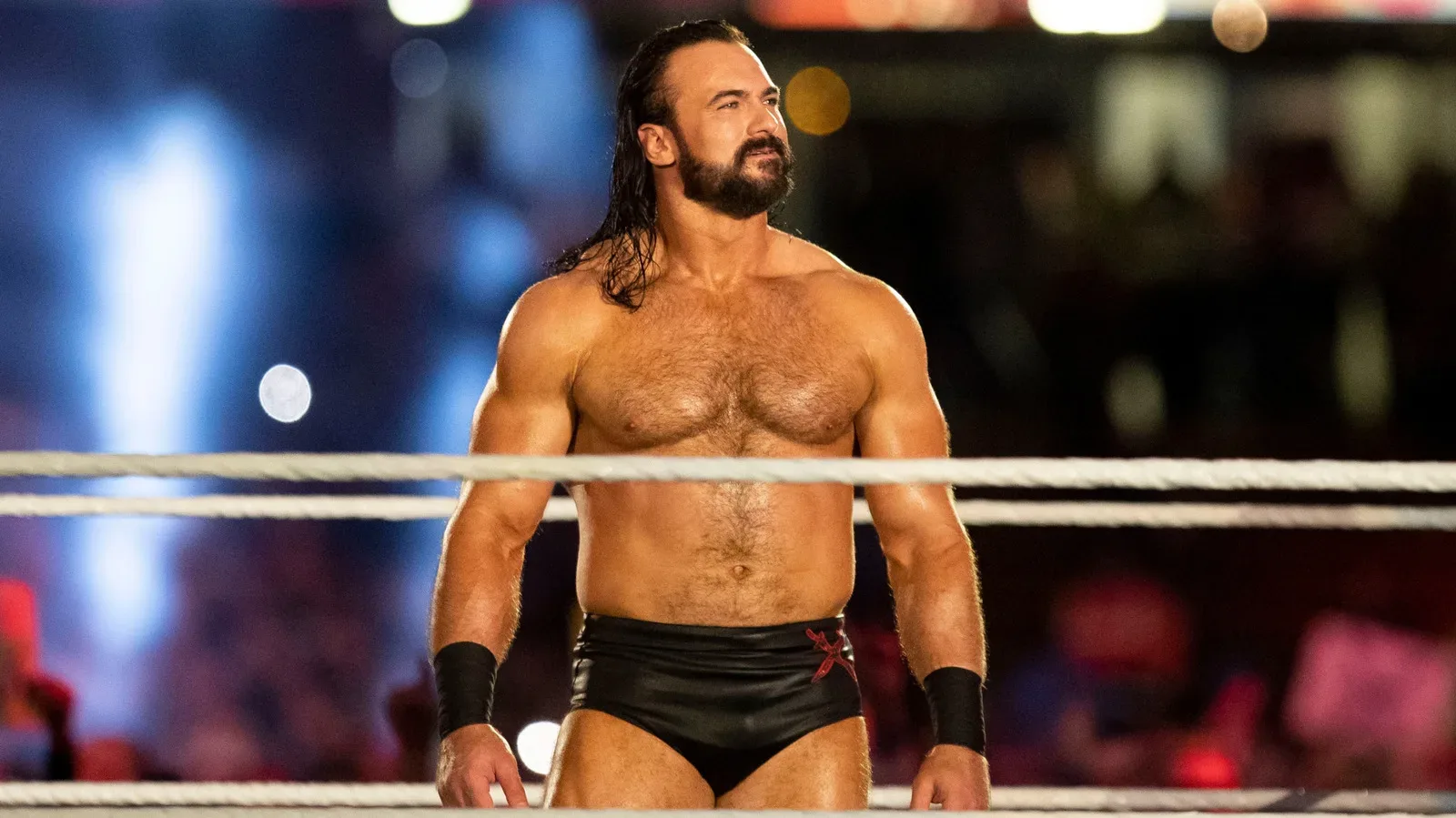
Drew McIntyre’s return to WWE in 2017 is often viewed as one of the company’s most successful second-chance stories. After departing WWE in 2014, McIntyre rebuilt his standing across multiple promotions, became a more complete performer, and came back through NXT with a level of confidence that quickly altered the course of his career. But that return was not inevitable.
McIntyre has revealed that, as his time with TNA was coming to an end, he was seriously considering a move to New Japan Pro-Wrestling instead of signing with WWE again. The former WWE Champion said he had begun initial discussions about potentially working in Japan, with wrestlers connected to New Japan prepared to speak on his behalf. In his mind at the time, he had reached a point where he no longer felt returning to WWE was the only measure of success.
That decision changed quickly after a conversation with Paul “Triple H” Levesque.
McIntyre had rebuilt enough momentum to consider a different path
McIntyre’s first WWE tenure began with immense promise. He was introduced to television as “The Chosen One,” a performer Vince McMahon publicly positioned as a future main-event star. However, his original run did not develop as expected. By the final stretch of his WWE contract, McIntyre had become associated with 3MB alongside Heath Slater and Jinder Mahal, a comedic act that bore little resemblance to the singles star initially presented as a major prospect.
For more background on this topic, read John Cena Reveals His Go-To Halloween Costume and King-Sized Candy Tradition.
Rather than allowing that experience to define him, McIntyre used his post-WWE years to reshape both his in-ring identity and his standing within the industry. Working under the Drew Galloway name in several places, he became especially prominent in TNA, where he held the company’s top championship. He also appeared for promotions including EVOLVE and ICW, building a reputation as a polished, hard-hitting main-event talent who had grown far beyond the role he held during his first WWE stint.
That success created a genuine question when his TNA situation changed. McIntyre explained that he was comfortable with the idea of not re-signing after new management did not see him as part of its future plans. More importantly, he did not see the situation as a setback. He felt the momentum he had established outside WWE gave him the freedom to select his next destination.
“I realized as the success was coming, maybe I don’t want to go back [to WWE],” McIntyre said.
McIntyre said his initial instinct was to pursue Japan. He described beginning conversations about a possible move toward New Japan, with people who had worked there set to raise his name with the company’s leadership. At that stage, Japan represented more than just another booking opportunity. It was a chance to continue testing himself in a major wrestling environment while remaining outside the WWE structure he had previously left behind.
New Japan was a realistic option as McIntyre weighed his future
The possibility of McIntyre joining NJPW in that period is particularly interesting in hindsight. New Japan was a major destination for internationally established talent, and McIntyre’s reinvention had made him a natural candidate to enter that setting. His more physical presentation, stronger command as a featured singles wrestler, and experience carrying championship responsibilities elsewhere could have fit the promotion’s environment.
McIntyre did not suggest that an agreement with New Japan had been finalized. He described the process as initial conversations, making clear that the idea was being explored rather than presenting it as a completed deal that WWE somehow pulled him away from. Still, the discussions were meaningful enough that he had begun mentally envisioning Japan as the next step in his career.
In his own recollection, he was leaning toward going there first and seeing where that route would lead. It was only after speaking with Triple H that his outlook shifted.
“In my head, I was like, ‘Ah, I feel like I’m going to go to Japan first and then see what happens there,’” McIntyre said. “And within two minutes of the conversation with Hunter, it was like, ‘Damn it. It’s time to come back.’”
McIntyre’s description of the exchange suggests that both men believed the timing had finally become right. WWE had changed in the years since McIntyre’s release, particularly with NXT serving as a high-profile platform for performers to establish themselves before a potential move to Raw or SmackDown. McIntyre had changed as well. He returned not as an untested prospect being handed a lofty label, but as a wrestler with years of experience and a much clearer understanding of who he was.
Triple H saw the growth McIntyre had made outside WWE
McIntyre said he had been away from WWE for three years and was 32 when the conversation took place. He felt secure in himself, both in the ring and personally, and he believed Triple H had followed the progress of his work outside the company.
“He’d been watching what’s going on, could see I’ve kind of grown up, not just as a performer but as a man as well,” McIntyre said.
That distinction is central to McIntyre’s story. His return was not simply based on WWE deciding to bring back a familiar name. It came after he had used his time away to prove he could thrive in demanding roles, lead as a champion, and create a more defined persona. By the time he returned, he was not trying to recover his old “Chosen One” concept. He was presenting himself as someone who had earned another opportunity through the work he had done after leaving.
McIntyre also credited William Regal with helping set the WWE return in motion. Regal contacted him after seeing that McIntyre had become a free agent and encouraged him to speak with Triple H. Regal’s involvement was fitting given his long-standing role as an influential talent evaluator and mentor to wrestlers seeking opportunities within WWE.
From there, McIntyre was prepared to begin again in NXT rather than demand a direct place on the main roster. He said he was eager to enter the brand and, in his words, try to make Vince McMahon view him as a different and new performer before eventually earning a main-roster spot.
NXT became the launching point for McIntyre’s second WWE chapter
McIntyre made his WWE return at NXT TakeOver: Orlando in April 2017. The choice to start in NXT immediately gave the comeback a different feel from a standard main-roster re-signing. He was presented as a major acquisition, but he still had to establish himself within the brand’s competitive singles division.
That approach paid off quickly. McIntyre defeated Bobby Roode to win the NXT Championship at NXT TakeOver: Brooklyn III in August 2017. Although an injury later ended his reign, the title victory made the intended message clear: WWE viewed him as a top-level act, and McIntyre had shown that his success away from the company could translate to its own major stage.
His subsequent main-roster career validated the decision to return. McIntyre rose through the ranks, became a fixture in marquee programs, won the Royal Rumble, and ultimately captured the WWE Championship. He also went on to hold the WWE Championship again, firmly establishing himself as one of WWE’s most reliable headline performers of his era.
The route could have been very different. A move to New Japan may have opened another significant chapter in McIntyre’s career, and his account makes clear that the option appealed to him. But the conversation with Triple H, along with Regal’s outreach, convinced him that WWE was no longer the same place he had left—or, perhaps more importantly, that he was no longer the same wrestler.
A reminder that McIntyre’s comeback was earned, not automatic
McIntyre’s comments offer a revealing perspective on how close major career decisions can be. His WWE return is now easy to frame as a natural outcome because of everything that followed. Yet at the time, he had a legitimate alternative in mind and enough success outside WWE to pursue it with confidence.
That confidence may have been the most important difference between his two runs. McIntyre did not return because he believed he needed WWE to validate him after his first departure. He returned after proving to himself that he could succeed without it. The discussions involving New Japan underscore that he had choices, while his decision to begin in NXT shows he was willing to rebuild within WWE on the right terms.
In the end, McIntyre’s second WWE run became a defining example of a performer leaving, evolving, and coming back stronger. His near-pursuit of NJPW adds another layer to that history: the path back to WWE was not preordained, and it took only a short conversation for him to recognize that the moment to return had arrived.
In pictures

Darryl Polo
Darryl Polo is a passionate wrestling fan covering WWE, AEW, TNA and beyond. He loves great rivalries, breakout stars and the moments that keep fans talking long after the bell. How we work.