
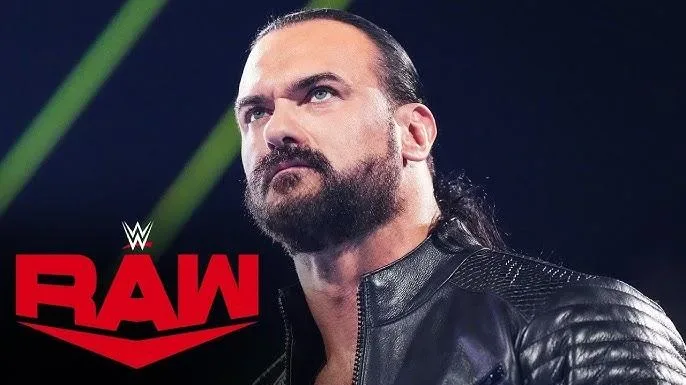
Drew McIntyre has shared an emotional remembrance of Benjamin Satterley, the wrestler known internationally as PAC, following Satterley’s recent passing at the age of 40.
Speaking during an interview with Dan Soder, McIntyre described the loss in deeply personal terms. Rather than focusing solely on the in-ring accomplishments associated with the PAC name, McIntyre stressed that Satterley was valued as both a gifted wrestler and a person whose impact extended well beyond his body of work.
“We lost one of our community members, one of our family members, Ben,” McIntyre said. “He wrestled as PAC, 40 years old. He worked his life off, was an amazing talent and amazing person.”
McIntyre’s comments place the loss within the close-knit nature of professional wrestling, an industry where performers can spend years crossing paths at different stages of their careers. His use of “community” and “family” reflected the way Satterley’s death has resonated among the people who knew him, worked alongside him, and watched his career develop.
For more background on this topic, read Xyon Set for Rugby Exhibition Return in Wales on October 17.
The WWE star also recalled first encountering Satterley long before both men became established names to a worldwide audience. McIntyre traced that memory back to 2004, when he was introduced to a teenage Satterley coming out of the backyard wrestling scene in Carlisle, England.
“From day one, I met him coming out of the backyard in Carlisle, England as a teenager,” McIntyre said. “They told me, ‘Wait until you see him.’ He just blew my mind.”
That recollection captures the immediate impression Satterley made on those around him. McIntyre did not simply describe a young wrestler with potential; he spoke of someone whose natural ability was instantly apparent. It is a meaningful distinction from a fellow performer who has himself spent decades pursuing professional wrestling at the highest level.
For McIntyre, though, the defining part of Satterley’s legacy was not limited to talent. He emphasized that the person he first met in 2004 remained the same person throughout his life. In an industry often defined by reinvention, public personas, and constant professional change, McIntyre viewed that consistency as one of Satterley’s most important qualities.
“The best thing about him is the same person I met in 2004, exactly the same person he was right until the end,” McIntyre said.
That sentiment gives McIntyre’s tribute a broader meaning. The PAC name represented an elite performer, but McIntyre’s memory centered on Ben: the person behind the ring identity, and the enduring impression he left on friends and peers. McIntyre’s account suggests that Satterley’s personal character matched the regard people held for his abilities as a wrestler.
McIntyre speaks about the legacy people leave behind
McIntyre used the conversation to reflect more generally on how people are remembered. He acknowledged that a wrestler’s accomplishments matter, but argued that professional success alone should not be the sole measure of a life. His comments returned repeatedly to character, gratitude, and the need to keep perspective when confronting a loss.
“People look back and I always say, how do you want to be remembered,” McIntyre said. “Your body of work is one thing but do you want people to google you and find out you were a piece of crap the whole time?”
The blunt phrasing was characteristic of the seriousness of McIntyre’s message. He was not minimizing Satterley’s work. On the contrary, he had already called him an “amazing talent.” But McIntyre made clear that the strongest memory he carries is rooted in who Satterley was away from the performance itself.
McIntyre’s remarks also served as a reminder of the emotional reality behind wrestling news. Fans often know performers through their matches, promos, entrances, and ring names. The wrestlers who share locker rooms and personal history with them experience a different kind of loss. McIntyre’s tribute connected those two perspectives by recognizing PAC’s immense professional identity while speaking candidly about Benjamin Satterley as a friend and colleague.
He urged listeners to consider the bigger picture and avoid taking time for granted.
“Again, perspective, gratitude, it could be all over tomorrow,” McIntyre said. “Let’s think of what’s the big picture, what actually matters. Relative to time, we’re not here for that long.”
Those words were not presented as a generic slogan. They came in the context of McIntyre remembering someone he had known since Satterley was a teenager. The length of that connection clearly shaped the weight of what he said. McIntyre was able to look back over more than two decades of knowing Satterley and identify a defining trait: he remained true to himself.
A tribute that began before the interview
This was not McIntyre’s first public message following Satterley’s passing. At the end of September, he posted a tribute video on social media. His appearance on Dan Soder’s show gave him an opportunity to expand on those initial thoughts and explain why the loss had affected him so strongly.
In doing so, McIntyre did not attempt to reduce Satterley’s life to a list of milestones or a discussion of his reputation as PAC. Instead, he offered a memory from the beginning of their shared history and paired it with a reflection on the values he believes matter most. The result was a tribute that addressed both the extraordinary wrestler fans knew and the person McIntyre says never lost the qualities he displayed as a teenager.
The reference to Carlisle is particularly poignant because it anchors McIntyre’s memory in a time before the wider recognition associated with the PAC name. McIntyre remembered being told to prepare for what he was about to see, only to find that the anticipation had been justified. It is the kind of recollection that conveys admiration without requiring exaggeration: a young Satterley made an immediate, unforgettable impact.
McIntyre’s description of Satterley as someone who “worked his life off” also underscored the commitment he saw in him. That phrase carried an appreciation for the effort behind the talent. In wrestling, ability can create attention, but sustained dedication is required to build a lasting body of work. McIntyre’s comments recognized both sides of that equation while keeping his focus on the human being at the center of the tribute.
Remembering Ben beyond the PAC name
There is a clear throughline in everything McIntyre said: Benjamin Satterley should be remembered not only for what he could do as PAC, but for how he treated people and how authentically he lived. McIntyre did not present that as an abstract ideal. He said he had seen it firsthand from 2004 until the end.
For fans mourning Satterley, McIntyre’s words provide an intimate perspective from someone who knew him long before this moment. They also reinforce the distinction between celebrating a wrestler’s craft and honoring the person whose life made that craft possible.
McIntyre’s final message was one of perspective. In remembering Satterley as an amazing talent and an amazing person, he encouraged people to think about the legacy they create through their conduct, their relationships, and the time they have with others. It was a heartfelt farewell to Ben, as well as a reminder that the most meaningful parts of a legacy are often found beyond the spotlight.

Darryl Polo
Darryl Polo is a passionate wrestling fan covering WWE, AEW, TNA and beyond. He loves great rivalries, breakout stars and the moments that keep fans talking long after the bell. How we work.