
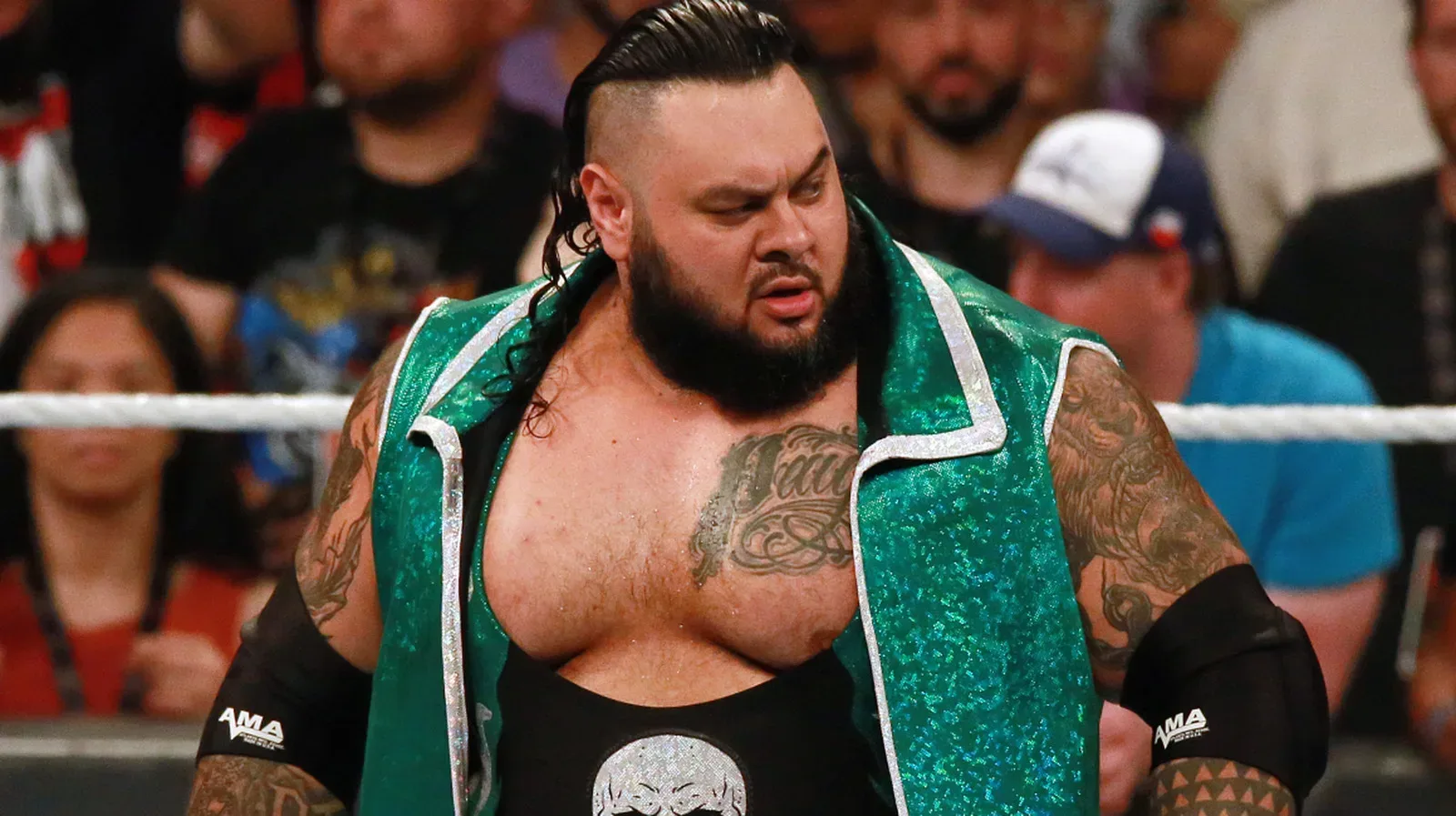
WWE once planned to turn Bronson Reed and Bron Breakker from allies into rivals, but the breakup never reached television. Speaking on Wrestling Observer Radio, Dave Meltzer said the two were supposed to be part of a leading heel act alongside Paul Heyman before WWE eventually split them up. Reed, whose real name was Jermaine Haley, remained loyal to The Vision through his final television appearance at WWE Crown Jewel 2026. In the wake of his death, Meltzer’s account sheds light on a direction WWE had considered for Reed beyond the role he played on screen.
The plan did not start with a falling-out between Reed and Breakker. Meltzer described a longer story in which the two would first work together against Seth Rollins, then become the focus of a feud of their own. WWE did air the attack on Rollins that figured into those plans, but Meltzer said it happened months earlier than intended because Rollins got hurt. The next major step, a separation between Reed and Breakker, never followed.
WWE wanted Reed and Breakker to work together before splitting them up
Meltzer said Breakker was intended to be the central wrestler in the group, with Reed backing him up and Heyman alongside them. That dynamic was supposed to give WWE two stories in succession. As allies, Reed and Breakker would be positioned near the top of the heel side of the roster. Once that partnership ran its course, their history together would give WWE a reason to put them on opposite sides rather than move them straight into unrelated programs.
Meltzer described Reed as having been pushed as a monster during the run. That presentation mattered to both parts of the proposed story. As long as Reed was helping Breakker, his presence made Breakker harder to deal with. If the two eventually split, the same wrestler who had made Breakker more difficult to beat would become a problem for him instead. The appeal of the matchup did not depend on WWE introducing a new challenger; it could come directly out of the role Reed was already playing.
For more background on this topic, read Elayna Black Reveals the Best Advice WWE’s CM Punk Gave Her.
What Meltzer did not settle was which wrestler would make the first move. He outlined the possibility of Reed turning on Breakker, but also allowed for Breakker being the one to turn on Reed. That distinction would have shaped how fans saw the feud. Reed starting the split would have given him the initiative after a run spent helping Breakker. Breakker starting it would have let Reed respond to a betrayal by the man he had backed. Meltzer’s account establishes that WWE had considered the separation, not that it had settled on how to stage it.
Seth Rollins’ injury moved up an earlier part of the story
The Rollins feud was supposed to come first. Meltzer said the plan called for an attack on Rollins, and that WWE went ahead with the angle after Rollins got hurt. The attack was not a new idea drawn up in response to the injury, in Meltzer’s telling. It was an existing idea that WWE used sooner than planned, changing the timing of the story before Reed and Breakker ever got to the point of turning on each other.
There is a distinction between that timing change and the decision not to air the breakup. Meltzer linked Rollins’ injury directly to the attack taking place months early. He did not identify a single event that caused WWE to drop the split. The early attack shows that the original sequence had already been disrupted, but it does not establish that the rest of the plan was abandoned at that moment. Nor did Meltzer give a date or event WWE had targeted for the two to go their separate ways.
Reed and Breakker also had injury setbacks in February 2026. Breakker sustained a hernia, while Reed tore his bicep on WWE Raw. Both eventually returned to action. Their absences are a possible factor in why the planned program did not happen, particularly when the story depended on both men being available, but Meltzer did not confirm that the injuries ended the idea. The timing makes the setbacks relevant without making them a definitive explanation.
Reed returned to help Breakker, not to confront him
By September, WWE was still presenting the partnership as intact. Reed resurfaced at Sunday Night’s Main Event to help Breakker during his feud with Oba Femi. The appearance put Reed back in the role Meltzer described for the first stage of the proposed story: Breakker was the one with a rival, and Reed was there to back him up. The opposition had changed from Rollins to Femi, but on that night the relationship between the two Vision members had not.
That return also illustrates why it would be a mistake to read the unused pitch as an angle WWE had already begun teasing. Reed helping Breakker had an immediate purpose in the Femi feud. Nothing in Meltzer’s account establishes that the September appearance was meant to lay groundwork for a betrayal or set a revised timetable for the split. By Crown Jewel 2026, Reed’s last television appearance, he was still loyal to The Vision. WWE never gave the alliance the ending Meltzer described.
The unused plan does offer a clearer picture of what WWE had in mind for Reed. Backing up Breakker was not necessarily supposed to be the extent of his role. WWE had considered using that partnership to set up a feud in which Reed would be one of the two central wrestlers, with their time together supplying the reason for the match rather than merely the backdrop. Whether Reed would have been the aggressor or the betrayed partner remains unresolved, and there is no basis to say how WWE would have ended the rivalry.
What made it to television was the alliance: Reed and Breakker took part in the attack on Rollins, and Reed later came back to help Breakker against Femi. What stayed off television was the shift from partners to opponents. Meltzer’s account explains how WWE once intended to connect those two phases, while leaving open why the company never moved on to the second.
In pictures

Darryl Polo
Darryl Polo is a passionate wrestling fan covering WWE, AEW, TNA and beyond. He loves great rivalries, breakout stars and the moments that keep fans talking long after the bell. How we work.