
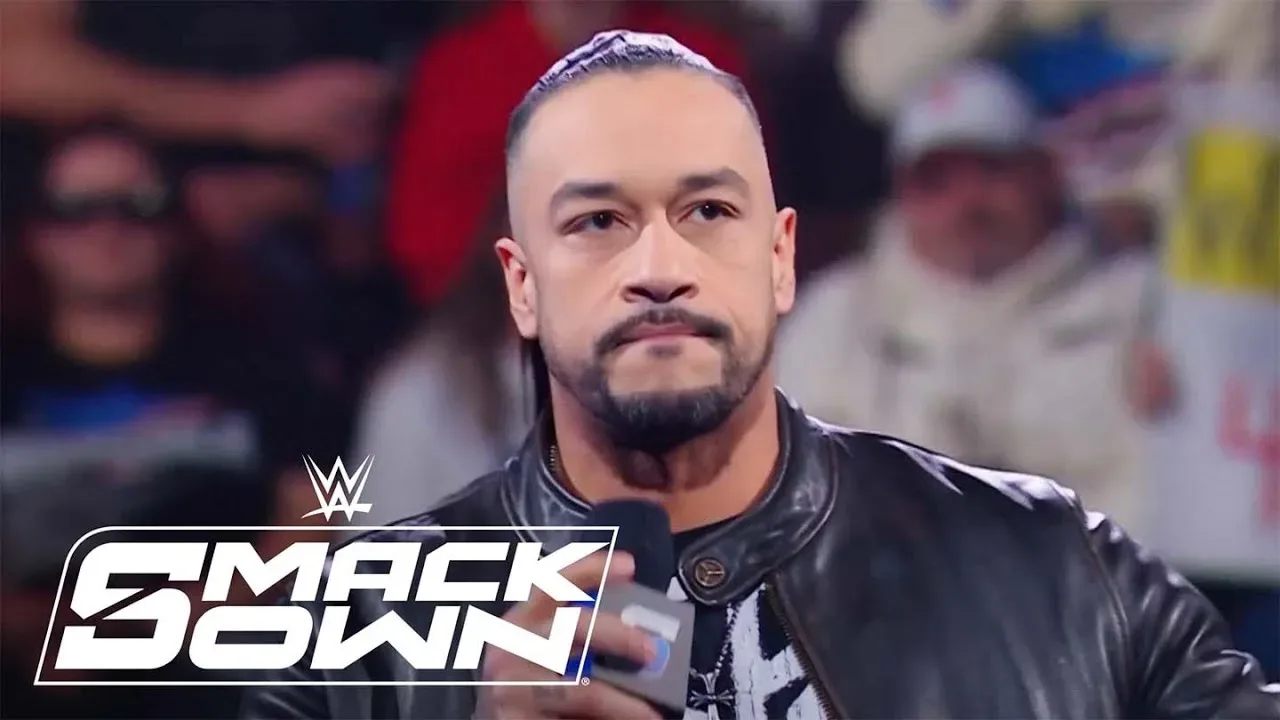
Damian Priest says he is feeling substantially better after navigating nagging physical issues and a reduced in-ring schedule during the latter half of 2025.
The WWE star addressed his health and mindset during an appearance on WWE Radio’s Off The Ropes, explaining that he has worked to manage pain without stepping completely away from his responsibilities. Priest did not identify the specific injuries he was dealing with or detail the procedures he underwent, but he said the treatment helped him feel better and resume the kind of training that has supported his preferred level of conditioning.
For Priest, the conversation was not framed as an excuse for any performance limitations. Instead, he stressed that wrestling is inherently demanding and that being hurt to some degree is a reality shared across the locker room. His focus has been on continuing to show up, improving his physical state where possible and correcting a mental outlook that had begun to drift away from the confidence he normally carries.
“Well, we’re never okay. It is what we do, you know,” Priest said. “No bitching and moaning, I don’t like overly talking about how my body is because I’m still showing up to do the job. It’s not an excuse. I’m not the only one banged up. So if my opponent’s banged up too, we’re on an even playing field. So I don’t like to rely on that.”
For more background on this topic, read Dragon Lee’s WWE Extension Confirmed as Five-Year Deal; Dralistico’s AEW Future Remains Unclear.
Priest discusses treatment while maintaining his WWE workload
Priest’s comments provide context for the lighter in-ring stretch he worked in the back half of 2025. Rather than taking an extended leave, he said he was able to have procedures done while continuing to work. That approach allowed him to address pain while staying available to WWE, though Priest made clear that he does not view being physically compromised as an unusual condition within professional wrestling.
The distinction is important in a profession where schedules, travel and physical contact can make managing wear and tear a continual process. Priest did not present himself as fully untouched by the rigors of the ring. In fact, his opening point was that wrestlers are rarely completely fine physically. But he believes the steps he has taken have made a visible difference.
“But, I’m feeling a lot better,” Priest continued. “I got some procedures done while I never took a day off, you know what I mean? So, I got some stuff done to ease pain and I feel a lot better. I think people can see it visually.”
There was no indication from Priest that he intends to provide more specifics regarding the treatment or the areas of his body that required attention. His emphasis remained on the outcome: less pain, better training and a stronger overall position than he felt he was in while working through the issues last year.
That measured approach fits the way Priest described his relationship with physical adversity. He acknowledged it, but he does not want it to become the defining explanation for his work. From his perspective, an opponent may be dealing with similar challenges, and the task remains to perform when the bell rings.
A return to familiar training and conditioning
Priest said feeling healthier has enabled him to change his training and move back toward the condition he associates with his strongest periods. He did not offer a detailed account of the adjustments to his regimen, nor did he place a timetable on any particular physical goal. Still, he connected his improved conditioning directly to the improvement in how he feels.
“I’m training differently, I’m getting back into the shape that I used to be in and it’s all because I feel better,” Priest said.
The statement is notable because it places the reduced schedule in a broader context than simple rest. Priest is describing a process of rebuilding: managing pain, receiving treatment, modifying training and regaining the ability to pursue the physical standards he expects of himself. For a performer whose presentation relies heavily on size, intensity and athletic presence, feeling capable of training at a higher level can affect more than appearance. It can also influence confidence in the ring and in the demanding day-to-day routine surrounding WWE television.
Priest did not claim that the work is finished or suggest that the physical strain of wrestling has disappeared. His “we’re never okay” observation underlined that he sees maintenance as part of the job. What has changed is his ability to work through that reality from a healthier place, rather than allowing persistent discomfort to shape every aspect of his preparation.
The mental side of Priest’s reset
While Priest spent much of his answer discussing his body, he also identified the mental component as equally significant. He said he had gotten himself down at one point, which stood in contrast to the positive view he generally tries to maintain about himself and his career.
Priest did not outline one singular incident that caused the shift in his thinking. He also did not connect it to a particular WWE storyline, match result or backstage situation. Instead, he described it as a personal moment of recognition. He realized he had begun approaching himself and his career in a way that did not align with his usual outlook, and he needed to address it.
“I’m in a better head place too, you know — I got myself down and for somebody who likes to think positively of myself and my career, I started doing the opposite and I had to check myself a little bit,” Priest said.
That self-assessment is central to the way Priest explained his current position. The procedures and the training changes helped physically, but he sees the improvement as a combined process. Better health helped his outlook, while addressing his outlook was also part of getting back to where he wants to be.
Professional wrestling often places performers in a cycle of constant evaluation. Television time, match opportunities, crowd reactions, character direction and physical readiness can all become part of how a wrestler judges their own standing. Priest did not expand on which factors affected him personally, and it would be speculative to assign a cause. What he did make clear is that he recognized the negative turn in his mindset and took steps to move beyond it.
Priest says the process has put him in a good place
Priest concluded that he is now in a good place both physically and mentally. It is a concise assessment, but one that carries added weight after his acknowledgment of pain management, a reduced schedule and the need to correct his own internal perspective.
“So that came with my health, physically and mentally,” Priest said. “I’m in a good place now, man. It is what it is.”
The comments do not establish a new injury absence, a planned break or any limitation on Priest’s WWE activity. On the contrary, Priest described himself as feeling better while continuing to work through the period in which he sought treatment. His remarks should therefore be viewed as an update on recovery and personal perspective, not an announcement that he is stepping away.
Priest also spoke elsewhere in the interview about his decision to turn his back on R-Truth, though his health comments stood apart as a candid look at what he has been handling away from the immediate storyline discussion. The admission that he had to “check” himself adds a personal dimension to a wrestler who has long projected composure and conviction on screen.
For now, Priest’s message is straightforward. He is not claiming to be immune to the physical toll of WWE competition, and he is not interested in using that toll as a crutch. But after making time for pain-relieving procedures and adapting his training, he believes he is moving in the right direction. Just as importantly, he says his mindset has followed.
As Priest continues working toward the shape he says he previously enjoyed, his outlook appears to be anchored in progress rather than frustration. He has acknowledged the difficult stretch, addressed what he could and emerged with a renewed sense that he is physically capable, mentally steadier and prepared to keep doing the job.

Darryl Polo
Darryl Polo is a passionate wrestling fan covering WWE, AEW, TNA and beyond. He loves great rivalries, breakout stars and the moments that keep fans talking long after the bell. How we work.