
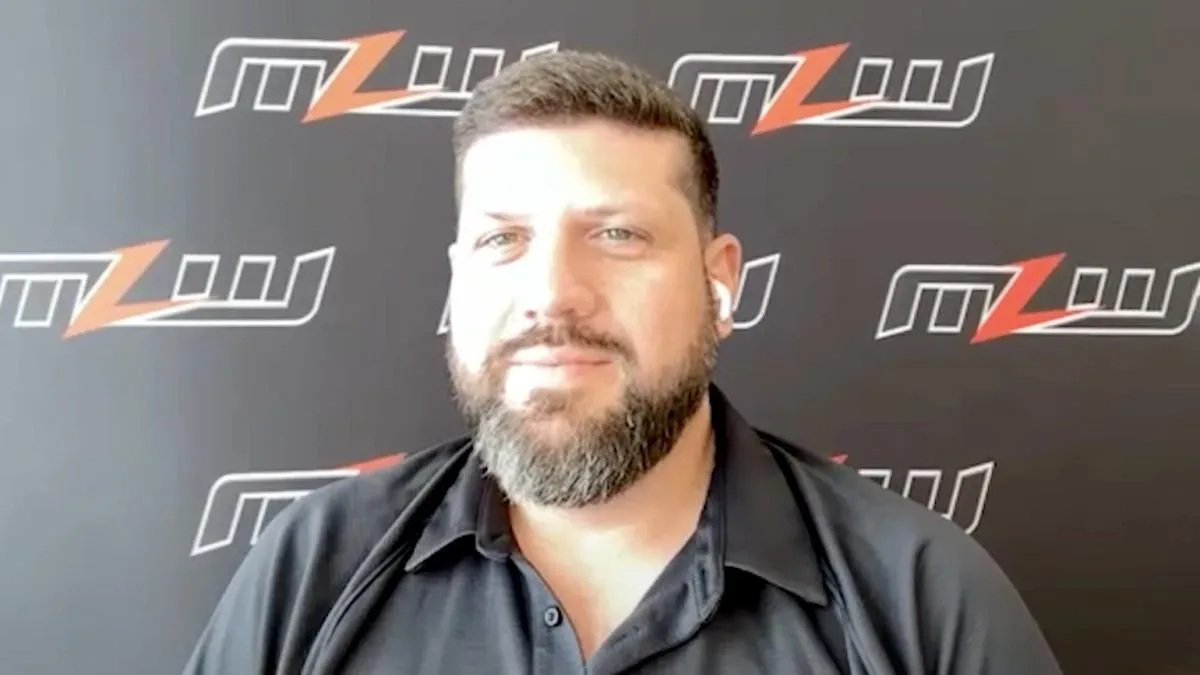
Major League Wrestling came close to a potentially transformative distribution deal with Paramount in 2025, according to founder Court Bauer, before the company’s plans changed amid the Skydance acquisition process and Paramount’s eventual agreement with UFC.
Bauer discussed MLW’s negotiations during an appearance on Wrestling Observer Radio, explaining that the promotion had advanced talks for an ambitious live weekly project. The proposed arrangement would have placed MLW within Paramount’s programming strategy at a pivotal point for both companies, with the launch targeted for the fall of 2025.
Instead, Paramount ultimately announced its major UFC deal in August 2025. That agreement made UFC events, including pay-per-views, available through a Paramount+ subscription without a separate pay-per-view charge. Bauer said MLW’s prospective deal was never signed, but characterized the promotion as being extremely close before the strategy changed.
MLW Was Waiting Through the Skydance Transaction
The timing of the talks was central to the situation. Bauer said MLW’s discussions with Paramount began around the company’s Los Angeles event in April 2025. At that time, the Skydance acquisition had not yet been completed, and the parties were navigating the uncertainty surrounding the pending corporate transaction and its government clearance process.
For more background on this topic, read WSW MegaMania Adelaide Results: Killer Kross Retains, Good Brothers Win Tag Titles.
“The company they were talking about last year at Paramount, prior to the Skydance acquisition, was MLW,” Bauer said. “The deal was going to be on the other side of the Skydance acquisition. It was going through the government to get cleared and blessed. We were told, ‘You’re on standby. This deal is getting done.’ So we had to wait.”
For an independent wrestling promotion, a major platform commitment can demand extensive preparation long before cameras begin rolling. Bauer said MLW had moved quickly after the initial conversations and had the broad framework of a deal in place. The company then spent June and July in a holding pattern as it waited for the larger business transaction to conclude.
“It moved fast, and we had the deal pretty much laid out; we were just waiting on standby through June and July,” Bauer said.
The period illustrates the difficulty promotions face when pursuing media distribution in an environment shaped by mergers, leadership turnover, and changing corporate priorities. Wrestling companies can have programming concepts, production teams, talent plans, and business staff prepared, but a change above the operational level can still reshape a deal before the paperwork is finalized.
A Live Weekly MLW Show Was the Plan
Bauer’s comments make clear that the prospective Paramount project was not being treated as a minor library arrangement or a simple streaming add-on. MLW was preparing for a live weekly schedule, an undertaking that would have required a meaningful expansion in production and staffing.
“We were looking to start in the fall of 2025 and the staff would scale up because it was going to be live weekly,” Bauer said. “It was a pretty ambitious thing, and we were here for it.”
A live weekly series would have represented a significant step for MLW’s presentation and reach. Live programming carries a different set of expectations than taped episodic content. It requires regular venue operations, dependable television production infrastructure, a stable creative schedule, and a roster built to sustain momentum across an ongoing calendar. It also puts greater emphasis on the ability to react immediately to stories, championships, rivalries, and audience response.
MLW had already established a presence across multiple platforms, but the described Paramount plan would have created an opportunity to grow on a larger scale. Bauer said the company had personnel ready to help execute the project, indicating that MLW was planning beyond early exploratory discussions and into the practical demands of a launch.
The details also show why the loss of the arrangement was consequential even without signed contracts. A promotion does not need to announce a deal publicly for it to affect its internal planning. The possibility of a live weekly show can influence staffing discussions, production goals, talent utilization, and long-term event scheduling well before an audience ever sees the final product.
Changes on the Paramount Side Affected the Conversation
Bauer described personnel changes during the merger period as a key part of the story. He said one individual connected to the discussions received what Bauer called a “golden bit parachute” and was informed that he would not continue with the deal after the merger.
“One of our guys got a golden bit parachute and was told he was not going to be continuing on with the deal post-merger, days before the deal was closed,” Bauer said.
He also identified Jesse Siskal as a significant figure in helping guide the MLW discussions from the Skydance side. Bauer noted that Siskal later left Skydance for RedBird Capital and said Siskal had been among the foundational people involved in launching Skydance.
“Our other guy, Jesse Siskal, who just left Skydance for Redbird Capital, was one of the founding guys Ellison commented on that helped launch Skydance,” Bauer said. “He was one of the key guys shepherding us on his end.”
Those changes matter because business relationships are often driven by executives and decision-makers who understand a specific project and are willing to advocate for it internally. When those people leave, are reassigned, or lose authority during a merger, even a proposal that has gained momentum can be reassessed. In MLW’s case, Bauer said the promotion found out about the UFC development through a press release rather than through its own ongoing conversations.
UFC’s Paramount Agreement Shifted the Strategy
Bauer recalled waking up to the public announcement of the UFC and Paramount deal and immediately seeking clarification from Siskal. The response, Bauer said, was that the UFC arrangement had been made at a very high level and was not something the people working with MLW had known was coming.
“One morning we woke up to a Variety press release that said ‘UFC Deal,’” Bauer said. “Jesse, what’s going on?’ He’s like, ‘No one was aware of this deal. It happened at a very high level. That deal happened and strategies, I guess, shifted.’”
The UFC deal was a major statement of Paramount’s sports and combat-sports ambitions. With all UFC events and pay-per-views moving into the Paramount+ subscription offering, it was understandable that the company’s broader programming approach could be reevaluated. Bauer did not suggest that MLW had a signed agreement that was directly canceled in favor of UFC. Rather, he said that the changing strategy came before the MLW contracts were executed.
“We never had the contracts signed,” Bauer said. “I’m not going to bitch, it’s just another day in the business, but we were at the one-yard line.”
That distinction is important. Bauer’s description is of a near-complete negotiation that did not cross the final contractual threshold. In media rights and content distribution, that final stage carries enormous weight. Interest, verbal momentum, proposed terms, and detailed planning can all be real, while the absence of signed paperwork leaves a project vulnerable to any late corporate change.
MLW Continues Building Across Its Current Platforms
Although the Paramount opportunity did not materialize, MLW remains active across a mix of outlets. The promotion is currently available through Tubi, VEEPS, YouTube, and other platforms, giving it several routes to reach its audience while continuing to stage events and develop its programming.
That multi-platform approach is especially valuable for a company operating outside the largest wrestling television structures. It allows MLW to maintain accessibility for viewers while preserving flexibility in how it distributes events, special programming, and episodic content. It also means the promotion’s future does not rest on one single outlet, even if a proposed weekly live series with Paramount would have been a major breakthrough.
Bauer’s account ultimately offers a look at how close MLW believed it was to a substantial expansion in 2025. The company had a plan, personnel ready to support it, and a prospective fall launch window. But the Skydance transaction, changes among the people involved, and Paramount’s high-level UFC agreement altered the landscape before MLW could reach the finish line.
MLW now moves forward with its existing distribution partners and its event schedule, including MLW Saturday Night SuperFight on November 7. The Paramount talks did not become a completed deal, but Bauer’s comments indicate that MLW was positioned for one of the biggest media moves in its history before the company’s circumstances shifted.

Darryl Polo
Darryl Polo is a passionate wrestling fan covering WWE, AEW, TNA and beyond. He loves great rivalries, breakout stars and the moments that keep fans talking long after the bell. How we work.