
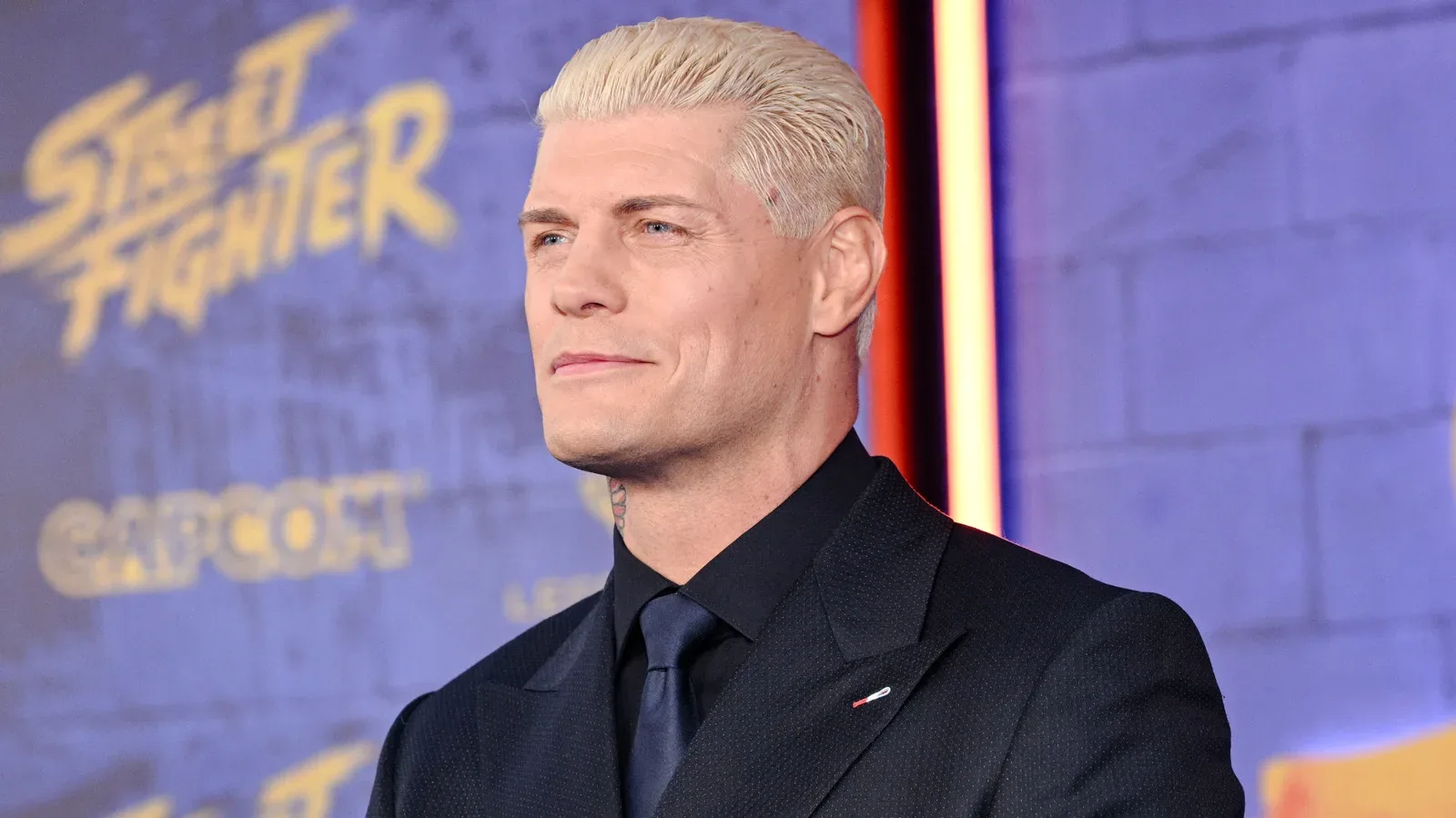
Cody Rhodes believes WWE’s financial landscape has changed dramatically enough that its highest-paid talent can now be discussed in the same broad conversation as athletes in major professional sports.
During an appearance on Flagrant, Rhodes reflected on the way WWE compensation has evolved in recent years, particularly for performers who reach the very top level of the company. The Undisputed WWE Champion framed the change as a meaningful development for wrestlers who have long possessed mainstream visibility but, in his view, did not always have earnings that matched their cultural reach.
“Nick Khan had a great quote about ‘These guys are going to do well. These guys are going to do really well and then these couple guys, they’re going to do next level.’ And that next level pay is now comparable with sports,” Rhodes said on Flagrant.
Rhodes’ comments offer a notable perspective from one of WWE’s most prominent modern headliners. He has occupied a central spot in the company since returning in 2022, becoming a fixture in WrestleMania main events, major championship programs, premium live event promotion and WWE’s broader mainstream presentation. As a performer who has experienced multiple stages of the wrestling industry, Rhodes is well positioned to recognize the difference between a strong wrestling payday and the kind of compensation traditionally associated with elite athletes in leagues such as Major League Baseball or the NBA.
For more background on this topic, read Vince McMahon’s Reckless Driving Charge Dropped After Probationary Period Ends.
The key distinction, Rhodes suggested, is that wrestling’s biggest names have historically been able to build substantial fame across the world without necessarily receiving financial terms that mirrored the earnings of top competitors in conventional sports. WWE’s global television footprint, live-event business, media presence and international brand recognition have created stars known far beyond a single market. But Rhodes said the income ceiling is now catching up to that level of exposure.
“That’s the part that I’m so proud of being a wrestler because when you’d hear baseball contracts and NBA contracts, and you know as a wrestler that you could go all over the world and be known and be seen, but you weren’t on that level,” Rhodes said. “You were on the level of penetration but not that level of income. Now, modern TKO and Nick have made it that you are.”
A changing ceiling for WWE talent
Rhodes specifically credited WWE President Nick Khan and the modern TKO era for helping establish that new upper tier. His wording did not suggest that every WWE performer is compensated at the same level, nor did he reveal specific figures from any individual agreement. Instead, he described a structure in which different levels of success can lead to different levels of financial reward, with a select group reaching what Khan characterized as “next level” pay.
That is an important point in an industry where the terms of individual deals are generally private and can vary widely based on a performer’s place on the roster, marketability, experience, championship status, media responsibilities and value to the company. Rhodes did not put a number on the top-end contracts he was discussing. He did, however, make clear that he views the present environment as exceptionally lucrative for wrestlers who become key attractions.
“The American Nightmare” also described the money being made in wrestling as “very good,” while emphasizing that the amounts cited in WWE contracts are guaranteed. Guaranteed money can provide a major measure of stability in a business that has changed significantly over several generations. The pro wrestling world has often been associated with performers navigating uncertain schedules, shifting territories, variable gates and compensation structures dependent on where they worked and how often they were booked.
WWE’s current model is, of course, built around a far different corporate and media environment. The company operates as an international entertainment brand with major media agreements, global touring, sponsorship opportunities, merchandise revenue and an expanding range of programming platforms. Rhodes’ assessment was focused on what those changes can mean for the performers who lead the product and become recognizable representatives of the company.
Rhodes sees progress through a wrestler’s lens
The comments carry additional weight because Rhodes comes from one of wrestling’s most famous families. His father, Dusty Rhodes, remains an iconic figure whose influence extended across generations of performers and fans. Dusty achieved legendary status through his charisma, connection with audiences and body of work, but he came from a vastly different business era.
Cody Rhodes said his late father would have been particularly surprised by the money now available to wrestlers at the upper end of WWE’s system. It is a striking reflection on how much the economics of the industry have shifted since Dusty Rhodes’ prime, when wrestling’s business was more fragmented and the routes to national and international exposure were markedly different.
For Cody, the subject is not only about headline-level income. His remarks reflect a sense of pride in seeing wrestlers treated as athletes and entertainers whose contributions can command compensation more in line with their visibility and drawing power. Rhodes has frequently spoken about wrestling as a profession that deserves respect, and his latest comments placed financial recognition within that broader conversation.
He did not portray the industry as identical to traditional sports leagues. Rather, he argued that WWE’s highest echelon has reached a level that would have once seemed out of reach for pro wrestlers. The distinction matters: Rhodes was celebrating a new possibility for the very biggest WWE names, not making a blanket claim about every contract in the business.
From return in 2022 to WWE’s top tier
Rhodes’ own WWE journey provides a clear example of the type of ascent he was describing. After returning to WWE in 2022, he quickly moved into the main-event picture and established himself as one of the defining stars of the company’s current era. His presentation, major-match positioning and connection with fans turned him into a centerpiece of WWE programming.
Since that return, Rhodes has won the Undisputed WWE Championship on three separate occasions. Those championship reigns placed him among the company’s most important active figures and reinforced his status as a leading attraction during a period in which WWE has continued to pursue a larger mainstream profile.
The path has also carried considerable personal resonance. As the son of Dusty Rhodes, Cody’s championship accomplishments have been viewed through the lens of a family legacy that has long been intertwined with the history of the industry. His comments about his father being shocked by current payouts underline that connection. For Rhodes, today’s top-level WWE compensation represents an evolution that past generations of major wrestling stars may not have imagined.
At present, Rhodes is involved in a feud with Randy Orton, a rivalry that also reaches back to an earlier chapter of his career. Orton was Rhodes’ former mentor in Legacy, the stable that linked the two performers alongside Ted DiBiase Jr. Their current conflict brings that history back into focus, now with Rhodes established as a top WWE champion and Orton carrying the credentials of a 14-time world champion.
The pairing creates a natural contrast between generations and career stages. Orton has spent years as one of WWE’s defining main-event stars, while Rhodes’ rise since 2022 has positioned him as a central face of the present product. Their shared Legacy history gives the rivalry an established foundation, but it also highlights how much Rhodes’ standing has changed since his early WWE run.
What Rhodes’ comments mean for the broader industry
Rhodes did not disclose internal WWE figures or lay out the details of the company’s contract process. Still, his comments reinforce the perception that WWE’s upper-card and main-event positions carry a financial upside that has expanded significantly in the modern corporate era.
For emerging talent, that type of ceiling can reshape the ambition attached to reaching the top of the card. The opportunity is not simply to gain championship visibility or headline a major event. In Rhodes’ view, it is also the chance to achieve a level of guaranteed compensation that places wrestling’s biggest names closer to athletes in the world’s most financially powerful sports.
That does not remove the competitive nature of WWE’s roster or the difficulty of reaching that elite group. Rhodes’ recollection of Khan’s quote was built around the idea of tiers: some will do well, some will do very well, and a smaller number will reach the next level. But for Rhodes, the existence of that final tier is itself cause for celebration.
As one of the performers currently occupying that rare air, Rhodes sees the shift as a victory for the profession. His message was straightforward: wrestling’s top stars are no longer only being seen around the world. The industry’s leading names can now be paid in a way he believes better reflects that worldwide stature.
In pictures

Darryl Polo
Darryl Polo is a passionate wrestling fan covering WWE, AEW, TNA and beyond. He loves great rivalries, breakout stars and the moments that keep fans talking long after the bell. How we work.