
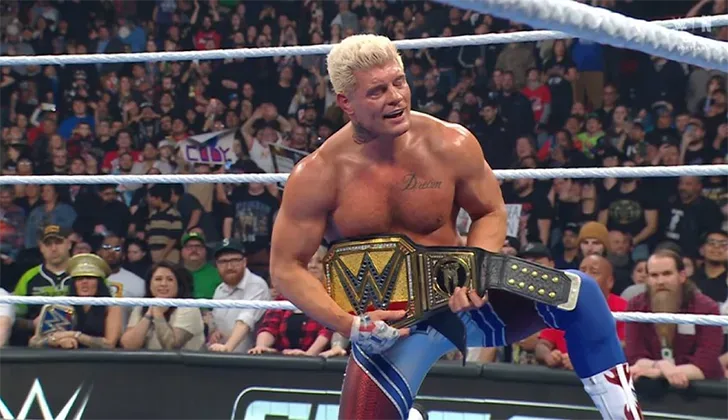
Cody Rhodes believes the financial ceiling for WWE Superstars has changed dramatically, to the point that the company’s highest earners can now be discussed alongside athletes in major professional sports leagues.
Speaking during a recent appearance while also promoting his upcoming role as Guile in Street Fighter, Rhodes addressed how different the modern wrestling economy is from the one navigated by prior generations. The former WWE Champion pointed to a landscape with more employment options, guaranteed contracts and an increased level of investment in the people positioned at the top of WWE.
For Rhodes, the shift is personal as well as professional. His father, Dusty Rhodes, became one of wrestling’s most celebrated figures through a career that required constant travel, relentless work and success across multiple territories and promotions. Cody said the numbers available in today’s industry would have been difficult for wrestlers from that era to imagine.
“The wrestling economy is different now because there’s other places you can go wrestle,” Rhodes said. “The money in wrestling and sports entertainment is very good. And I feel like if you were my dad or any of these wrestlers we talked about on that list, you’d be shocked.”
For more background on this topic, read Cody Rhodes Confirms New WWE Deal, Says He Intends To Finish His Wrestling Career With The Company.
Rhodes recalled telling his mother about a particular financial figure and said her reaction reflected just how far the business has come. The comparison is not simply about larger dollar amounts, either. He emphasized that the structure of WWE agreements is markedly different from the conditions many past stars faced.
“My mom didn’t get it when I said, ‘Hey, X amount,’” Rhodes said. “She legit like — [Andrew Schulz interjects, ‘Yeah. Well, your pops was grinding at a very different–.’] Grinding and grinding, and also but now the contracts are guaranteed, and all this very, very different time. All that means to me, and it’s like that’s a huge responsibility.”
Guaranteed Deals Change the Conversation
The reference to guaranteed contracts is central to Rhodes’ point. Professional wrestling has historically involved a financial model that could be unpredictable even for highly recognizable performers. Wrestlers often depended on dates worked, ticket sales, territory opportunities, merchandise, television exposure or the continuing health of a particular promotion. A major injury, a change in creative direction or the collapse of a territory could sharply alter a performer’s income.
WWE’s modern deal structure has helped create a more stable environment for many contracted talent, particularly those who have established themselves on television. Rhodes did not attempt to outline every level of the company’s compensation system or offer specific figures. Instead, he stressed the broad transformation in what a successful career can offer financially.
That distinction matters because Rhodes has experienced several eras of the current industry. He first became a WWE talent in the 2000s, later built a prominent reputation outside the company, helped launch AEW, and then returned to WWE in 2022. He has been at the center of major events and championship programs since coming back, giving him a direct perspective on the growth of both the company and the overall marketplace for elite wrestling talent.
His comments also frame modern compensation as carrying an obligation. Rhodes described the increased money not as a reason to become complacent, but as a responsibility for performers who have access to resources and security that previous generations often did not enjoy.
Rhodes Defers on Developmental Starting Pay
When asked about what wrestlers entering WWE’s developmental system receive, Rhodes did not claim to know the exact current rate. He began by suggesting that six-figure compensation is part of the discussion, then deliberately deferred to WWE President Nick Khan’s previous assessment of the opportunities available to talent.
“Oh man, I don’t know what our developmental — I mean, everything is six figures,” Rhodes said. “You know what? I’m actually defer because Nick has a great — Nick Khan had a great quote about these guys are going to do well. These guys are going to do really well, and then these couple guys, he named a few guys, they’re going to do next level.”
Rhodes’ answer stopped short of presenting a definitive developmental pay scale. That caution is important, since compensation can vary based on experience, role, negotiating leverage and a number of individual factors. Still, his larger message was that WWE has created pathways where prospects can be paid well while developing, while a smaller tier of talents can ultimately reach a dramatically higher financial bracket.
The difference between doing well and reaching “next level” status is familiar to anyone who follows major sports. Every league has a wide range of earnings, from developing players and role players to franchise-defining stars. Rhodes believes WWE now has a comparable upper tier, where the most valuable names can command income on a scale that changes how wrestlers and the public view the profession.
Wrestling Recognition, and Now Wrestling Income
Rhodes contrasted today’s situation with the longstanding global visibility of professional wrestling. Major wrestlers have long been famous beyond the ring, with international touring, television distribution and crossover appearances giving them a level of public recognition that can rival athletes from more conventional leagues. But Rhodes said that visibility did not always translate into equivalent pay.
“That next level pay is now comparable with sports,” Rhodes said. “And that’s the part that I’m so proud of being a wrestler because when you’d hear baseball contracts and NBA contracts, and you know as a wrestler that you could go all over the world and be known and be seen, but you weren’t on that level. You were on the level of penetration but not that level of income. Now, Modern TKO and Nick have made it that you are.”
Rhodes’ use of “Modern TKO” places the change within WWE’s current corporate era. WWE operates under the TKO banner, and the company’s growth has included major media agreements, expanded global initiatives and a heightened focus on positioning its leading performers as crossover personalities. Those factors can raise the value of the most visible talent, particularly performers able to carry premium live events, television programming, merchandise campaigns and mainstream promotional commitments.
The wrestler’s point was not that every WWE performer receives compensation comparable to a superstar athlete in the NBA or Major League Baseball. Rather, he drew a distinction between the broad roster and the select names who rise to the highest level. In Rhodes’ view, that top-end opportunity is a meaningful milestone for an industry that has often been culturally prominent without always offering its performers the same financial standing as stars in traditional sports.
Street Fighter Adds Another Crossover Opportunity
Rhodes’ comments arrived as he prepares for another high-profile entertainment project. He portrays Guile in the new Street Fighter movie, extending his presence beyond WWE programming and into a major film adaptation. The project is scheduled to arrive in theaters on October 16.
WWE World Heavyweight Champion Roman Reigns is also part of the cast, appearing as Akuma. Their involvement gives WWE two major names in a franchise with a long history across video games and popular culture, while also illustrating the kind of outside opportunities available to leading figures in the company.
For Rhodes, crossover work and wrestling’s stronger financial position appear to be connected pieces of the same larger evolution. The modern WWE star is not only expected to perform in the ring and on weekly television, but can also become a recognizable representative for films, media appearances, sponsorship activity and international promotional campaigns.
That does not diminish the demanding nature of the job Rhodes described through the example of his father. If anything, his remarks underline the opposite: the financial growth has been accompanied by greater expectations. WWE’s top talent are asked to be athletes, performers, media representatives and public-facing ambassadors for a global company.
Rhodes sees that opportunity as something worth taking seriously. The industry may have moved closer to the pay scale associated with major sports at its top level, but he made clear that the change should be met with gratitude and accountability. For a wrestler who grew up watching what prior generations endured to make a living in the business, the present-day ceiling represents both progress and a challenge to make the most of it.

Darryl Polo
Darryl Polo is a passionate wrestling fan covering WWE, AEW, TNA and beyond. He loves great rivalries, breakout stars and the moments that keep fans talking long after the bell. How we work.