
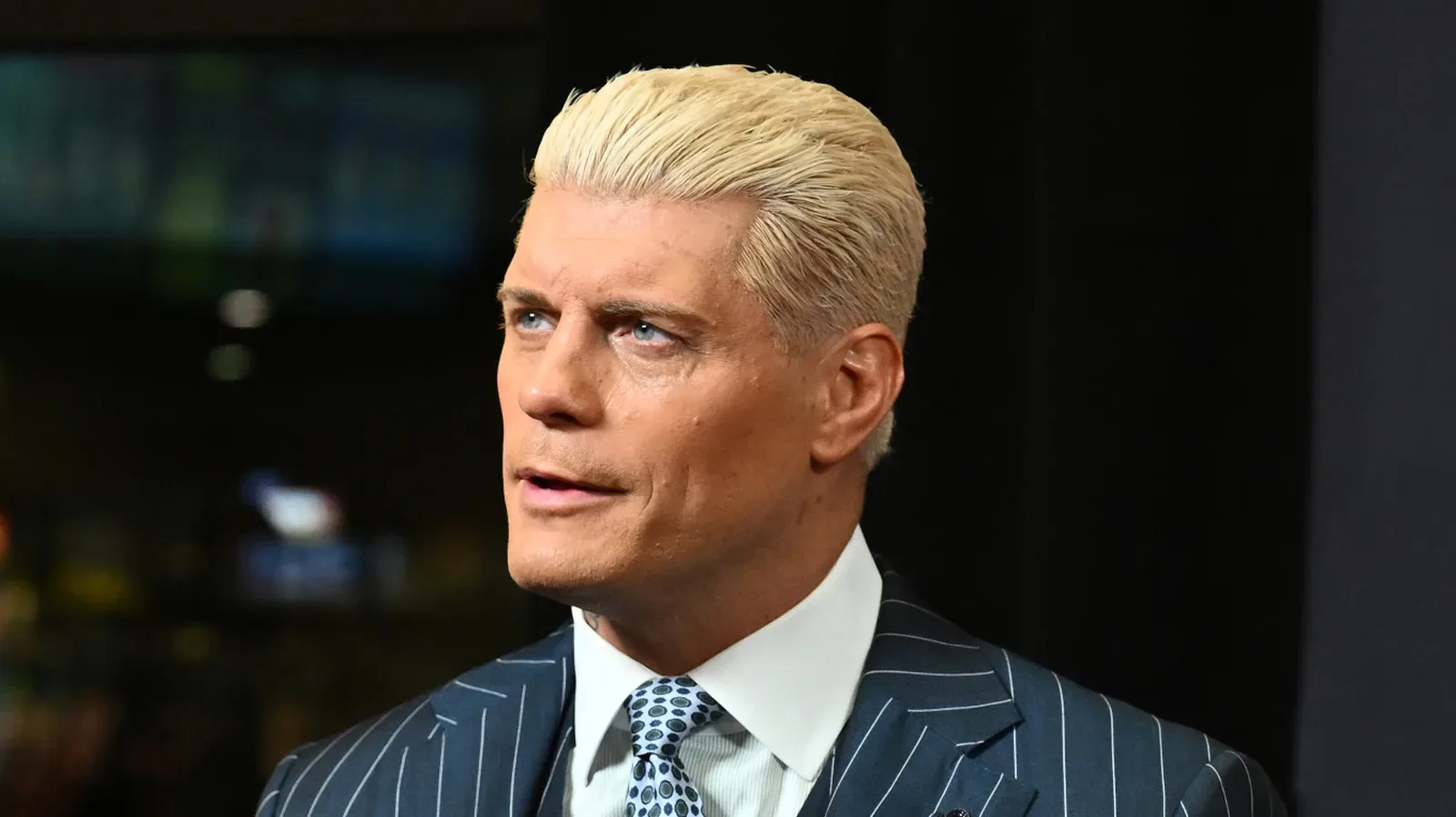
Cody Rhodes has opened up about the lasting effects of the orbital fracture he suffered around WWE WrestleMania 42, explaining that the injury continued to create a legitimate obstacle after the event despite his decision to remain active.
Rhodes and Randy Orton met at WrestleMania 42 in a match that generated considerable discussion, including attention surrounding Pat McAfee's involvement. Yet one of the most striking moments from the match was Orton's punt kick to Rhodes. The kick appeared to connect with Rhodes' face, and Rhodes has now acknowledged that he dealt with what he described as a small orbital fracture in the aftermath.
Speaking on Insight with Chris Van Vliet, Rhodes said he is not completely certain whether the fracture was caused by Orton's punt or by an earlier punch during the match. Regardless of the exact point of impact, he made clear that it was not an issue that immediately disappeared once WrestleMania was over.
“I think we skated by with a little bit of an orbital fracture, and I think I'm mad at myself for doing so, because it's affected my work since,” Rhodes said.
For more background on this topic, read Channing ‘Stacks’ Lorenzo Shares Defiant Update Following NXT House Show Injury.
The revelation puts a different perspective on Rhodes' decision to keep performing after WrestleMania. Injuries are a regular part of professional wrestling, particularly for talent at the top of the card who work physically demanding matches and carry extensive promotional responsibilities. An injury involving the area around the eye, however, carries an especially concerning set of complications. Rhodes said the fracture affected his peripheral vision and that it slowed him down to some degree.
“[It] super slowed down... you know what I mean, [my peripheral vision]. Yeah, to a degree, to a little bit,” Rhodes said. “And I feel like that's... you can't go out there, QB1, and say you're in your prime and you're the best you've ever been, if you're dealing with something that's a bit of a hindrance like that.”
Rhodes' use of the “QB1” comparison illustrates the standard he continues to hold himself to as one of WWE's central figures. He does not simply view being able to appear as enough; he wants to be able to perform at the level expected of someone presented as a leading star. In his view, dealing with impaired peripheral vision represented a hindrance that clashed with that expectation.
At the same time, Rhodes said he has now made it through the situation and is “out of the woods.” He also noted that he reported for duty the night after WrestleMania, a decision that reflects the approach he has taken throughout his career. Rhodes has long cultivated an image built around perseverance, whether that has meant competing through physical pain, embracing demanding schedules, or refusing to surrender momentum when an opportunity is in front of him.
“But at this point, we're out of the woods. I got through it, I showed up the next night,” Rhodes said.
Rhodes Warns Younger Wrestlers Not To Follow His Example
While Rhodes' willingness to push through discomfort may fit the fighter's mentality that fans associate with him, he did not present his decision as a model for younger talent. Instead, he openly characterized his own mindset around serious injuries as “toxic,” acknowledging the potential cost of treating the ability to keep going as an obligation.
That distinction is important. Wrestling has a long history of performers working injured, often because they fear losing a position, letting down an audience, or missing a rare career-defining moment. Modern conversations around athlete health have increasingly challenged that culture. Rhodes did not deny the pull of that old-school mentality, but he did caution aspiring wrestlers against adopting it.
“I'm letting you know, that's not good,” Rhodes said. “If you're a young wrestler, don't do it. Don't. Live to fight another day. I just, I can't. Something about me can't not want to go. I don't know what it is. I love it too much. Maybe it's ego, I don't know. But I just can't not. So yeah, that was a nasty one.”
The comments are unusually candid from a performer who remains in a highly visible role. Rhodes did not frame the decision to work through the fracture as a badge of honor without consequence. He admitted frustration with himself for doing it and directly stated that continuing to work while affected by the injury was not a good choice for a young wrestler to imitate.
There is also a significant difference between recognizing that an athlete has an intense personal drive and endorsing every decision that drive produces. Rhodes' words reflect both sides of that equation. His commitment to WWE and to performing for fans is evident, but so is his awareness that the same commitment can lead someone to push beyond what is advisable.
The Orton Rivalry Moves Toward Crown Jewel
The injury discussion arrives as Rhodes prepares to renew hostilities with Orton. The two are scheduled to face one another in a Last Man Standing match at WWE Crown Jewel next month, adding another brutal stipulation to a rivalry already connected to the WrestleMania 42 orbital fracture.
Last Man Standing matches are designed around endurance and punishment. Victory does not come through a pinfall or submission, but by keeping an opponent down for a referee's 10-count. The format frequently encourages brawling throughout the arena, weapon use, and extended sequences intended to demonstrate that neither competitor can continue. For Rhodes and Orton, the stipulation naturally raises the stakes following their WrestleMania encounter.
It also places added focus on Rhodes' statement that he is now past the lingering effects of the injury. He did not indicate that the orbital issue will prevent him from competing at Crown Jewel, and his remarks suggest he believes he has recovered from the period in which the fracture was affecting his vision. Still, the match represents another physically punishing chapter against the man whose kick has been tied to the injury.
The uncertainty surrounding whether the damage came from the punt or an earlier strike does not change the larger reality: Rhodes left WrestleMania 42 with a facial injury that followed him into subsequent work. In a sport where the line between storyline violence and physical reality can be difficult for viewers to separate, his account is a reminder that even carefully planned matches can produce unintended consequences.
A Personal Admission From One Of WWE's Top Stars
Rhodes' comments also stand out because they offer a more vulnerable assessment than the usual rhetoric surrounding toughness in wrestling. He did not suggest he was invulnerable, nor did he claim that fighting through the problem came without a price. Instead, he acknowledged that he was slowed down, that his peripheral vision was affected, and that he is unhappy he allowed the issue to continue impacting his work.
That honesty does not erase the fact that he chose to keep going. It does, however, provide an important message for fans and performers alike: dedication does not make an injury insignificant. Rhodes can be proud of his resilience while also recognizing that there are times when recovery should take priority.
For now, Rhodes says he has emerged from the ordeal and remains ready for the next collision with Orton. Their Last Man Standing match at Crown Jewel will test the limits of both men, but it will carry additional weight after Rhodes' admission that the WrestleMania 42 encounter left a physical mark that lasted far longer than one night.
As Rhodes continues forward, the story is not merely that he endured an orbital fracture. It is that he has publicly acknowledged the danger in the mentality that led him to work through it. That combination of determination and self-criticism provides a fuller picture of the reigning WWE standard-bearer as he heads into another high-risk battle with one of his most dangerous rivals.
In pictures

Darryl Polo
Darryl Polo is a passionate wrestling fan covering WWE, AEW, TNA and beyond. He loves great rivalries, breakout stars and the moments that keep fans talking long after the bell. How we work.