
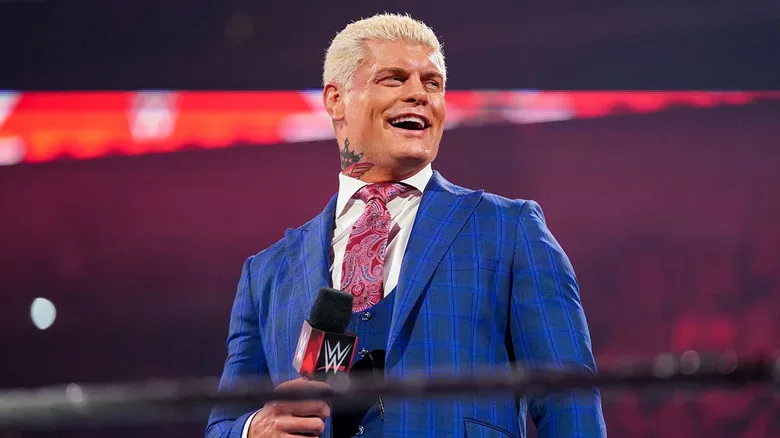
Cody Rhodes says he would be honored to hold the pencil in WWE. Asked on What’s Your Story? With Steph McMahon whether he ultimately wants to lead the company’s creative direction, Rhodes said he often has better ideas for other wrestlers than he does for himself. He also acknowledged that he has failed in a creative position before and said the experience made him better equipped to think about the job.
Rhodes has spent the past few years as one of WWE’s top wrestlers and has worked in different roles over more than two decades in the business. His answer, though, wasn’t a pitch to take over from Paul “Triple H” Levesque. It was an explanation of why he would welcome the responsibility and what he thinks it would take to handle it. He put particular emphasis on having the right people around whoever makes the final call.
Rhodes says failure has shaped how he thinks about booking
“I have a tendency to come up with better ideas for other people than myself, and I have failed at this position before. Genuine failed. That failure is incredibly helpful. That is the greatest teacher. I would be honored to be in that spot.”
To “hold the pencil” is wrestling shorthand for having booking authority: deciding which matches and rivalries to present, who wins, and how those outcomes shape what comes next. It doesn’t mean writing every line or coming up with every angle. The distinction is that a booker has to decide which ideas fit together and take responsibility for the result. A wrestler can pitch a great segment for next week; the person holding the pencil still has to decide what that segment does for both wrestlers a month later.
For more background on this topic, read Zilla Fatu Sets NXT Championship Goal Ahead of John Cena Classic.
That distinction gives Rhodes’ comment about having better ideas for others some weight. There’s a natural incentive for any wrestler to focus on what will make their own program work. Booking the show means stepping back far enough to see where an idea might do more for somebody else. A win that would be routine for an established headliner, for example, could give a wrestler lower on the card a reason to ask for a bigger match. The finish itself isn’t the whole idea. What each wrestler can do with it afterward is part of the decision.
Rhodes didn’t identify a specific decision or storyline when he brought up his past failure. His point was that he considers the experience useful, not that he wanted to retry an old booking call. There’s a difference between saying a pitch didn’t land and saying you failed at the job. Rhodes used the stronger language and put it right alongside his willingness to do the work again.
Why Rhodes would want a team around him
For all that the expression “holding the pencil” puts the focus on one person, Rhodes described a job that depends on more than one set of ideas. He talked about having a “proper cabinet” and pointed to the size of the operation Levesque oversees. In Rhodes’ telling, the right group can put the person in charge in a position to succeed. The reach of WWE’s programming is one reason he sees the stakes as so high.
“I mean, Hunter is in charge of–We are on Netflix. We’re on ESPN. We are fully global.”
Rhodes invoked Netflix and ESPN to make a point about the scale of the job, not to spell out a different approach for either platform. WWE’s biggest matches may get the most attention, but the creative work includes giving viewers a reason to care about those matches before they happen. It also includes having somewhere to go once a rivalry ends. The closing image of a major show can be right for that night without necessarily making the next week’s television easier to book.
A good team can help test those decisions before they’re made. Someone focused on the main event might see the value in keeping a champion strong for another month. Someone looking further down the card might notice that the challenger has already lost too many consequential matches for another defeat to have the intended effect. Neither observation decides the finish on its own, but the person making that call benefits from hearing both. Rhodes didn’t name people he would want in those roles or lay out a proposed creative structure. He made the broader case that the decision-maker needs good advice.
An interest in the job, not a bid for it
The question McMahon put to Rhodes was about what he ultimately wants, not about an immediate change in WWE. Rhodes spoke about Levesque as the person in charge and didn’t give a timetable for ever taking on the role himself. His answer establishes that he would welcome the opportunity; it doesn’t establish that WWE has offered it or that a succession plan is in the works.
Rhodes has also discussed Levesque’s booking in a separate interview, but the focus of this exchange was different. It wasn’t about whether he agreed with a particular finish or would have taken a story in another direction. It was about whether he wants to be the person who has to make those choices across the card. That means weighing a main-event program against the needs of wrestlers who may not yet have had a chance to show they can carry one, and deciding which ideas need more time and which have already run their course.
Rhodes’ time as a headliner gives him the performer’s view of those decisions. His answer suggested that he doesn’t confuse that perspective with knowing what’s best for the entire show. The two things he volunteered were that his strongest ideas often involve somebody else and that he knows from experience what it feels like to get the responsibility wrong. He’d be honored to have the pencil, but he made a point of saying who would need to be there with him: people whose judgment he could trust when his own idea wasn’t the best one in the room.

Darryl Polo
Darryl Polo is a passionate wrestling fan covering WWE, AEW, TNA and beyond. He loves great rivalries, breakout stars and the moments that keep fans talking long after the bell. How we work.