Cody Rhodes nearly returned to WWE television with a much different look after his WrestleMania 41 loss to John Cena.
Rather than appearing in the familiar Nightmare Family tracksuit that has become closely associated with his modern WWE presentation, Rhodes considered wearing all black and topping the outfit with a black cowboy hat. The idea was intended for the moment he came back from several months away and resumed his pursuit of Cena. In the end, however, the visual never made it to television after Bruce Prichard voiced concerns that the hat would distract from the larger purpose of the return.
Rhodes discussed the unused concept while speaking with Simone Johnson on What Do You Want To Talk About?. The revelation offers a look at the kind of detailed presentation choices that can be considered before a major WWE return, particularly for a performer whose entrance, wardrobe and on-screen identity have all been important elements of his run at the top of the company.
The Return Concept Cody Rhodes Considered
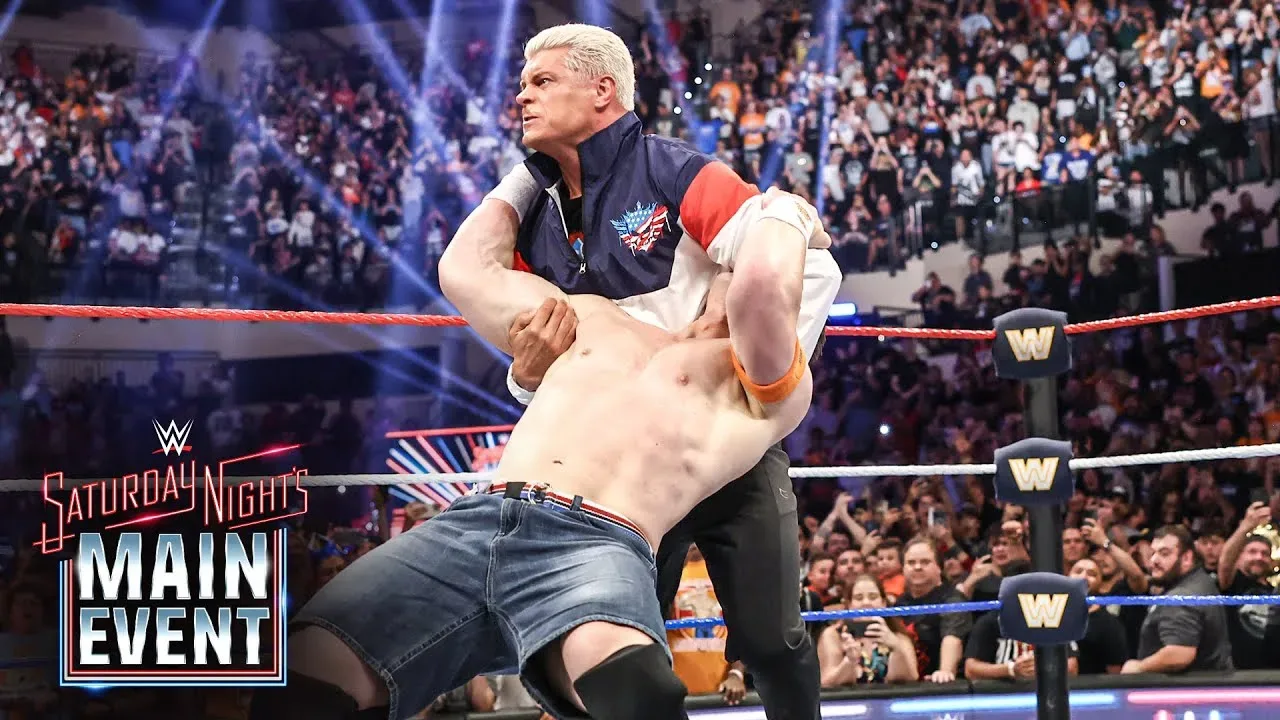
After losing the Undisputed WWE Title to Cena at WrestleMania 41, Rhodes was absent from WWE programming for months. He returned at WWE Saturday Night’s Main Event in May, once again setting his sights on Cena. Rhodes ultimately came back in his standard tracksuit, maintaining the look fans immediately recognize as part of the American Nightmare character.
For more background on this topic, read Final Teams Confirmed for 2026 Dusty Rhodes Tag Team Classic Field.
Before that decision was finalized, Rhodes considered taking the visual presentation in a darker direction.
“How would you feel about my character with a cowboy hat?” Rhodes asked Johnson. “I was coming back at a show, I believe it was Logan Paul and John Cena in the ring, and I was jumping them after I had been away. I thought about wearing all black with a black cowboy hat.”
The planned context mattered. Rhodes was not discussing a minor backstage segment or a one-off promotional appearance. He envisioned the hat as part of an aggressive return angle involving Cena and Logan Paul, designed to immediately re-establish him after his absence. A black outfit would have differentiated the moment from his usual presentation and signaled that the defeat at WrestleMania 41 had potentially changed his outlook.
In wrestling, first impressions after a lengthy absence are often deliberate. A return can reaffirm a performer’s established image, introduce a fresh chapter, or tease a more substantial character evolution. Rhodes’ idea appears to have fallen somewhere between those options: he was still Cody Rhodes, but with a new visual feature meant to add another layer to the comeback.
The Personal Logic Behind the Cowboy Hat
Rhodes did not present the hat as a random piece of wardrobe. He explained that he had personal reasons for believing the cowboy imagery could fit him.
“My logic in it was my dad quarter-horsed; they are from Austin. I read this dumb horse book as a kid. I’m from Georgia. I have some ownership of it.”
The explanation connects the proposed look to Rhodes’ family history and upbringing. His father, Dusty Rhodes, remains one of the most influential figures in professional wrestling history, and Cody has often incorporated that legacy into his own journey. The quarter-horse connection gave him a personal point of reference, while his Georgia roots made the Southern-inspired imagery feel less disconnected from his background.
That did not necessarily mean the concept would have translated on camera exactly as Rhodes envisioned. Wrestling attire must communicate quickly, especially in a surprise return. A single accessory can sharpen a character’s identity, but it can also create associations that were never intended. A cowboy hat could have suggested a new persona direction, prompted comparisons to other Western-influenced wrestling characters, or simply pulled attention away from the confrontation with Cena and Paul.
Rhodes’ description of the look as all black is equally notable. His current WWE persona has frequently used polished suits, patriotic colors, elaborate entrance gear and the highly recognizable Nightmare Family branding. Black clothing and a black cowboy hat could have created a stark visual contrast. Whether it would have read as more serious, more hostile, or simply unfamiliar is impossible to know because the concept remained behind the scenes.
Bruce Prichard Made the Final Call
Rhodes said he sought opinions from a small circle of people whose judgment he values. Most of them approved of the idea. One key dissenting voice, however, proved decisive.
“Three out of the four guys that I speak to about everything gave me a thumbs up,” Rhodes said. “It was just one who said, ‘I don’t think that’s going to work. I think that’s going to be distracting.’ The one who told me that it was going to be distracting and made the decision ultimately was Bruce Prichard.”
Prichard’s feedback was straightforward: the hat risked becoming the focus rather than serving the story. For a return built around Rhodes targeting Cena, clarity was likely the priority. The audience needed to understand immediately who was back, who he was confronting and why the moment mattered. Introducing an unexpected accessory might have invited fans to wonder whether a major reinvention was underway instead of concentrating on the central rivalry.
The decision also reflects the collaborative nature of WWE character presentation. Rhodes brought forward an idea rooted in his own instincts and experiences. He discussed it with trusted people, received mostly positive reactions, and then accepted an opposing opinion from someone with significant creative influence. The final version of the return retained the visual continuity of the Nightmare Family tracksuit.
That continuity can be particularly valuable for a star like Rhodes. His WWE entrance has become highly structured, from the music and crowd response to the wardrobe and physical mannerisms. Altering one prominent detail could be effective if it supports a larger storyline, but an isolated change carries a different risk. Prichard apparently believed the cowboy hat would be more distracting than additive in that specific setting.
Rhodes Is Open About His Creative Ideas
The cowboy hat pitch is also consistent with Rhodes’ willingness to discuss his own creative process candidly. Elsewhere in the conversation, he acknowledged that many of his ideas do not land. Rhodes said that nine out of ten of his ideas are bad, a self-aware assessment that puts the abandoned hat concept in perspective.
That attitude is significant because it suggests Rhodes does not view every personal creative pitch as something that must be protected or pushed through unchanged. A performer can be invested in an idea and still recognize the value of criticism. In this case, Rhodes had a personal rationale, support from three people in his inner creative circle, and a clear scenario for the debut of the look. Yet he still described Prichard as the person who made the ultimate decision and explained why the concept was dropped.
Professional wrestling is built on bold ideas, and not all of them need to reach the screen. Some concepts are useful simply because they help performers explore the tone of a story or the emotional state of a character. Rhodes considering black attire and a cowboy hat after losing the Undisputed WWE Title indicates that he was thinking through ways to make his return feel distinct. The eventual decision to keep his established image indicates that WWE saw greater value in recognition and focus.
A Look That Will Remain a What-If
Rhodes’ May return will be remembered for what it accomplished in the ongoing conflict with Cena, not for an unused piece of attire. Still, the black cowboy hat has become an interesting behind-the-scenes what-if. It was a concept with family connections, regional logic and a clear intention to make a returning Rhodes look different after months away.
At the same time, Prichard’s objection highlights why seemingly small visual decisions can matter. A hat is not just a hat when it is introduced during a major return angle involving top WWE names. It can alter the audience’s interpretation of a character, potentially creating questions that the storyline does not intend to answer.
For Rhodes, the familiar tracksuit won out. The American Nightmare returned as the audience knew him, immediately targeting Cena rather than asking viewers to decipher a new aesthetic. The rejected cowboy hat may have had an understandable personal foundation, but it was ultimately judged to be an unnecessary distraction at a moment when the rivalry itself needed to remain front and center.
Darryl Polo
Darryl Polo is a passionate wrestling fan covering WWE, AEW, TNA and beyond. He loves great rivalries, breakout stars and the moments that keep fans talking long after the bell. How we work.