
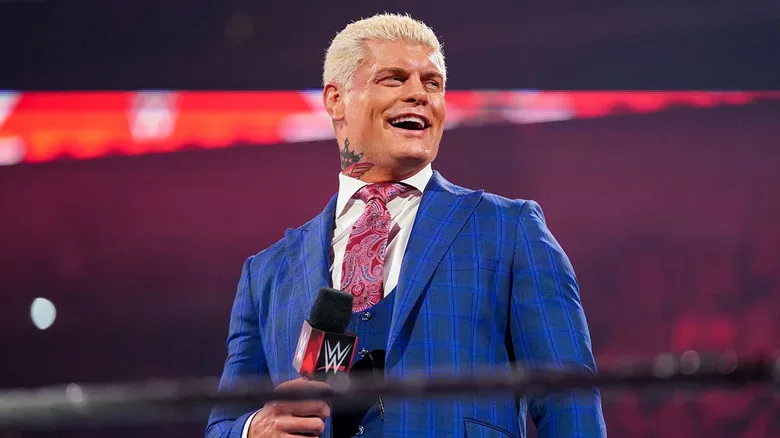
Cody Rhodes has offered a strong endorsement of one part of WWE life that rarely receives the same attention as championship matches, television storylines or the demands of the touring schedule: catering.
Speaking on the Double Coverage Podcast, Rhodes described WWE’s backstage food operation as exceptional and said he believes it stands above what is available elsewhere in the entertainment business. The former Undisputed WWE Champion framed the service as an extensive all-day setup designed to support the large number of people required to put on a WWE event.
“WWE show, we have an unreal catering situation,” Rhodes said. “There’s no meal ticket. It’s just open all day.”
View the referenced post on Instagram
Rhodes’ comments shed light on an aspect of live-event production that is generally invisible to the audience. A WWE television taping or premium live event requires far more than the wrestlers seen in the ring. Production crews, referees, announcers, medical personnel, security, operations staff, office employees and other traveling personnel all contribute to the presentation. Rhodes said the food offering is built on a scale suited to that kind of operation.
For more background on this topic, read Sheamus Says He Is Taking a ‘Long Vacation’ During Dortmund-Bayern Watch Party.
In his description, WWE catering is not limited to a single preset meal or a restricted time window. Rhodes noted that the available food ranges from practical nutritional staples to changing specialty options, giving talent and staff a mix of choices throughout the day.
“I don’t know who it’s made for because some of it’s really athletic-based,” Rhodes said. “There’s your chicken, there’s your rice, and then other stuff is just today’s taco day. It’s all over the place and they can make you anything either.”
That balance is particularly notable in a company where performers have vastly different travel routines, dietary preferences and physical requirements. WWE talent are responsible for maintaining their own conditioning, but a long production day can make accessible food an important practical consideration. Rhodes specifically pointed to the availability of protein-and-rice-style meals while also emphasizing that the menu does not appear to be confined to a narrowly athletic approach.
He also acknowledged that custom requests can be accommodated, while making clear that he does not view that as something to take for granted. “You don’t wanna be one of those guys who asks for stuff,” Rhodes said, before noting that there are options that can be prepared when needed.
The remarks came from a wrestler with experience in multiple parts of the modern industry. Rhodes has worked in a variety of environments during his career, including major television productions and independent wrestling settings, making his enthusiastic assessment of WWE’s current setup especially direct. Rather than simply calling the food good, he described himself as “very spoiled as far as catering.”
For Rhodes, the size of WWE’s backstage meal service is inseparable from the size of the operation itself. He said it is intended to feed “a small army” of WWE production personnel. That phrase underlines the logistics behind weekly programming and major events: the workforce supporting a WWE show extends well beyond the names who appear on camera.
Food service is not normally a central public talking point in professional wrestling, but it is part of the daily experience for a touring company. Talent can arrive at an arena well before bell time for travel, meetings, preparation, rehearsals, media commitments and match planning. Production personnel may have even earlier call times depending on the venue and the requirements of the show. An all-day food setup can therefore serve people working different schedules rather than only those sitting down for one designated meal.
Rhodes’ answer also illustrates the contrast between the audience’s view of a WWE event and the larger workplace operating behind the scenes. Fans see a finished broadcast, complete with entrances, lighting, music, commentary and matches. Before those elements come together, however, a substantial number of people have already spent hours in the building. Catering is one of the basic services that helps support that workforce through a demanding event day.
While Rhodes did not present his remarks as a broad discussion of WWE’s travel and production policies, his praise was unambiguous. He said he does not believe there is a better catering operation anywhere in the world and delivered that opinion with the kind of definitive language usually reserved for a competitive claim.
“I don’t think there’s a better catering in the world than WWE’s,” Rhodes said. “I’m gonna put our flag in the sand. The best catering in all of entertainment is WWE.”
The declaration is a lighthearted one, but it also reflects how Rhodes views the company’s ability to provide for its talent and staff on show days. WWE’s roster includes performers with different training methods and nutritional needs, while its events also bring together a broad traveling and local crew. A menu with both straightforward fitness-focused selections and more varied daily offerings can accommodate that range without turning meals into another logistical problem for those working the show.
Rhodes did not identify a single meal as his favorite, nor did he offer a ranking of specific dishes. His praise focused instead on volume, variety, flexibility and availability. The absence of meal tickets, in particular, stood out to him as a sign that food is simply accessible during the day rather than being handled as a limited perk.
That accessibility matters in an environment where schedules can change quickly. WWE events involve live television timing, travel variables, venue restrictions and the possibility of last-minute creative or production adjustments. Rhodes did not tie catering directly to any of those factors, but his description of food being available throughout the day speaks to the usefulness of an operation that can serve people on different timetables.
His comments are also a reminder that quality-of-life details can shape how performers experience a demanding schedule. Professional wrestling is a physically intensive field, and the roster’s work does not begin only when a match is announced. Preparation, recovery and travel are continuing parts of the job. Rhodes’ admiration for WWE catering was rooted in the simple but meaningful fact that the company provides ample choices in one place while people are preparing for work.
There was no storyline revelation, match announcement or championship challenge attached to the podcast appearance. Instead, Rhodes used the conversation to highlight a part of WWE’s event-day infrastructure that is easy for viewers to overlook. His conclusion left little room for doubt: in his view, WWE sets the standard when it comes to feeding the people who make its shows possible.
For a performer who has competed at the highest level of the company, Rhodes’ praise may be a small detail in the larger WWE landscape. But it offers a useful glimpse into the scale of a modern wrestling production and the everyday support systems behind it. On the subject of catering, Rhodes believes WWE is not merely doing well—it is leading the entire entertainment industry.

Darryl Polo
Darryl Polo is a passionate wrestling fan covering WWE, AEW, TNA and beyond. He loves great rivalries, breakout stars and the moments that keep fans talking long after the bell. How we work.