
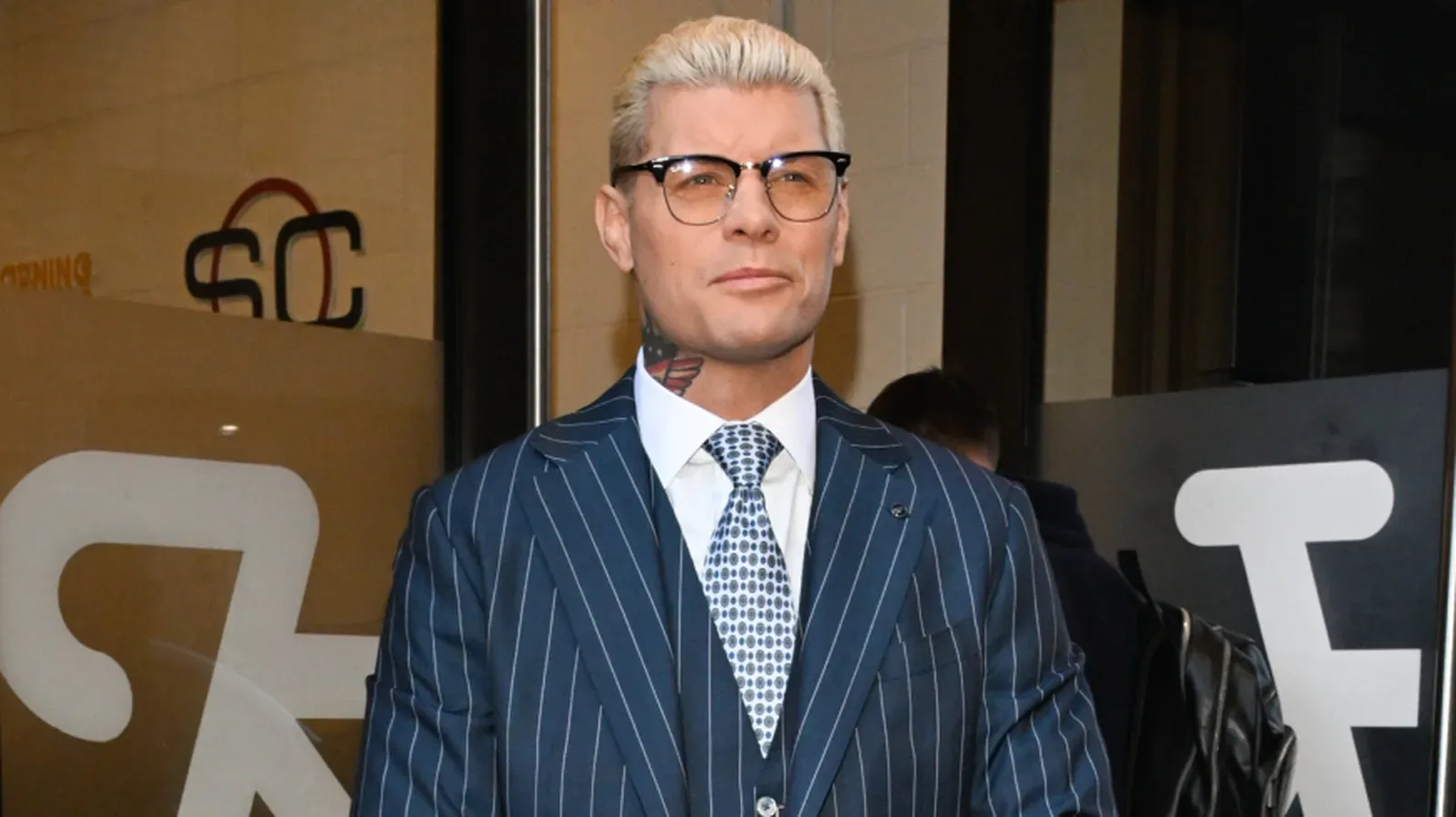
Cody Rhodes has again addressed the possibility of one day entering politics, outlining an approach that would sharply contrast with the confrontational tone often seen across social media and modern campaigns.
During an appearance on The Nikki & Brie Show, Rhodes spoke candidly about what frustrates him about political conversation online. The WWE star has previously expressed interest in potentially serving in Georgia, and he said any campaign he pursued would be built around a simple idea: treat an opponent with respect, even while clearly disagreeing with that person’s platform.
Rhodes, one of WWE’s most recognizable active performers and a former WWE Champion, believes political discourse has drifted away from arguments over ideas and toward attacks on a candidate’s private life. Rather than escalating that kind of exchange, he said he would aim to become what he described as an overwhelmingly positive “babyface” toward the other candidate.
“Social media, it's just — guys, what are we doing? We used to have debates where they just say, like ‘His policy s**ks.’ And now it's just like, ‘Oh, you heard he was divorced?’” Rhodes said. “Why does everything — why do we nuke each other? Everything gets to the nuke.”
For more background on this topic, read The Rock Honored With USC School of Dramatic Arts’ Multihyphenate Award.
In professional wrestling, a babyface is a heroic figure intended to earn the audience’s support. Rhodes has spent much of his career embracing that role, particularly during his current run at the top of WWE. His political concept would adapt that presentation into a campaign setting: praise the person across from him, reject personal insults, and keep the disagreement centered on policy.
“I said if I ever run for any type of office, I'm just going to overly babyface the other candidate,” Rhodes said. “I’m ready. ‘Yeah, he said I was terrible and I had a lisp and all this.’ I’m like, ‘This guy’s awesome. Lovely. I just think his policy isn’t good.’”
A Longstanding Ambition Beyond Wrestling
Politics has not been a passing topic for Rhodes. Earlier in 2026, he discussed the two major dreams he had while growing up: becoming President of the United States and becoming a wrestler like his father, Dusty Rhodes.
He has unquestionably achieved the latter ambition. Rhodes followed one of the most influential performers and talkers in wrestling history into the industry, but his own path was far from straightforward. He built a name in WWE, departed the company, helped shape a major alternative wrestling movement, and ultimately returned to WWE to become one of the defining stars of his generation.
That journey has made Rhodes a familiar face not just to longtime wrestling viewers, but also to a wider mainstream audience. His identity as “The American Nightmare,” his highly visible position on WWE programming, and the legacy of the Rhodes family have all contributed to a public profile that naturally invites questions about possible life after wrestling.
Still, Rhodes has also acknowledged that the presidential part of his childhood vision may no longer be realistic. A few years ago, he described the idea of becoming President as a dream that may have been extinguished, calling that possibility “a terrible thing.” He specifically pointed to his prominent neck tattoo as a potential obstacle in a presidential campaign.
The tattoo remains among the most distinctive elements of Rhodes’ look. While it has become inseparable from his wrestling presentation, he has recognized that a highly visible tattoo could be judged differently in national electoral politics. His comments have not indicated that he has abandoned all political interest, however. Instead, they have left open the prospect of seeking some form of office in the future, particularly in Georgia.
Policy Over Personal Attacks
Rhodes’ comments on The Nikki & Brie Show did not announce a candidacy, identify a specific office, or establish a timeline for a run. They were instead a reflection of how he believes a candidate should communicate in a political environment he sees as increasingly hostile.
The central point of his proposed strategy is not avoiding disagreement. Rhodes explicitly framed policy as the area where a campaign should draw its contrasts. In his example, he would tell voters that an opponent is “awesome” and “lovely,” while maintaining that the opponent’s policy is not good.
That distinction is important. Rhodes was not suggesting that candidates should conceal differences or decline to make an argument for their own positions. He was arguing for a style of advocacy that refuses to equate political opposition with personal destruction.
For a performer whose profession relies on emotional conflict, the approach is notable. Wrestling is built around rivalries, promos, insults, and clear opposition between characters. Yet Rhodes’ view is that the political arena should not simply copy the most destructive elements of a feud. In his framing, a candidate could still be forceful, competitive, and direct without reducing another person to a target for ridicule.
The idea also fits the public character Rhodes has cultivated in WWE. His modern presentation has largely been grounded in determination, family legacy, resilience, and a belief that difficult goals can be pursued openly. The character’s connection with fans has come from both his success and the setbacks he endured on the route to it.
Those themes may help explain why Rhodes sees positivity as more than a campaign gimmick. His remarks suggest he views it as a response to what he considers an exhausting political culture—one in which personal allegations and viral hostility can overshadow substantive debate.
No Immediate Campaign Announced
There is no indication that Rhodes is preparing to leave WWE for politics or that he has made a formal decision to run for office. His comments should be understood as a discussion of a possible future path, not a declaration of a campaign.
At present, Rhodes remains deeply associated with WWE’s top tier. Any eventual political decision would also involve questions that have not been answered publicly, including which office he might seek and when he might consider doing so. His previous interest in Georgia provides context, but it does not establish a specific plan.
What Rhodes has made clear is that politics remains part of his long-term thinking. He has spoken openly about it over several years, even while acknowledging reasons his original childhood aspiration of reaching the presidency may be out of reach. His latest comments add another layer by explaining how he would want to conduct himself should he ever become a candidate.
Rather than defining a future campaign through outrage, Rhodes says he would prefer a message rooted in decency toward an opponent and a pointed debate over governing priorities. Whether that philosophy ever moves from a podcast discussion to a ballot remains uncertain. For now, it offers a revealing look at how one of WWE’s biggest stars imagines applying the language of a wrestling babyface to a world far removed from the ring.
In pictures

Darryl Polo
Darryl Polo is a passionate wrestling fan covering WWE, AEW, TNA and beyond. He loves great rivalries, breakout stars and the moments that keep fans talking long after the bell. How we work.