
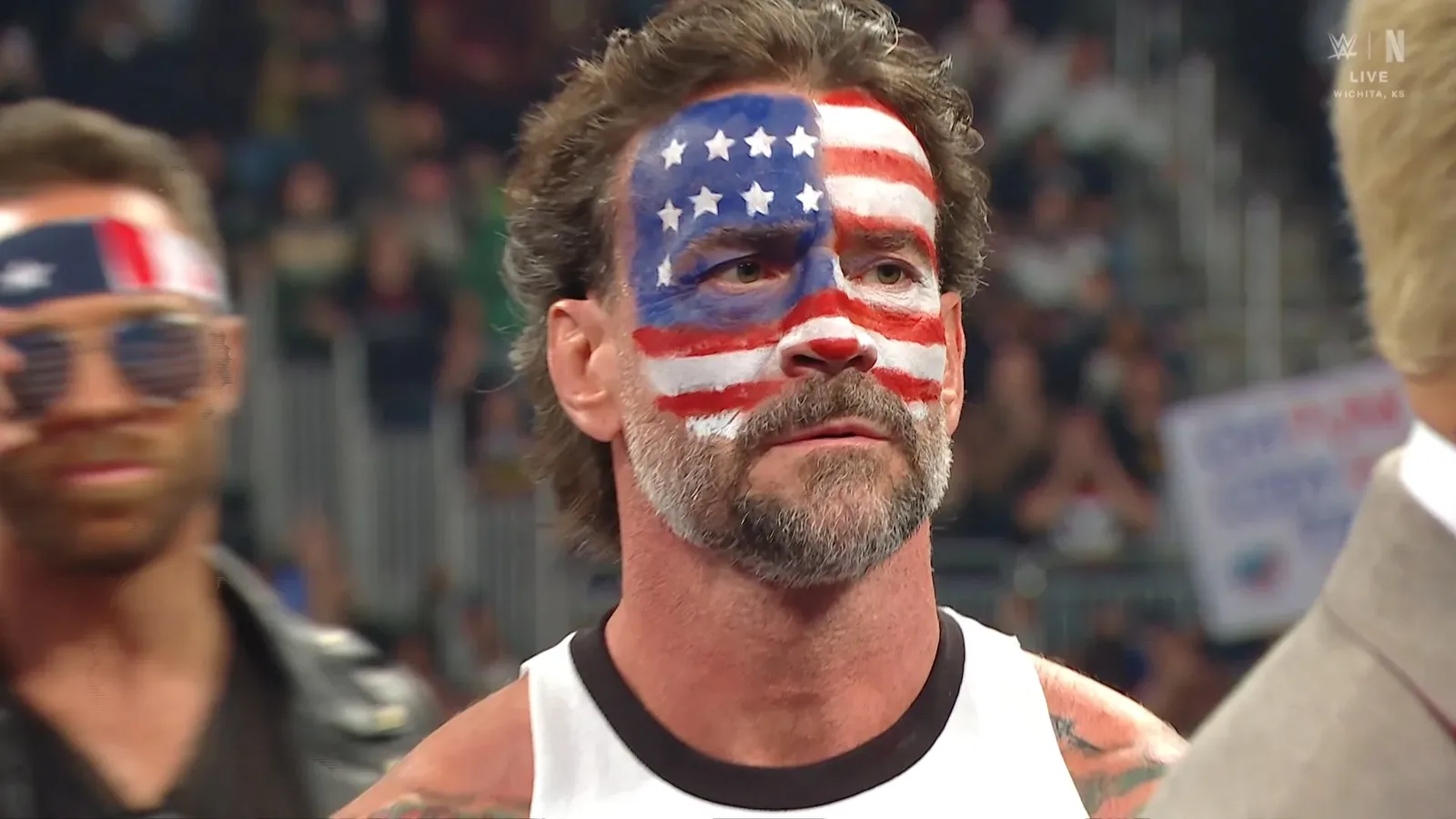
CM Punk wants fans to take Team USA vs. Team Mexico seriously as a wrestling match without making it more serious than it needs to be. WWE Survivor Series: War Games is set to feature the two sides in a traditional Survivor Series match, and Punk sees the national-team setup as a chance to revisit a familiar kind of wrestling rivalry. The flags give both teams something to rally around, but he wants the focus to stay on the competition and the people in the ring.
Speaking on the Wingmen podcast, Punk called the matchup a throwback. He explained that the premise, for him, comes down to pride in representing a country and the responsibility that comes with being on a team. Each side wants to win and raise its flag, but getting there means helping the wrestlers on your own side. That distinction matters in a traditional Survivor Series match, where losing a teammate changes the contest for everyone who remains.
CM Punk wants national pride without the political fight
Punk acknowledged that his explanation of the premise might sound corny, but he didn't shy away from it. He wants to lean into the straightforward appeal of USA versus Mexico while offering an alternative to the political conflict he feels people have been surrounded by lately.
“I think too often, especially lately, we have been immersed in this political warfare type thing and I’m just trying to do something a little bit light hearted and have fun with it.”
For more background on this topic, read Royce Keys welcomes The Rock to WWE Survivor Series but wants him out of WarGames.
That's not an argument for taking the flags out of the match. Punk specifically talked about wanting to win so his team could raise its flag. The difference is in what he wants that moment to mean: one side got the better of the other in a wrestling ring. A fan can get behind Team USA or Team Mexico and care about which side is left standing without treating the result as a statement about anything beyond the match.
His comments describe his own approach rather than laying out how every wrestler will play the rivalry. National pride is the hook, but Punk put at least as much emphasis on sharing the ring with people he respects. Asked about the concept, he talked about working with wrestlers he considers legends and giving the crowd in Houston a show. He also pushed back on the idea that he was looking for a fight within his own team.
“I’m not looking to fight any of my teammates, I’m looking to get in there with who I think are a bunch of legends and put on a show for everyone in Houston.”
Why the traditional Survivor Series format fits the idea
Although War Games is in the event's name, Team USA vs. Team Mexico is set for a different match type: the traditional Survivor Series elimination match. In that format, an elimination isn't the end of the match unless it removes the last wrestler on a side. The team that loses a member has to carry on short-handed, and the advantage can change again with the next elimination. The flags tell viewers who is on which side; the format makes it easy to follow what each side needs to do.
That helps explain why Punk spent time talking about being there for his teammates. In a regular tag match, the first fall can settle the contest. In a Survivor Series match, a wrestler can score an elimination and still have plenty of work ahead, or watch a teammate go out and have to make up the difference. A whole team can contribute to a win even if only one of its members is still in the match at the end. The format gives Punk's idea of team pride a clear payoff without requiring a more complicated premise.
It also leaves room for individual performances without losing track of the team result. The wrestler who scores a key elimination doesn't necessarily have to be the one who survives, and a wrestler who goes out early can still have changed the balance before leaving. For a match Punk described in terms of getting in the ring with legends, that's part of the appeal: the audience can look forward to particular exchanges while still paying attention to which team is getting closer to the win.
For longtime Survivor Series viewers, the elimination rules are themselves part of the throwback. On a card billed around War Games, a traditional team match brings back the question that defined the earlier format: who survives? Giving the teams a national identity adds a clear visual and emotional stake, but the result still comes down to the same thing it would in any traditional Survivor Series match: which side can put away all of its opponents before it runs out of wrestlers.
Punk also recalls being fined over a 2013 John Cena piledriver
The Wingmen interview also touched on a much older WWE match. Punk said he was fined for delivering a piledriver to John Cena in 2013. That was a separate recollection, not an indication of anything planned for Survivor Series. The point Punk shared was that the move carried a consequence for him after the match.
The Cena anecdote looked back at one specific moment between two wrestlers. Punk's Survivor Series comments were about a different challenge: getting a match with two teams and a broad premise across to a live audience. He didn't use the interview to predict who would win or lay out how the eliminations would go. He instead explained what he wants to bring to the match and why the national-team setup appeals to him.
For Houston, the pitch is simple. Two teams arrive with a flag they want to raise, and the elimination format gives the crowd a way to see either side gain or lose ground as the match goes on. Punk wants the wrestlers to compete for that win and the audience to enjoy picking a side. In his telling, the rivalry doesn't need to reach beyond the ring to give both teams something worth fighting for on the night.

Darryl Polo
Darryl Polo is a passionate wrestling fan covering WWE, AEW, TNA and beyond. He loves great rivalries, breakout stars and the moments that keep fans talking long after the bell. How we work.