
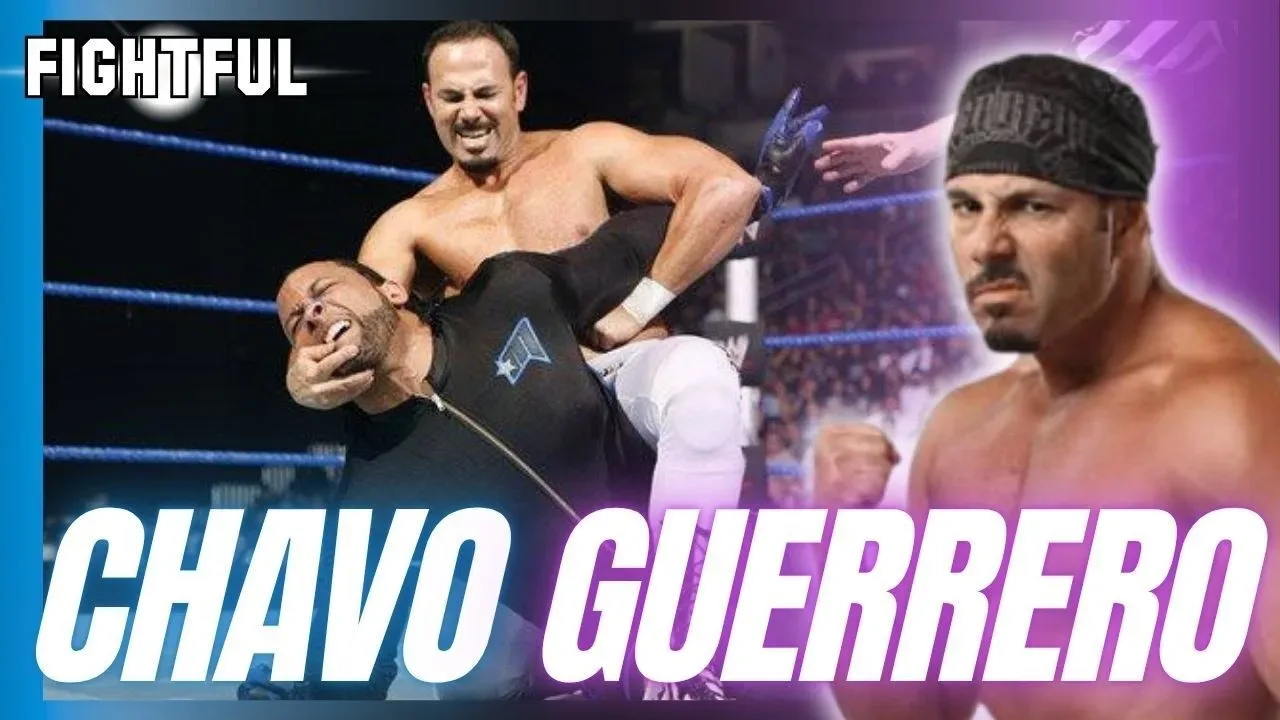
Chavo Guerrero has reflected on the formative creative process behind Lucha Underground, explaining that the promotion’s now-celebrated cinematic presentation did not arrive fully polished from the beginning.
For many fans, Lucha Underground stood apart because it approached wrestling television with a visual language that felt notably different from a conventional weekly wrestling program. Its backstage material, character scenes, and overall atmosphere became a major talking point as audiences began to embrace the show. Guerrero, who was among the early figures involved with the project, said that the path to finding that style involved a rough start, a change behind the camera, and a realization among the talent that they had to match the level being established by the production team.
Guerrero said the company was still trying to define exactly what it was during its initial run of filming. He recalled that production on the first season was continuing even after the first episode had already aired, an unusual but familiar process in certain television environments.
“We still really didn’t know what it was,” Guerrero said. “We were still filming the first season when the first episode aired, that happens sometimes in Hollywood.”
For more background on this topic, read NWA Powerrr Results: Country Gentlemen and Hardway Retain Titles on November 14.
That uncertainty extended to the original backstage vignettes. Guerrero was candid in his assessment of those early efforts, saying they initially failed to achieve the dramatic, visually distinctive effect the promotion would later become known for.
“At first, they started filming these backstage vignettes and they kind of sucked,” Guerrero said. “They weren’t really that good.”
The key shift, Guerrero explained, came when Skip Chaisson joined the process as the backstage vignette director. Chaisson had been brought in by Robert Rodriguez, and Guerrero credited him with fundamentally changing the feel of the material. Rather than treating the segments as standard wrestling-TV inserts, the creative approach moved in a more film-like direction.
Guerrero described the impact in especially direct terms, saying Chaisson made the material feel like a film and that the cinematography became “so crazy.” He also pointed to the use of color treatment resembling a comic-book aesthetic as an important part of the transformation. The result was a presentation that gave Lucha Underground an identity beyond the matches themselves.
That distinction mattered because the vignettes were not merely transitional pieces between bouts. They helped establish mood, frame personalities, and present the world around the wrestlers as something separate from the familiar locker-room or interview-set formats associated with much of wrestling television. Guerrero’s comments suggest the company discovered that approach through experimentation rather than beginning with a fixed, complete blueprint.
Learning the Production Side of the Business
Guerrero also revealed that he was included in aspects of the editing process. That involvement gave him an opportunity to learn more about how the visual storytelling was being assembled, while also allowing him to see how much the production decisions could affect the audience’s understanding of a character or segment.
In wrestling, performers are accustomed to carrying much of the storytelling responsibility themselves through their physical work, promos, entrances, reactions, and interactions with opponents. Television production can either support that work or limit it. In this case, Guerrero saw a production team developing a style ambitious enough that the wrestlers needed to adapt their own approach to keep pace.
After watching the first episode at home, Guerrero said he gathered the wrestlers together once filming resumed. His message was that the usual relationship between a wrestling production and its performers had been reversed. Rather than production struggling to catch up with the action and ideas generated by the talent, he believed the talent now needed to rise to the standard being set by the show’s presentation.
“Usually, it’s production trying to keep up with us,” Guerrero recalled telling the roster. “We have to step up our game and keep up with that production.”
That observation speaks to the unusual demands of a project built around a highly stylized television identity. A cinematic visual approach can amplify a performer’s work, but it can also demand more specificity. Wrestlers have to understand the tone of the scene, the importance of facial expressions and timing, and the larger character story being communicated through editing, framing, and atmosphere.
Guerrero’s account also highlights why the eventual visual direction became such a central part of Lucha Underground’s appeal. The production did not simply provide a backdrop for the wrestlers. It created an environment that challenged them to think about their roles in a broader storytelling context.
An Audience That Needed Time
Guerrero remembered that the earliest online reaction was not universally enthusiastic. He said some viewers were unsure what to make of the show at first because its style was so different. That response was understandable: wrestling fans often bring expectations shaped by the formats they watch week after week, and Lucha Underground was asking its audience to engage with a presentation that did not immediately resemble those norms.
He characterized the early reaction as cautious rather than dismissive. In Guerrero’s recollection, there was a willingness among viewers to give the project time, even as they questioned whether the unconventional concept would work.
By the third, fourth, and fifth episodes, Guerrero said, the response had changed significantly. He believed fans had become fully invested by that point. The recollection offers an important reminder about the value of consistency in an experimental wrestling product: audiences may not always immediately understand a new creative language, but they can respond strongly once that language becomes clear and the execution improves.
For Lucha Underground, the early adjustments to the vignettes appear to have been crucial to that process. A different look alone would not have been enough. The style needed to serve the characters and the stories, while the performers needed to commit to the tone that the production was building. Guerrero’s description suggests those elements gradually came together during the first season rather than being perfected before viewers ever saw the program.
Why Guerrero’s Perspective Matters
Guerrero’s comments carry particular weight because he was involved early enough to witness the uncertainty, the creative changes, and the reaction once the series reached the public. His story is not one of a flawless launch. Instead, it is an account of a wrestling project identifying weaknesses, bringing in a new creative influence, and asking its performers to evolve alongside the show.
That is often where a distinct identity is forged. A promotion can have a concept, talent, and resources, but still need to discover the precise methods that make those components work together. Guerrero’s recollection of the first vignettes being unsuccessful is therefore not simply a criticism of the early material. It is part of an explanation for why the later presentation resonated: the people involved recognized the problem and changed course.
The comparison Guerrero made to Hollywood is also revealing. He referenced GLOW while discussing a production schedule in which episodes can air while additional material is still being filmed. That kind of pace means creative decisions continue to develop in real time. Feedback, early footage, and the experience of seeing the work reach an audience can all influence what comes next.
In Lucha Underground’s case, Guerrero saw the premiere as a turning point. Watching the episode convinced him that the production had achieved something he had not seen before, and it prompted him to challenge the roster to embrace that higher standard. The show’s developing visual identity was not an accessory to the in-ring product; in Guerrero’s view, it was a reason for everyone involved to elevate their work.
Guerrero also discussed the differences between training wrestlers and training actors during the same interview. His reflections on Lucha Underground’s vignettes underscore why that distinction can matter. Wrestling performers are trained to communicate in a live athletic setting, while filmed dramatic material requires an additional awareness of camera work, editing, pacing, and scene construction. The promotion’s evolution required an intersection of those skill sets.
Ultimately, Guerrero’s account paints Lucha Underground’s early creative development as a process of trial, correction, and commitment. The initial backstage pieces did not meet the standard the project needed. Once the cinematic direction sharpened, however, the wrestlers were challenged to meet it, viewers were given time to adjust, and the show found the presentation that would become one of its defining traits.

Darryl Polo
Darryl Polo is a passionate wrestling fan covering WWE, AEW, TNA and beyond. He loves great rivalries, breakout stars and the moments that keep fans talking long after the bell. How we work.