
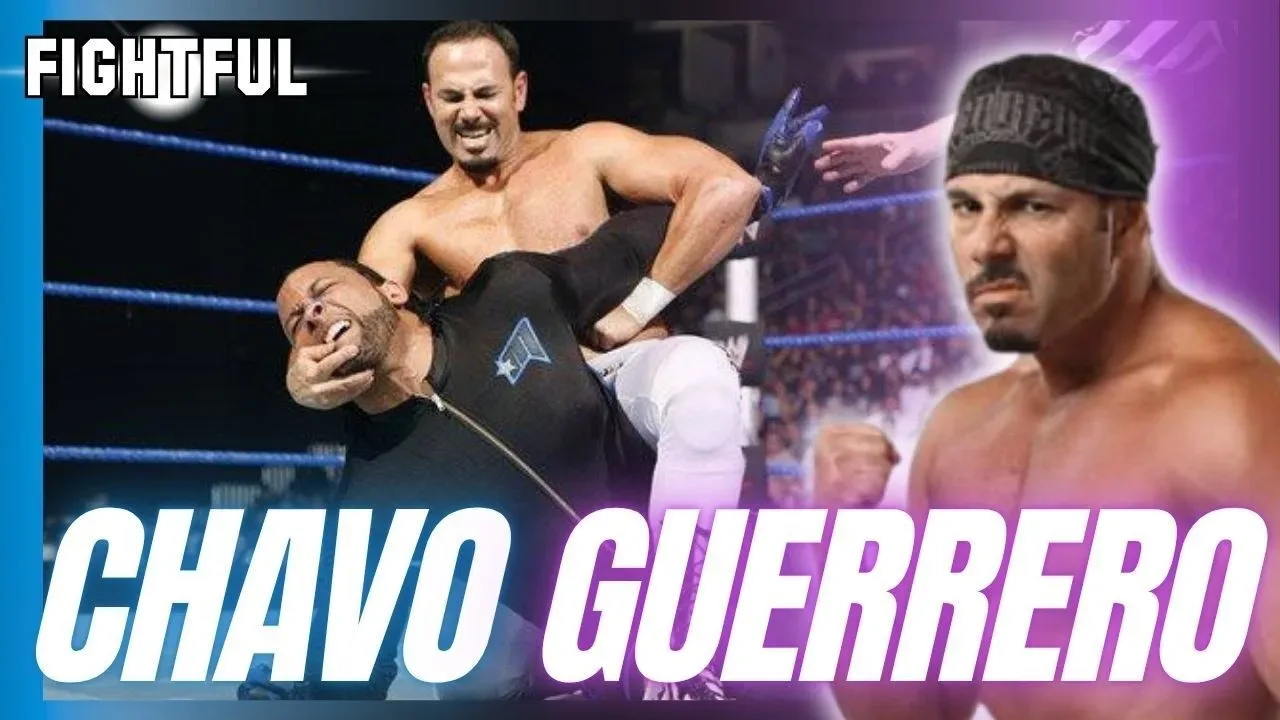
Chavo Guerrero has looked back on Aro Lucha’s short-lived existence, describing the promotion as a project with genuine ambitions that ultimately never found the chance to establish itself.
Aro Lucha arrived in 2017 with a roster that gave the company considerable immediate visibility. Rey Mysterio, Swerve Strickland, Ricky Saints and Penta were among the recognizable wrestlers associated with the promotion, while Guerrero worked both as a producer and an in-ring performer. For a company entering a crowded independent wrestling landscape, those names created the sense that Aro Lucha had the personnel to make an early impression.
That promise did not translate into a sustained run. Aro Lucha held four shows before folding in 2018, leaving behind a brief chapter rather than the long-term alternative that its presentation and talent lineup appeared to suggest.
Speaking about the promotion, Guerrero said he still views his involvement as one of the many experiences that has added to his career, even while acknowledging that the larger plan did not come together.
For more background on this topic, read Joe Lando Announces Dislocated Elbow Injury, Says His 2026 Is Over.
“That’s a very short lived thing, something that we thought was maybe going to take off,” Guerrero said. “I believe it was Ron and Don Harris, great dudes, awesome guys that also got into that space. Sometimes things take off or sometimes the money dries up. I don’t really know what happened there, but we were looking to really make an impact on it and it just didn’t get off the ground. That’s Hollywood, that happens all the time. It’s wrestling as well too, you know. That was something, another little feather in my cap there.”
A Promotion With Noticeable Early Potential
The story of Aro Lucha is a familiar one in professional wrestling: a new company can enter the business with recognizable names, a distinct identity and apparent enthusiasm behind it, yet still struggle to turn that initial attention into a lasting operation. Guerrero’s comments do not offer a definitive explanation for why Aro Lucha ended, and he was clear that he did not know exactly what happened. But his remarks underline the central reality of the promotion’s run: its goals were much larger than the four events it ultimately produced.
Guerrero said the group wanted to “really make an impact.” That phrasing is important because Aro Lucha was not presented simply as a one-off attraction or a limited series of independent cards. The roster gave it the potential to attract fans interested in lucha libre, established stars and emerging performers alike. Mysterio’s association brought immediate name recognition, while wrestlers such as Strickland, Saints and Penta represented a mix of talent that could appeal to viewers following the changing independent scene.
In retrospect, the group’s lineup also makes the promotion notable as a snapshot of a particular period in wrestling. Several of the performers connected to Aro Lucha would continue building major profiles after the company’s closure. That does not change the promotion’s own outcome, but it adds another layer to Guerrero’s view that the experience remains a feather in his cap. Working with talent before or during important stages of their wider careers is part of the legacy left by a brief project.
For Guerrero, the experience also fit naturally within a career defined by variety. He has competed across major stages, worked in creative and production capacities, and remained connected to lucha libre’s influence on American wrestling. Aro Lucha gave him another opportunity to contribute beyond a traditional wrestler role, even if the company was unable to continue.
Guerrero Does Not Claim To Know Why It Ended
One of the most notable parts of Guerrero’s reflection is the restraint in his explanation. He mentioned Ron and Don Harris positively, calling them “great dudes” and “awesome guys,” but did not present a detailed account of the business circumstances that brought Aro Lucha to an end.
Instead, Guerrero framed the situation through the unpredictability of entertainment and wrestling. “Sometimes things take off or sometimes the money dries up,” he said, before stressing, “I don’t really know what happened there.”
That distinction matters. Short-lived wrestling promotions often become subjects of speculation, particularly when they debut with familiar talent and then disappear quickly. Guerrero did not identify a specific financial issue, creative disagreement, operational failure or other backstage cause. His comments should therefore be understood as a reflection on the uncertainty of such ventures, not as a conclusive account of Aro Lucha’s closure.
Still, the broader point is clear. Wrestling promotions require more than an impressive roster to survive. They need consistent resources, reliable operations, sustained audience interest and the ability to maintain momentum beyond an initial launch. Aro Lucha had a degree of early intrigue, but it did not secure the runway necessary to develop into a long-term company.
Guerrero compared that reality to Hollywood, where projects with perceived potential can also fail to move forward. The comparison reflects the overlap between wrestling and the larger entertainment business. Both fields rely on creative ideas and recognizable performers, but neither guarantees that a project will find enough support to last.
Four Shows, Then An Early Finish
Aro Lucha’s entire run lasted only four shows, a small number that stands in contrast to the attention its initial roster drew. In wrestling, four events are enough to introduce a concept and give performers a platform, but they leave limited time to build enduring rivalries, establish a dependable live-event rhythm or create the kind of audience habits that can sustain a promotion over time.
That is what makes Guerrero’s comments about wanting to make an impact especially reflective rather than bitter. He did not portray the venture as meaningless because it was brief. Instead, he placed it among the different stops in his career, calling it another “little feather” in his cap.
There is value in that perspective. Not every wrestling project becomes a fixture of the industry, and not every promotion that features prominent names reaches its intended scale. Yet individual experiences within those projects can still matter to the people involved. For Guerrero, working as both a producer and wrestler provided another chance to apply his knowledge in multiple ways.
The producer role is particularly significant in understanding his involvement. Wrestlers bring a promotion to life in front of the crowd, while producers help shape the presentation behind the scenes. Guerrero’s dual position meant he was part of Aro Lucha’s on-screen product while also contributing in a capacity tied to the broader execution of the shows. Even a company with a limited lifespan can offer meaningful professional experience in those roles.
A Brief Part Of Guerrero’s Wider Wrestling Journey
Guerrero’s remarks also arrive as he continues to discuss different chapters of his career and the various projects in which he has participated. Elsewhere in the same conversation, he addressed early versions of Lucha Underground vignettes, another subject that reflects his connection to lucha-based wrestling presentation and production-driven concepts.
While Aro Lucha and Lucha Underground were separate projects, both are reminders that wrestling has frequently explored different ways of presenting lucha libre-influenced talent and storytelling to audiences. Some efforts gain a longer runway than others. Guerrero’s reflection on Aro Lucha is not that it lacked intent; it is that the intended impact never had the opportunity to fully materialize.
His wording carries an acceptance that many veterans of wrestling and entertainment understand well. A project can have people who believe in it, recognizable talent attached to it and a goal that sounds achievable, only for circumstances to prevent it from growing. The end result may be disappointing, but it can still remain part of a career worth remembering.
Aro Lucha will therefore be remembered less for a lengthy catalog of events and more for its unrealized potential. Its roster suggested possibilities. Its four-show lifespan limited what it could become. And Guerrero, who worked inside the project as both producer and performer, now views it as a concise but meaningful entry on a long list of wrestling experiences.
For fans who remember the promotion’s launch, Guerrero’s comments provide a grounded assessment rather than a dramatic postmortem. Aro Lucha was meant to make an impact. It did not get off the ground in the way those involved hoped. But for Guerrero, the work itself remains a worthwhile part of his professional history.

Darryl Polo
Darryl Polo is a passionate wrestling fan covering WWE, AEW, TNA and beyond. He loves great rivalries, breakout stars and the moments that keep fans talking long after the bell. How we work.