
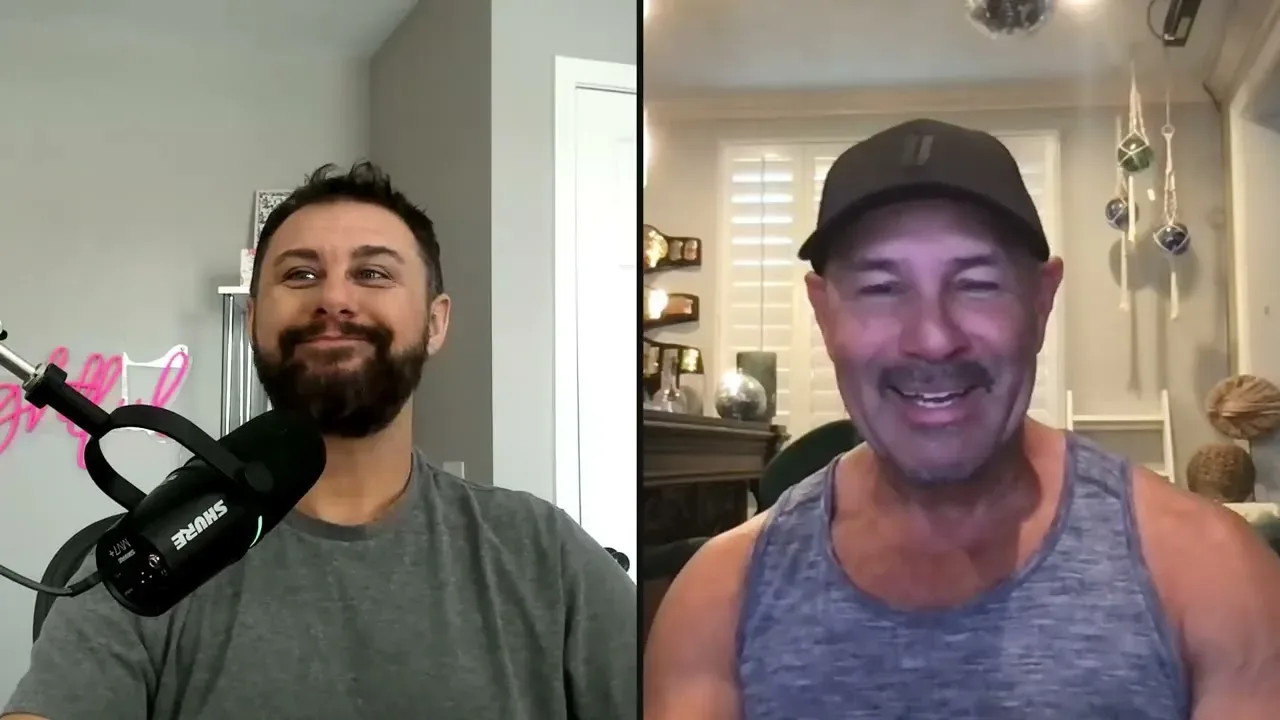
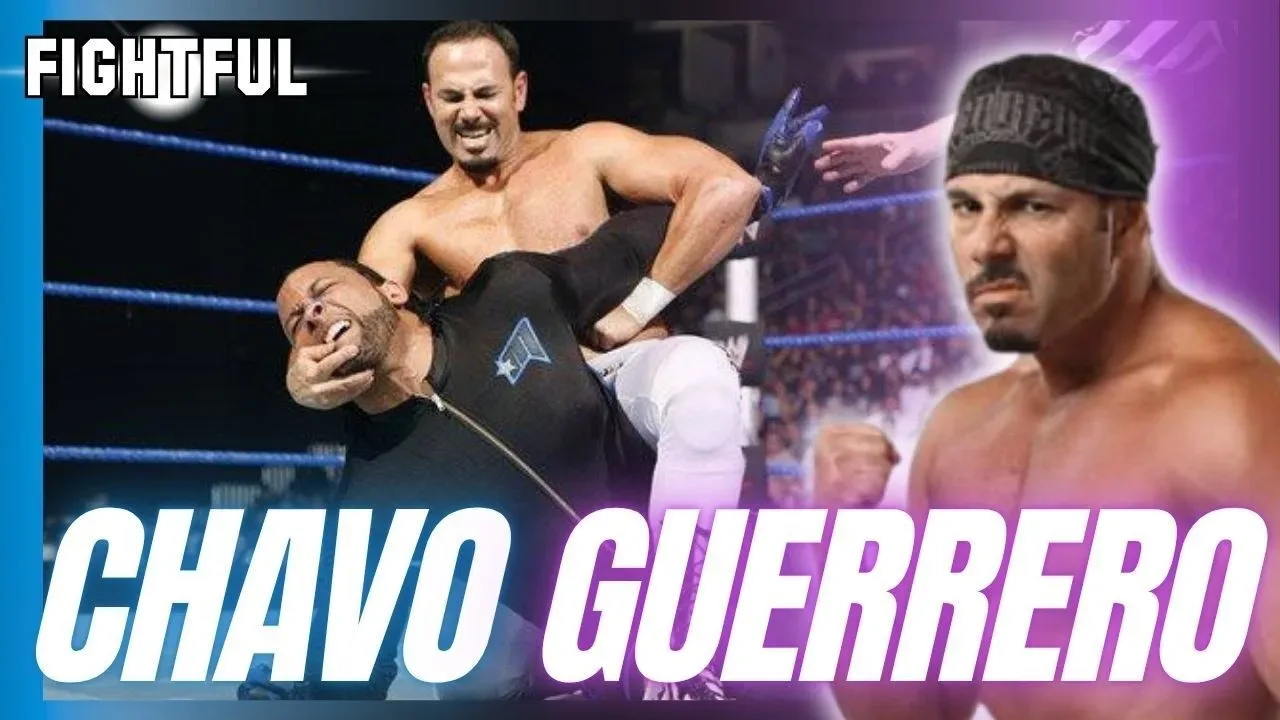
Chavo Guerrero has offered a detailed look at the kind of behind-the-scenes work that goes into making wrestling feel authentic on screen, recalling a moment during production of The Iron Claw when he helped revise a scene on the spot.
Guerrero, whose work in film and television has extended well beyond training performers to execute moves safely, explained that he is often involved throughout a production. That can include casting input, match choreography, wardrobe, set design, and script discussions. In the case of The Iron Claw, he said a disconnect emerged between the dialogue being used and the physical action that had been designed for the scene.
Rather than allowing that mismatch to remain in the production, Guerrero said he raised the issue directly with director Sean Durkin while filming was underway. Durkin asked what was wrong, and Guerrero’s response was that the material was not fitting together as it should.
“I’m involved with everything, whether it be helping cast the part, choreography, wardrobe, set design, scripts,” Guerrero said. “I mean, there was a time in The Iron Claw when something wasn’t matching the choreography and the verbiage.”
For more background on this topic, read Wrestling Open Results: Brick City and 23 Hazard & Peter Gianni Advance in Eliminator Cup.
Guerrero said the exchange quickly evolved from identifying a problem to finding a practical solution. After he began explaining his thoughts, Durkin asked him to lay out the full revision. Guerrero said the scene’s language was then reworked immediately so that it better served the planned wrestling sequence.
“We rewrote the scene in a sense right there, or at least the verbiage,” Guerrero said. “He looked at Zac Efron like, ‘Hey man, can you do this right now?’ Of course, Zac looks it over and it’s like, ‘Yup, we got it.’ So we just re-wrote it right there, made it fit, you know?”
The account illustrates a frequently overlooked part of wrestling consultation in dramatic productions. A wrestling sequence is not simply a collection of moves performed for the camera. The dialogue surrounding it, the timing of the performers’ reactions, the presentation of the competitors, and the motivation behind the action all need to work in concert. When the language does not reflect what is unfolding physically, viewers familiar with wrestling can often recognize that something is off, even if they cannot immediately identify why.
For a story rooted in the lives of the Von Erich family and the culture surrounding Texas wrestling, that level of detail carried particular importance. The Iron Claw required its cast to portray professional wrestlers in a setting where the sport, its personalities, and its traditions were central to the drama. Guerrero’s recollection indicates that his assignment extended into protecting the internal logic of those scenes, not merely arranging the mechanics of the matches.
More Than a Choreography Assignment
Guerrero described his approach as comprehensive whenever he is brought onto a wrestling-related project. His comments make clear that he views the wrestling component as something that touches nearly every creative department. Casting can affect whether an actor can credibly move, react, and carry themselves like a wrestler. Wardrobe has to allow for movement while also fitting the era and character. Set design can influence how believable a venue or locker-room environment feels. Scripts must give performers words that match the world they are portraying.
That wider role can be especially valuable when productions are attempting to recreate a specific period in wrestling history. Details that may appear small in isolation can significantly affect the credibility of a scene: how a wrestler speaks before a match, how an opponent responds to a hold, what kind of intensity is appropriate for a particular moment, and whether the action and dialogue communicate the same stakes.
Guerrero said this has been his working method from the beginning of his Hollywood career. His comment about writing credit was made with humor, but it also underscored how much creative input he believes the job can require.
“I’ve been doing that since day one, I should be getting writing credit, you know?” Guerrero said.
That statement does not mean Guerrero has claimed a formal writing credit on The Iron Claw. Instead, he was describing the reality of offering story and dialogue notes where the wrestling material demands them. In this case, he said the production was able to make the change in real time, with Efron reviewing the adjusted material and being ready to perform it.
The ability to make that kind of alteration quickly is significant on a film set, where scenes are constructed through coordination among performers, a director, camera operators, stunt and movement personnel, and multiple other departments. A rewrite that improves the connection between dialogue and choreography can prevent a larger problem later, whether that would have involved reshooting footage or trying to solve a storytelling issue in post-production.
Guerrero Also Discusses His Contributions to ‘GLOW’
The Iron Claw was not the only project Guerrero cited when discussing the scope of his involvement. He also reflected on his work with Netflix’s GLOW, the wrestling comedy-drama that aired from 2017 through 2019. The series drew inspiration from the original Gorgeous Ladies of Wrestling promotion while telling its own fictionalized story about performers building a women’s wrestling television program.
Guerrero said that some of the stories developed for the series grew out of his own experiences and conversations with the show’s writing team. He recalled participating in the writers’ room before a season began, with writers using him as part of their brainstorming process. Later, when he read scripts, he recognized elements that had originated from his stories.
“A lot on GLOW, they were doing a lot of stories — a lot of stories on GLOW were my stories that we just tweaked a little bit,” Guerrero said. “I was in the writing room talking to the writers and they were kind of just brainstorming off me before the season started. Next thing you know, I’m reading the script like, ‘Hey, wait a minute, that’s my story.’ They start laughing, yep.”
His recollection points to the value of lived wrestling experience in scripted entertainment. Wrestling has its own rhythms and vocabulary, but it also has a deep reservoir of personalities, career turns, rivalries, travel stories, training experiences, and locker-room dynamics. Those details can provide a production with material that feels more specific than a generalized version of the industry.
For shows such as GLOW, authenticity is not limited to the ring itself. The performers’ relationships, the challenges of learning the craft, the process of creating characters, and the pressures surrounding a wrestling production can all benefit from input by people with direct familiarity with that environment. Guerrero said he is involved in the entire process when the wrestling side of a project is concerned.
“Anything with the wrestling part, I’m involved with the entire process of it and that’s what they get when they hire me,” Guerrero said.
A Growing Need for Wrestling Expertise on Screen
Guerrero’s comments arrive amid continued interest in wrestling stories across film and television. Projects set in or around the industry face a distinctive challenge: they must be accessible to audiences who may know little about pro wrestling while remaining convincing to viewers who have spent years watching it. The physical side is essential, but realism can be lost just as easily through a line of dialogue, an incorrect response to a spot, or a character behaving in a way that does not fit the wrestling world being depicted.
That is why the role of a wrestling consultant can be much broader than teaching actors how to take a bump or execute a lockup. It can involve helping performers understand how wrestlers communicate, how they sell pain or exhaustion, how matches build emotionally, and why a particular moment should happen in a particular way. It can also mean recognizing when the written material needs to change so that the storytelling and physical performance support one another.
Guerrero’s experience on The Iron Claw offers a concise example of that process in action. He identified a creative issue, communicated it to the director, helped shape revised wording, and saw the adjustment put into use immediately by Efron. In Guerrero’s view, that type of intervention is part of the complete service he provides to wrestling-based productions.
His remarks on both The Iron Claw and GLOW reinforce the same point: the most effective wrestling portrayals are often built through collaboration long before a move is performed in front of the camera. For Guerrero, the work starts with the details and extends wherever those details are needed.
In pictures

Darryl Polo
Darryl Polo is a passionate wrestling fan covering WWE, AEW, TNA and beyond. He loves great rivalries, breakout stars and the moments that keep fans talking long after the bell. How we work.