
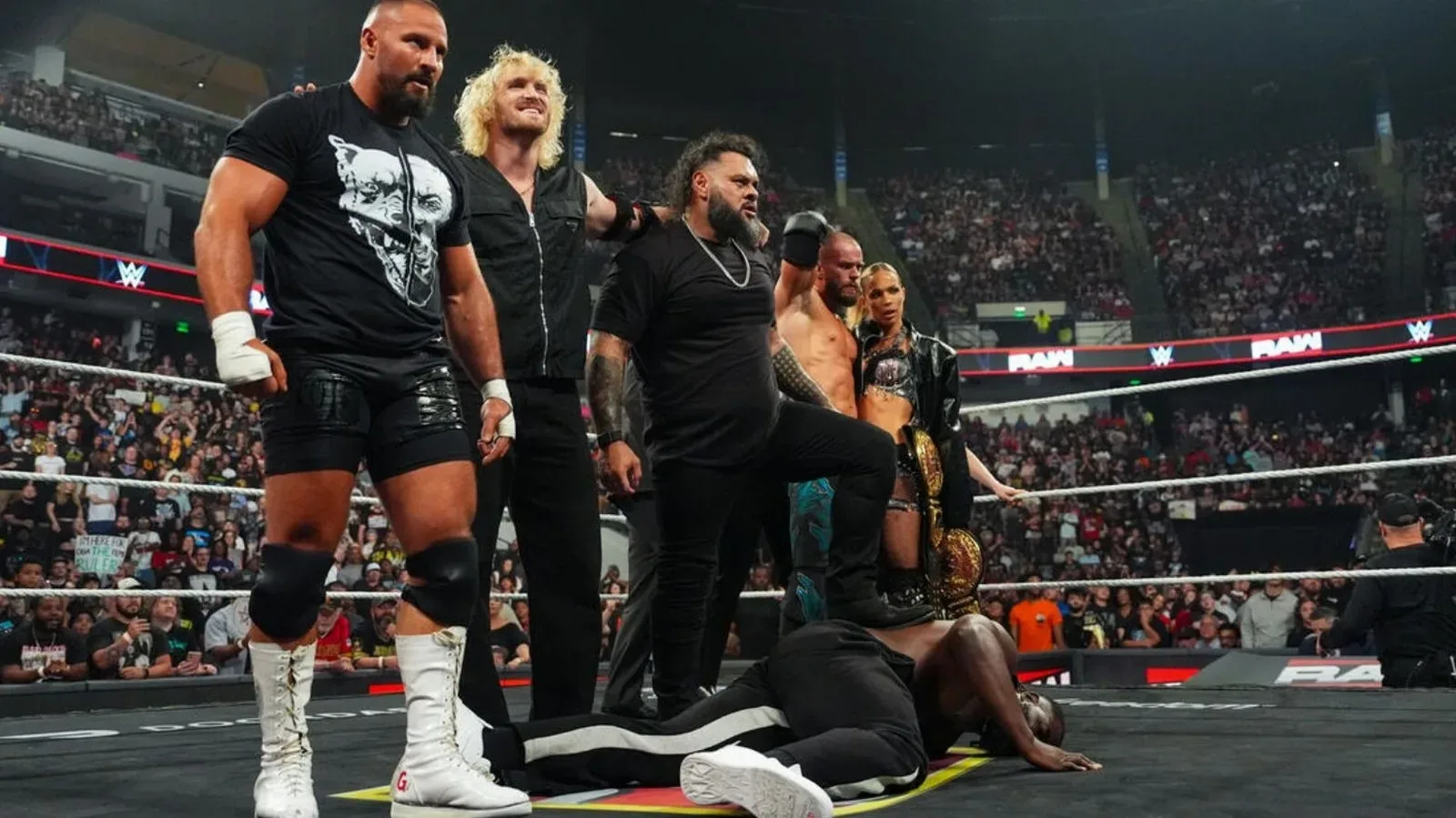
Oba Femi’s looming singles match with Bronson Reed at WWE Money in the Bank has already been framed by physical confrontations, a contract signing, and repeated attacks. But Bully Ray believes WWE had an opportunity to make the rivalry feel even more personal by returning to a short exchange from the September 7 beatdown of Femi by The Vision.
The moment was simple, but it carried a clear message. After Femi had been overwhelmed and left down, Reed moved to place his foot on him. Femi, despite being hurt and outnumbered, knocked Reed’s foot away. In Bully Ray’s view, that final act of defiance was more than a stray piece of business at the end of an angle. It was a character beat that could have given both men a sharper, more emotionally grounded reason to fight.
Speaking on Busted Open Radio, Bully Ray said the incident was exactly the kind of detail that can make wrestling rivalries feel authentic. “You know how I always talk about [how] I want my wrestling to be real?” he said while recalling the scene. Bully Ray’s argument was not that WWE needed to rewrite the larger direction of the program. Rather, he felt the company should have recognized the meaning behind Reed’s gesture and Femi’s response.
A Small Moment With Major Stakes
Wrestling angles often rely on major visuals: tables breaking, groups of wrestlers storming the ring, contract signings collapsing into fights, and champions being left prone under a rival’s boot. Those images can be effective, but Bully Ray’s point centered on what happens when an angle supplies a more intimate point of conflict inside the chaos.
For more background on this topic, read Charlotte Flair Says ‘Off The Pedestal with Ashley Fliehr’ Is Set to Launch Within Weeks.
Femi being beaten down by The Vision establishes a numerical disadvantage. It tells the audience that Reed and his allies can create situations Femi cannot easily survive alone. Yet Femi swatting away Reed’s foot suggests something equally important: being physically overwhelmed is not the same as being mentally broken or willingly humiliated.
That distinction could be especially significant for a performer known as “The Ruler.” A character built around dominance and authority cannot simply accept a rival treating him as a trophy beneath a boot. Even while unable to rise and continue the fight, Femi’s refusal to allow Reed that final act of disrespect presents a direct challenge to Reed’s attempt to claim superiority.
Bully Ray said he wished WWE had “turned that into more,” identifying it as a moment that spoke loudly without requiring a lengthy explanation at the time. The value, from his perspective, was in following up later. A promo, an interview, or another face-to-face exchange could have connected the action to the Money in the Bank match and ensured viewers understood that Femi had not forgotten it.
The Promo Bully Ray Wanted From Oba Femi
Bully Ray outlined the type of response he would have liked to hear from Femi. The key idea was that it took all of The Vision to keep Femi down, but Reed still wanted the added satisfaction of putting a foot on him. In that framing, Reed’s act would no longer be an incidental pose after a beatdown. It would become a deliberate insult.
Femi could have used that insult to reinforce his toughness while also setting a line that Reed had crossed. The message would be that The Vision may have won one ambush through overwhelming numbers, but Reed did not earn the right to degrade him. That creates a clear emotional foundation for a singles match: Femi is not merely looking for revenge after an attack; he is looking to answer a rival who tried to strip him of his pride.
That approach would also allow Femi to acknowledge the reality of the beatdown without weakening him. Wrestlers regularly face the challenge of explaining why they were laid out in a previous segment. If a babyface only insists that the attack did not matter, the audience has little reason to view it as consequential. If the wrestler appears too shaken, the character can lose momentum. Bully Ray’s proposed direction offers a middle ground. Femi could concede that he was outnumbered while making clear that Reed’s disrespect is what turned the incident into an unresolved issue.
“I wish they would have turned that into more.” — Bully Ray on Busted Open Radio
It is also a direction that would put a spotlight on Femi’s resilience. The memorable part of the September 7 segment was not that Femi escaped the assault or immediately fought off everyone involved. He did not. The defining image, as Bully Ray saw it, was that Femi still had enough fight left to reject Reed’s foot. In a rivalry built around power, that may be a more useful character note than another exchange of generic threats.
Reed’s Disrespect Could Define The Match
Bully Ray did not only see a possible promo for Femi. He also suggested a stronger way for Reed to embrace the moment. In his vision, Reed could make the foot-on-the-chest image part of his stated plan for Money in the Bank.
“Not only did that happen to you, it’s going to happen again, that’s how I’m going to pin you when I beat you,” Bully Ray said Reed could declare on Busted Open Radio. He added that Reed could threaten to put his foot “on the top of your chest” for the pin and take Femi’s shoes as well.
The precise threat is intentionally excessive, and that is what gives it value in a wrestling setting. Reed would not just be predicting victory. He would be promising humiliation. A pinfall is a result; a pin with a boot on the chest is a statement. By publicly committing to it, Reed would give Femi a clear image to fight against and give the audience a visual to anticipate when the bell rings.
More importantly, it would make the finish of any key exchange matter. Every time Reed positions himself over Femi, viewers would understand the history. Every late-match kick-out or rally from Femi would carry the added meaning of denying Reed the disrespect he had promised. That is the advantage of an effective recurring detail: it turns a familiar wrestling visual into a story point.
Bully Ray characterized Reed’s action as a “high level” of disrespect, comparing its intent to a wrestler going into business for himself at the expense of “The Ruler.” Whether Reed’s original gesture was meant to develop into a larger issue or was simply part of the immediate segment, Bully Ray’s criticism is rooted in the potential that was visible on screen. The interaction already existed. The question is whether WWE could have used it to further distinguish this program from a standard sequence of brawls ahead of a premium live event.
Why Follow-Through Matters In WWE Feuds
The broader lesson in Bully Ray’s observation is about continuity. Wrestling fans are often asked to invest in rivalries through a succession of confrontations. An attack leads to retaliation, retaliation leads to a stipulation or a contract signing, and the conflict escalates toward the match. The strongest programs, however, are usually remembered for the specifics within that framework.
A single insult, a stolen item, a broken promise, a taunt after an injury, or a refusal to show respect can give competitors a personal stake that goes beyond winning. Such details are particularly useful when both wrestlers are established as physical threats. Femi and Reed do not need much help convincing audiences that they can hurt one another. The question is what makes their collision emotionally distinct.
The September 7 moment offers one answer. Reed tried to stand over Femi as though the matter was settled. Femi rejected that claim even from the mat. That is a simple story of pride, and pride is often the most durable fuel for a wrestling match.
WWE’s lead-up has included enough confrontations to establish hostility between Femi and Reed. Bully Ray’s perspective is that the program could have gained another layer by articulating exactly why this particular confrontation mattered to each man. For Femi, it is the refusal to be degraded. For Reed, it is the desire to prove that Femi’s resistance was meaningless and that he can force the same image again on a bigger stage.
Money in the Bank Provides The Answer
Femi and Reed will now have the chance to settle the issue one-on-one at Money in the Bank. The group dynamic that helped create the September 7 visual may remain part of the background, but the scheduled match puts the focus squarely on whether Reed can back up his intimidation or whether Femi can turn his brief act of resistance into a defining victory.
Even without an extended verbal callback, the match can still draw from that history. Reed’s body language, his pin attempts, and Femi’s reactions can all reinforce the conflict Bully Ray identified. Should Reed seek the same disrespectful cover, it would instantly call back to the previous beatdown. Should Femi deny it, the audience would see the payoff to an act of defiance that initially lasted only seconds.
Bully Ray’s critique is ultimately a reminder that the smallest choices can become the most useful building blocks in wrestling storytelling. The physicality between Oba Femi and Bronson Reed has not been in doubt. What Bully Ray wanted was a more explicit acknowledgment that, beneath the beatdowns and the contract signing, one insult may have provided the rivalry with its most personal hook.
In pictures

Darryl Polo
Darryl Polo is a passionate wrestling fan covering WWE, AEW, TNA and beyond. He loves great rivalries, breakout stars and the moments that keep fans talking long after the bell. How we work.