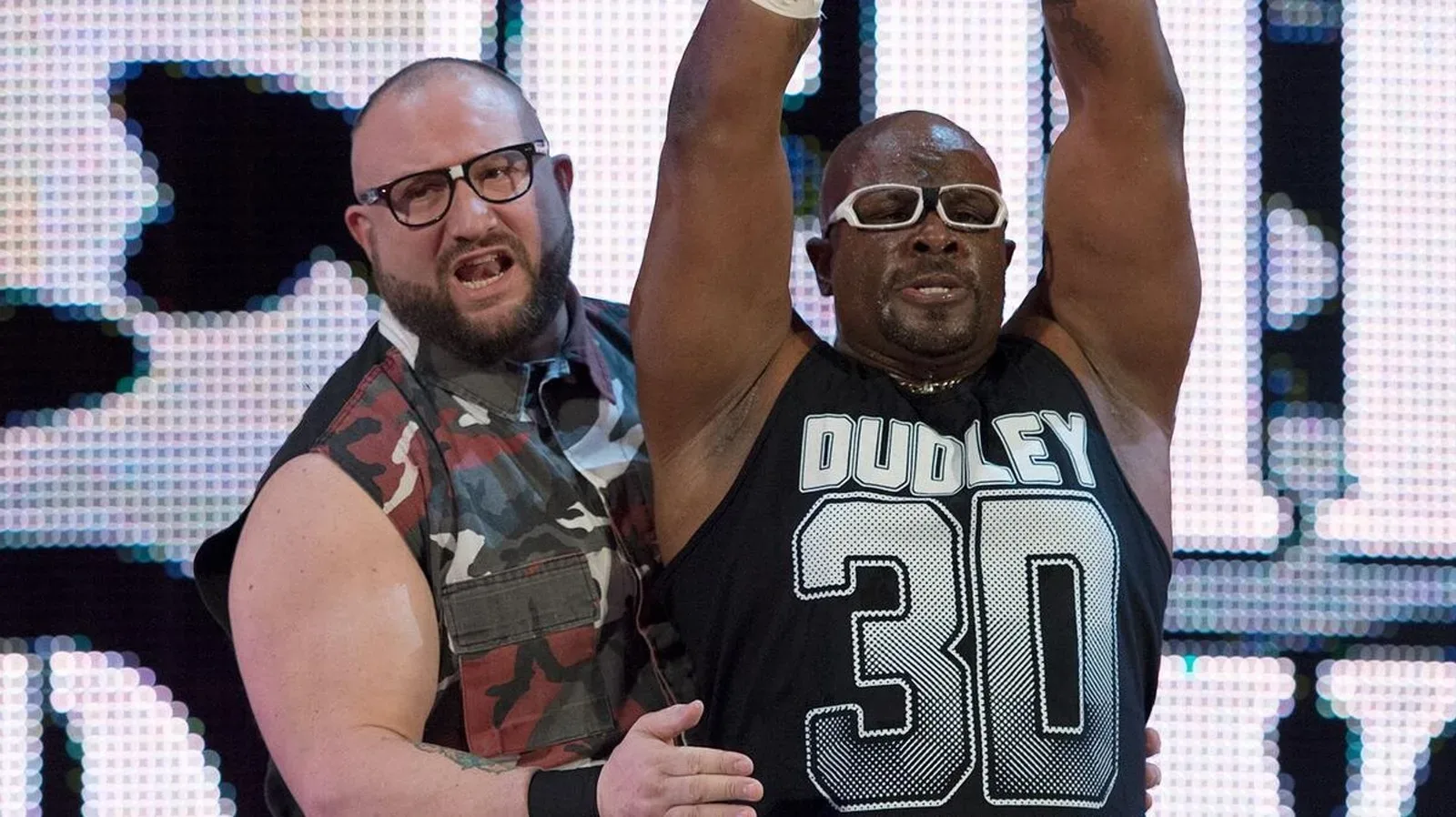
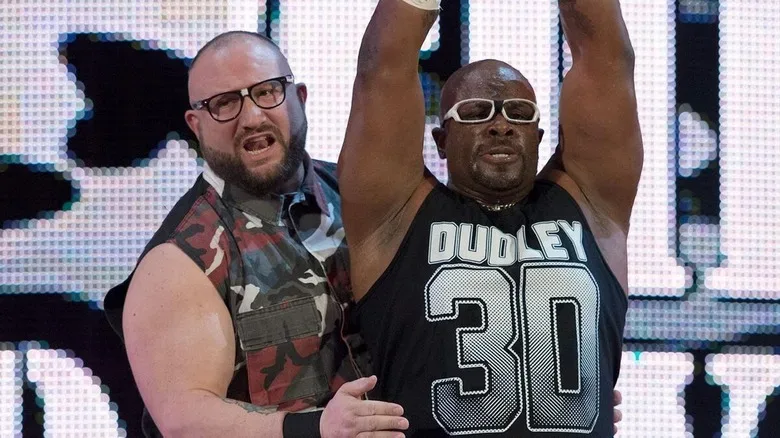
Bully Ray says the Dudley Boyz’ final WWE run came with a clearly defined mission from Vince McMahon: use one of wrestling’s most decorated and recognizable tag teams to help elevate the next generation of WWE tandems.
Speaking on Busted Open Radio, Bully Ray looked back on his return alongside D-Von Dudley after the team had spent a decade away from WWE. The reunion was an immediate nostalgia-driven moment for fans who remembered the Dudleys’ major role in both ECW and WWE, but Bully Ray said the creative direction was not completely clear to him on day one. In fact, he recalled having a disagreement with McMahon over how the comeback should begin.
The Dudley Boyz had left WWE in 2005, ending a run that had helped define the company’s tag team scene during a period filled with high-profile rivalries and championship success. When D-Von and Bubba Ray returned years later, they brought an established legacy with them. The team ultimately entered the WWE Hall of Fame in 2018, but Bully Ray’s comments make clear that he views their final in-ring stretch as something more complicated than a straightforward celebration of that legacy.
An Immediate Disagreement Over The Return
Bully Ray said McMahon wanted the Dudleys to make their return and then direct remarks toward Titus O’Neil and Darren Young. At the time, O’Neil and Young were aligned as a tag team, and Bully Ray believed putting the attention on them right away would undermine the significance of the Dudleys’ reappearance.
For more background on this topic, read Killer Kross Reacts To Sami Zayn’s Short WWE Title Reign, Keeps Future Intentions Cryptic.
“I actually had a disagreement with Vince McMahon that very first day,” Bully Ray said on Busted Open Radio. “Vince specifically wanted us to roll out to the ring and address Titus O’Neil and Darren Young, and I was like, ‘Vince, no. Like, let us stay in the ring, soak in the moment.’”
For Bully Ray, the issue was not merely whether the segment could advance another act. He believed it was about giving the crowd a chance to react to the reunion before moving the story forward. A returning act as established as the Dudley Boyz had a built-in emotional connection with a portion of the audience, and Bully Ray felt that reaction was worth protecting.
He argued that an immediate confrontation with O’Neil and Young would have felt insignificant compared with the scale of the Dudleys’ return. Bully Ray compared the idea to following up a finishing move with additional offense: something that may happen in the moment, but that does not add much to the larger impression the segment leaves behind.
While he said McMahon offered several reasons for wanting the angle to play out that way, Bully Ray admitted he no longer remembered the specifics of those explanations. His larger point was that he did not see the proposed interaction as a meaningful use of a return that had been built on years of history. Looking back, he also said he does not believe people would remember the O’Neil and Young team years later in the same way they recall the Dudley Boyz’ legacy.
McMahon’s Broader Plan For The Dudleys
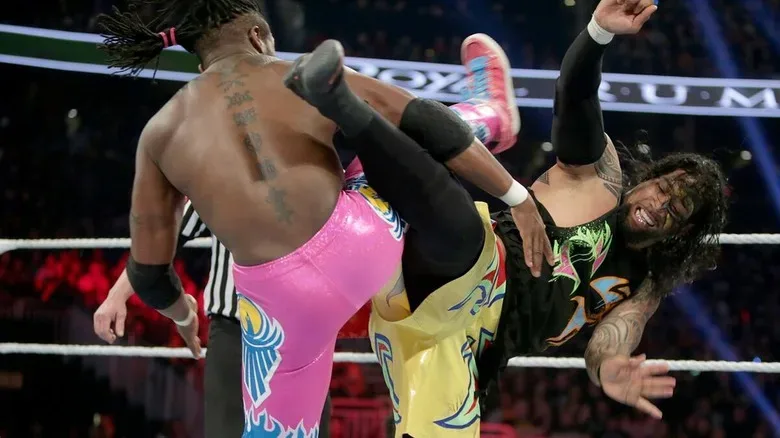
Despite the initial disagreement, Bully Ray said McMahon later sat down with the Dudleys before the next episode of WWE Raw and laid out a broader direction for them. The objective, as Bully Ray remembers it, was not to simply present D-Von and Bubba Ray as a returning attraction. They were supposed to work with and help establish three important WWE teams: The New Day, The Usos and The Wyatt Family.
“I want you to get The New Day over, I want you to get The Usos over, and I want you to get The Wyatts over,” Bully Ray recalled McMahon telling them on Busted Open Radio.
That instruction placed the Dudley Boyz in a familiar but difficult position. Their reputation had been built through championship runs, major feuds and a style that made them one of the defining teams of their era. Yet the directive for the return was, in Bully Ray’s telling, to use that credibility to help WWE’s newer teams gain further momentum.
All three acts named by McMahon went on to become central pieces of WWE programming. The New Day emerged as one of the most successful and enduring trios in company history, while The Usos became a major standard-bearer for WWE tag team wrestling across multiple eras. The Wyatt Family also became a defining group of its time, with the individual members and the faction as a whole leaving a substantial mark on WWE television.
Bully Ray said he did not agree with every aspect of the creative execution, but he took pride in the results. He pointed to the accomplishments of the teams the Dudleys were asked to face and elevate as evidence that the overall purpose of their run produced something meaningful.
“Even though I didn’t agree with the exact way Vince wanted it done, I’m proud to say that all of those three teams went on to, you know, bigger and better [things],” Bully Ray said.
His perspective offers a revealing look at the role veteran teams can play upon returning to WWE. A comeback can be driven by nostalgia and still be designed as a vehicle for the future. In Bully Ray’s account, McMahon recognized that the Dudley Boyz’ history gave them credibility that could be transferred to teams WWE wanted audiences to regard as major players.
New Day’s Record And Bully Ray’s Uso Prediction
Bully Ray also acknowledged that The New Day eventually surpassed the Dudleys’ mark for tag title reigns. That record shift is especially notable because the Dudley Boyz’ championship history had long been an essential part of their identity. Their body of work across multiple promotions made them synonymous with tag team success, and seeing another WWE act move beyond one of their benchmarks underlined how accomplished The New Day became.
Rather than presenting that development as a slight, Bully Ray framed it as part of the progression he was proud to have helped support. He also made a bold prediction about The Usos, saying he believes they could one day move past The New Day’s record as well.
“I believe The Usos will go on to break The New Day’s record one day,” Bully Ray proclaimed.
That prediction speaks to Bully Ray’s confidence in The Usos’ place in WWE history. Whether or not that particular record changes hands, The Usos and The New Day have already been among the teams most associated with WWE’s modern tag division. Bully Ray’s recollection suggests McMahon’s plan was aimed at strengthening precisely that layer of the roster by pairing rising or established modern teams with a veteran act whose status was already unquestioned.
For Bully Ray, the key takeaway remains that the Dudley Boyz did their part with the opportunities they were given. “We did the best we could with the hand we were dealt,” he said, summing up a tenure that he believes succeeded in helping others even as he remained dissatisfied with aspects of the direction.
Why Bully Ray Ultimately Walked Away
Bully Ray said McMahon was pleased enough with the Dudleys’ work in putting over The New Day, The Usos and The Wyatt Family that the WWE Chairman offered them a three-year contract. However, Bully Ray said he became increasingly disgruntled with the booking as that deal progressed.
By the third year, he felt the Dudley Boyz had been positioned in a way that left little room to rebuild their standing. Bully Ray recalled going directly to McMahon and saying that he could not continue under those circumstances.
“Sorry, Vince, I can’t do this anymore,” Bully Ray recalled telling McMahon. He said McMahon asked what he meant, and Bully Ray responded: “You can’t rebuild us anymore! We’ve been basically jobbed out for a year!”
Bully Ray specifically expressed frustration that the Dudleys were losing to makeshift pairings, mentioning “Cardona and ‘insert-name-here’” as his example. His complaint was not that the team had been asked to lose or contribute to the rise of younger performers. Earlier in his comments, he credited the success of The New Day, The Usos and The Wyatt Family and expressed pride in the Dudleys’ contribution to those acts. Instead, his concern was that repeated defeats had, in his view, reduced the Dudleys’ ability to be restored as a credible force later.
That distinction is central to his reflection. Bully Ray appears comfortable with the concept of a legendary team giving something back to the division. What he objected to was the long-term balance of the booking: helping elevate other teams while preserving enough value in the Dudley Boyz that their own presence could still matter.
The Dudley Boyz’ WWE return ultimately remains a notable chapter in the careers of both Bully Ray and D-Von Dudley. It reunited a historically important team, placed them in programs with major WWE acts, and preceded their Hall of Fame induction. But Bully Ray’s account also illustrates the tension that can exist between legacy, nostalgia and the practical demands of building a roster for the future.
In his telling, McMahon’s purpose for bringing the Dudleys back was straightforward. They were there to help make The New Day, The Usos and The Wyatt Family bigger. Bully Ray believes that mission was accomplished. His lingering frustration is rooted in the belief that, by the end, the price of accomplishing it was the Dudley Boyz’ own ability to remain a team WWE could credibly rebuild.
In pictures
Darryl Polo
Darryl Polo is a passionate wrestling fan covering WWE, AEW, TNA and beyond. He loves great rivalries, breakout stars and the moments that keep fans talking long after the bell. How we work.