
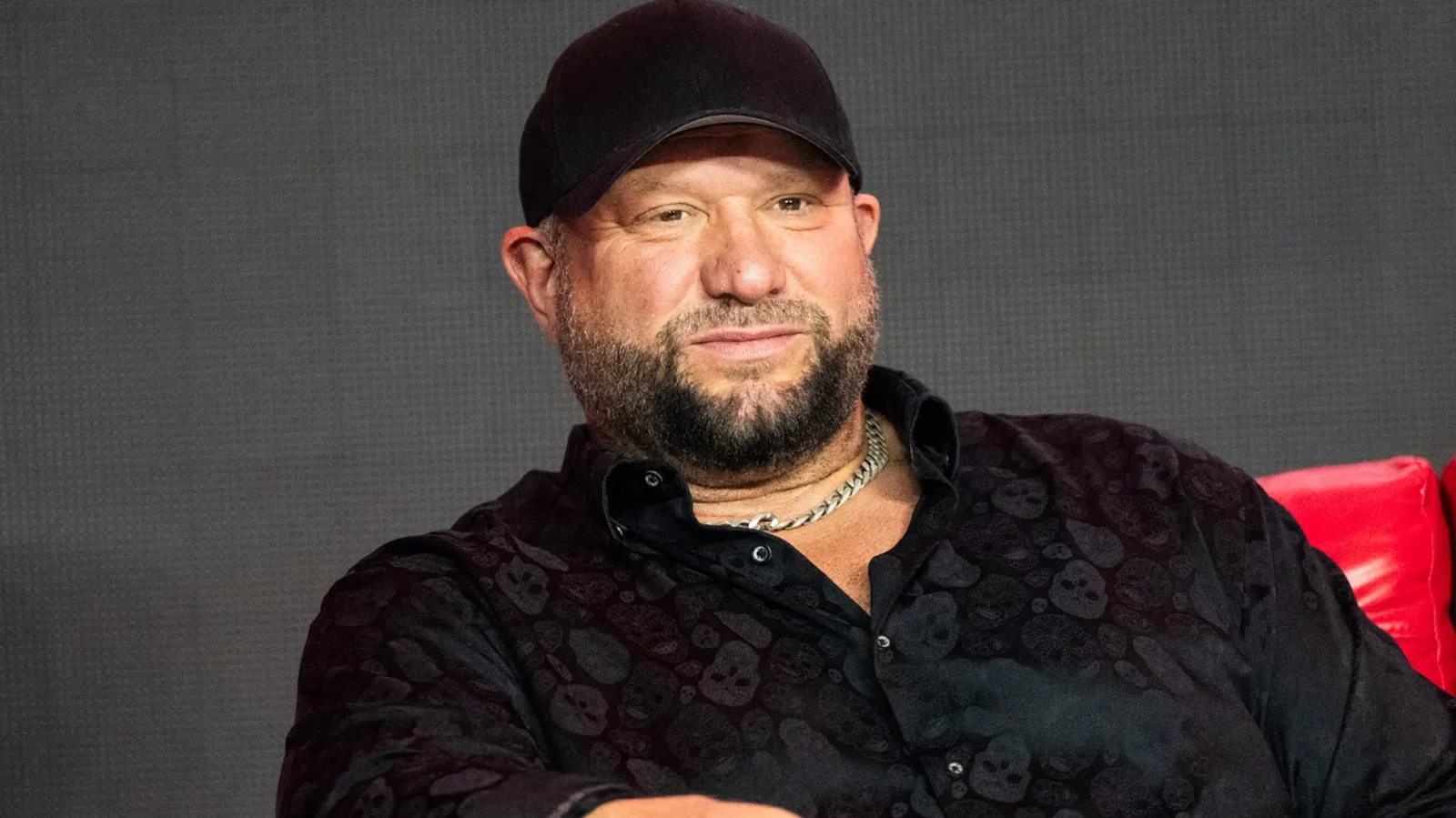
WWE’s main-roster tag team divisions have gained new faces in recent weeks, but Bully Ray is not ready to view those additions as proof of a meaningful turnaround. The WWE Hall of Famer believes the company’s tag championships are once again being treated as secondary prizes, and he does not see enough sustained storytelling around the titles to suggest that a new boom period is imminent.
Speaking on Busted Open Radio, Bully Ray assessed the current place of tag wrestling in WWE with a perspective shaped by his own history as one-half of one of the company’s most successful teams. Alongside D-Von Dudley, he won WWE tag team championships on multiple occasions during the early 2000s, a period when The Dudley Boyz were central figures in an especially competitive scene.
“The Tag Team Championships right now in the WWE are where the Tag Team Championships find themselves throughout the majority of history in the WWE, and that's as secondary championships that have no real story revolving around them,” Bully Ray said.
His argument was not that WWE has never elevated tag wrestling. Instead, he pointed to the occasional stretches in which the company has assembled the right collection of teams, personalities, rivalries and stakes to make the division feel essential. Those periods, in his view, have been exceptions rather than the standard.
For more background on this topic, read Kelani Jordan Embraces ‘One Shot Lani’ Nickname After NXT Women’s Title Win.
“Every once in a while, there is a golden era within WWE where some tag teams click and there's something special going on, but that hasn't happened in a long time,” Bully Ray continued. “It doesn't look like that's about to happen in the near future. Just being realistic about it.”
A division in need of momentum
The concern comes at a transitional time for WWE’s tag ranks. Multiple established pairings have split, moved into hiatuses or left the company during 2026, creating openings across the main roster. WWE has begun filling some of that space with fresh combinations, though it remains to be seen whether those teams will receive the kind of consistent creative focus Bully Ray feels is missing.
On WWE Raw, The Vision’s Bron Breakker and Austin Theory hold the WWE World Tag Team Championship. Their reign gives the red brand a pairing built around two high-profile talents, each of whom has previously been presented as a significant singles act. That profile could theoretically help the championship picture, especially if WWE positions challengers with comparable momentum and clear motivations.
WWE SmackDown has its own new direction at the top. Talla Tonga and Tama Tonga lead the blue-brand division after defeating R-Truth and Damian Priest for the titles last month. The title change placed the Tongas in control of a division that has also seen rapid movement in its roster makeup.
Among the newest main-roster pairings are Shinsuke Nakamura and Kyoki, with Kyoki also known as former IWGP Junior Heavyweight Champion Hiromu Takahashi. Elsewhere, Solo Sikoa and LA Knight have formed an unlikely alliance, while OTM’s Lucien Price and Bronco Nima have entered the Raw landscape. Price and Nima made an immediate statement on August 24 when they aligned with Royce Keys.
These teams give WWE a wider range of possible matchups than it had only a short time ago. Nakamura and Kyoki bring international reputations and a potentially distinctive in-ring identity. Sikoa and Knight carry the intrigue of two prominent personalities working together, while OTM offer a physical presence that can be established quickly against almost any opponents. The key question is whether WWE turns that increased depth into layered rivalries rather than simply rotating teams through short championship programs.
Bully Ray’s critique is centered on that broader presentation. A tag division does not become important solely because several teams are available. It also needs stories that make the partnerships matter, define why teams want the championships and establish what losing—or splitting—means for the competitors involved. In a strong tag environment, championships can function as the payoff to personal conflict, competitive ambition and long-term rivalries. Without that foundation, even talented teams can feel as though they are waiting for a purpose.
Bully Ray sees an opportunity in mixed tag wrestling
While he remains skeptical about the state of the traditional men’s tag scene, Bully Ray identified a concept that he believes could immediately make WWE tag wrestling more compelling: a formal mixed tag team division.
The proposal would pair male and female wrestlers as regular teams, with championships, tournaments and storylines designed specifically around mixed-tag competition. WWE has presented mixed tag bouts at various points over the years, but it has not operated a permanent division with dedicated titles and a defined competitive structure.
“When it comes to tag team wrestling in the WWE, I would be 100% more invested in a mixed tag division than I am the traditional tag division,” Bully Ray said.
For Bully Ray, the appeal is not limited to novelty. He sees the format as a way to create combinations and feuds that would open up new storytelling possibilities across both the men’s and women’s rosters. A mixed division would allow WWE to build teams around existing relationships, shared rivalries, conflicting personalities or strategic alliances. It could also give performers a different route to prominence without requiring them to be removed from singles competition entirely.
“I think that a mixed tag division in the WWE would be a breath of fresh air, and a lot of fun over what's going on with regular tag team championships these days,” he said. “Think about the stories you could tell, man and a woman team versus man and a woman team.”
He specifically raised Chelsea Green as an example of a talent who could be placed into a dynamic new pairing beyond her established association with Matt Cardona. That example underlined his larger point: WWE has enough roster depth that a mixed tag concept would not need to rely on only obvious real-life or storyline couples. Creative teams could experiment with unexpected partnerships and allow chemistry to develop on television.
“There's so much depth there,” Bully Ray said. “There's so much new fun, exciting things that you could do there. I would be so invested in a mixed tag team tournament or just mixed tag team storyline, mixed tag team championships. It has always, always, always worked.”
WWE has tested the format before
Though a dedicated mixed tag championship has never existed in WWE, the promotion has evidence that the format can connect when it is given structure and stakes. Individual mixed tag matches have long been part of WWE programming, often driven by intersecting rivalries between male and female performers. The match type can be particularly effective when the teams have clearly established chemistry or when a larger faction conflict makes the pairing feel natural.
Rhea Ripley and Damian Priest are among the recent examples of a duo that drew attention in mixed tag settings. Their shared presence and ability to project a united identity offered a glimpse at the value of recognizable intergender partnerships, even without an official championship division built around them.
WWE also ran the Mixed Match Challenge in 2018, expanding the concept into a tournament-based attraction featuring active roster members. The series gave fans a chance to see talent paired in combinations that were not always available on weekly television, while the tournament format created a straightforward reason for the teams to remain together and compete.
The Miz and Asuka won the first Mixed Match Challenge season, defeating Bobby Roode and Charlotte Flair in the final. The second season was won by R-Truth and Carmella, who earned the coveted No. 30 entry positions in the following year’s Royal Rumble matches. Those tournaments did not lead to a permanent mixed tag title structure, but they demonstrated that WWE can frame mixed competition around tangible rewards.
A modern version of the idea would face practical questions. WWE would have to establish rules, determine how frequently mixed teams compete, and ensure that the division does not reduce its women’s roster to supporting roles in men’s stories. A successful model would require both members of each team to be presented as essential competitors, with meaningful in-ring contributions and character agency. It would also need a clear place within WWE’s already crowded championship landscape.
Still, the potential upside is evident in Bully Ray’s pitch. A mixed tag title tournament could instantly create a series of fresh pairings, generate new rivalries and provide a defined goal for wrestlers who may not currently be near a singles championship program. More importantly, it could give WWE a chance to make tag wrestling feel different rather than attempting to recreate past eras with a thinner traditional division.
The challenge is sustained investment
Whether WWE chooses to explore mixed tag championships or focuses on rebuilding its existing divisions, Bully Ray’s comments point back to the same fundamental issue: tag wrestling needs a sustained identity. New teams can help, title changes can create movement and tournaments can offer a temporary spark. None of those elements alone guarantees that fans will see the championships as central to the weekly product.
Breakker and Theory, Talla Tonga and Tama Tonga, Nakamura and Kyoki, Sikoa and Knight, and OTM now give WWE several directions to explore. The coming months will determine whether those names become the foundation of a deeper tag team resurgence or simply the latest group to navigate a division Bully Ray believes has too often been left without a real story.
In pictures


Darryl Polo
Darryl Polo is a passionate wrestling fan covering WWE, AEW, TNA and beyond. He loves great rivalries, breakout stars and the moments that keep fans talking long after the bell. How we work.