
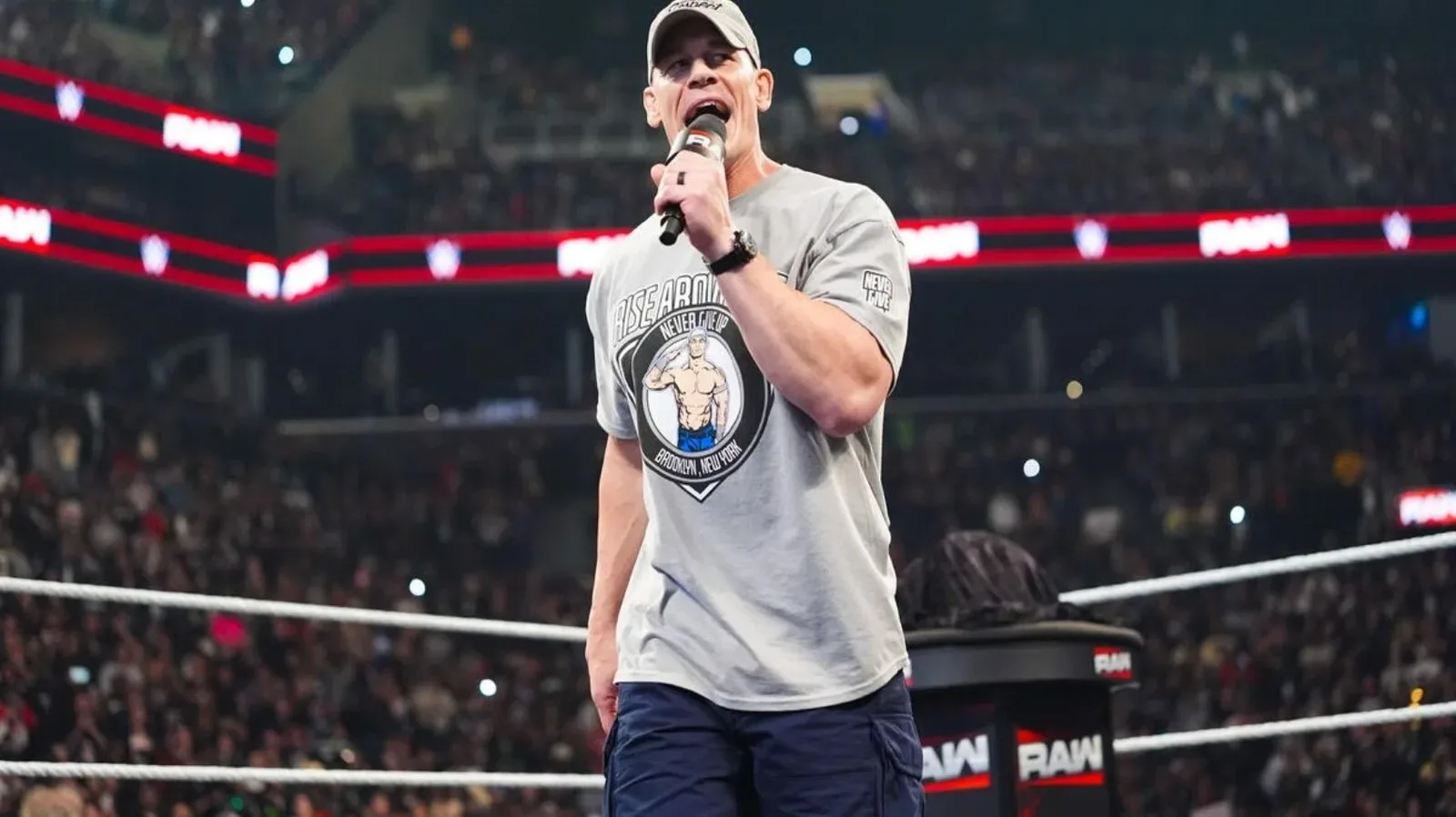
WWE has begun putting more definition around the John Cena Classic, but the tournament’s ultimate stakes remain the central question following the latest edition of WWE Raw.
John Cena used Monday’s show to disclose additional details about the event, including when and where it will be held. He also confirmed Cody Rhodes as the first entrant in the field. Cena further unveiled the championship belt associated with the tournament, a prize carrying Cena branding and imagery as part of its presentation.
Those announcements moved the John Cena Classic from concept to an increasingly tangible WWE attraction. Yet they did not answer every question about the competition, particularly whether winning it provides something beyond possession of the belt itself. That issue was the focus of Bully Ray’s reaction during Busted Open Radio.
A question of tournament stakes
Bully Ray made clear that his concern is not necessarily with WWE honoring Cena or building a tournament around one of the company’s defining stars. Instead, he questioned whether the announced reward gives wrestlers, and viewers, enough reason to view the Classic as a major competitive objective.
For more background on this topic, read WWE SmackDown Viewership Rises to 1.162 Million for October 30 Episode.
“I’m not a huge fan of inconsequential rewards,” Bully Ray said on Busted Open Radio. “This seems a little light to me, like you’re just going to win this championship.”
His point was rooted in the distinction between a symbolic accolade and a prize with immediate ramifications inside WWE’s title picture. In Bully Ray’s view, the design and association of the John Cena Classic belt may make it visually notable, but the tournament will need a clearer competitive purpose if WWE expects it to carry the same weight as its most consequential annual events.
The wrestling veteran compared the idea to the original presentation of the King of the Ring. Historically, the winner was positioned as the best performer in that particular tournament and was recognized with distinctive royal imagery, including a crown, cape and saber. That presentation was built around the status of becoming King of the Ring, even when the tournament’s prize was not necessarily a guaranteed championship match.
However, the modern version of the concept has frequently included a more concrete reward. Recent King and Queen of the Ring winners have received championship opportunities, giving the brackets a direct effect on WWE’s wider landscape. That creates an easily understood incentive: survive multiple opponents, win the tournament and earn a route toward a major title.
“We’re fighting for this belt that is named after this guy with a picture of this guy on it,” Bully Ray said. “What are we fighting for? I get it, it’s entertainment, but what are we fighting for?”
What WWE has, and has not, announced
As of Cena’s latest Raw announcement, the tangible prize attached to the John Cena Classic is the tournament championship belt. Cena’s reveal established the belt as a key part of the event’s identity, while Rhodes’ inclusion immediately connected the tournament to one of WWE’s biggest names.
What has not been established is whether the winner will receive a title match, a special designation, a future main-event opportunity or another benefit beyond holding the Cena-themed championship. WWE may yet reveal additional stakes as the tournament takes shape, but no such prize was included in the details Cena provided on Monday.
Bully Ray argued that the absence of an announced championship opportunity is notable. He suggested that Cena likely would have said so during the initial reveal if a title match were part of the tournament’s structure. While that is an interpretation rather than a confirmed indication of WWE’s plans, it underscores why the current presentation has left room for debate.
The issue is not unique to the John Cena Classic. Wrestling tournaments often have to establish two different kinds of value. The first is prestige: fans must believe that winning the field proves a wrestler is elite. The second is consequence: audiences need to know how that achievement changes the winner’s future. A trophy, cup, ring or commemorative title can serve the first purpose. A championship match, contract or other opportunity usually handles the second.
Money in the Bank is an especially clear example of the latter. Its briefcase represents a physical reward, but its significance comes from the title-match contract inside it. The winner gains leverage over every champion and can choose when to pursue a world title. The object matters because of the opportunity it guarantees.
Bully Ray specifically said he would like the Classic to offer that type of meaningful conclusion rather than simply ending with a belt presentation. His comments were not a dismissal of Cena’s legacy or of a tournament in Cena’s name. They were a challenge for WWE to make the prize feel indispensable to the roster members competing for it.
Cody Rhodes immediately changes the conversation
Rhodes being named the first entrant gives the John Cena Classic an obvious level of star power. It also led Bully Ray to propose one possible story direction that, for him, would justify the tournament’s existence even without a traditional title-shot stipulation.
“If this is all being done for Cody Rhodes to win the whole thing, only to be presented with that beautiful John Cena belt, for Cody to crack John in the face,” Bully Ray said. “For Cody to turn heel, I’m on board, brother.”
That scenario remains entirely speculative. WWE has not announced Rhodes as the winner, nor has it indicated that he will turn heel or clash with Cena at the tournament’s conclusion. Bully Ray was outlining the kind of decisive story beat that could turn the belt presentation into an angle with lasting impact.
His hypothetical also identifies an important challenge for WWE: Cena’s presence can provide enormous ceremonial value, but the John Cena Classic will ultimately be defined by the wrestlers who enter it and the stories that emerge from their pursuit of the prize. If the tournament is simply a vehicle for a presentation moment, fans may continue to ask the same question Bully Ray raised. If it launches rivalries, reshapes allegiances or gives its winner a clear path upward, the belt can become a symbol of something larger.
Prestige needs a clear payoff
There is still time for WWE to fill in the missing pieces. Cena has announced the tournament’s location and date, unveiled its championship and put Rhodes into the field, but the complete format and the final implications of victory have yet to be fully explained. Additional entrants could help define the level of competition, while further rules or stakes could establish exactly where the Classic fits within WWE’s broader calendar.
For now, the John Cena Classic is positioned as a tribute to Cena and a new competition with a distinctive prize. That can be enough to generate interest, especially as WWE reveals more participants and the tournament begins to take shape. But Bully Ray’s criticism reflects a practical storytelling concern: prestige is easier to sustain when a victory leads somewhere concrete.
WWE’s next announcements will determine whether the John Cena Classic belt stands on its own as an honor or becomes the centerpiece of a larger opportunity. Until then, Rhodes’ entry and Cena’s involvement ensure attention will remain high, while the debate over what competitors are truly fighting to win will continue.
In pictures

Darryl Polo
Darryl Polo is a passionate wrestling fan covering WWE, AEW, TNA and beyond. He loves great rivalries, breakout stars and the moments that keep fans talking long after the bell. How we work.