
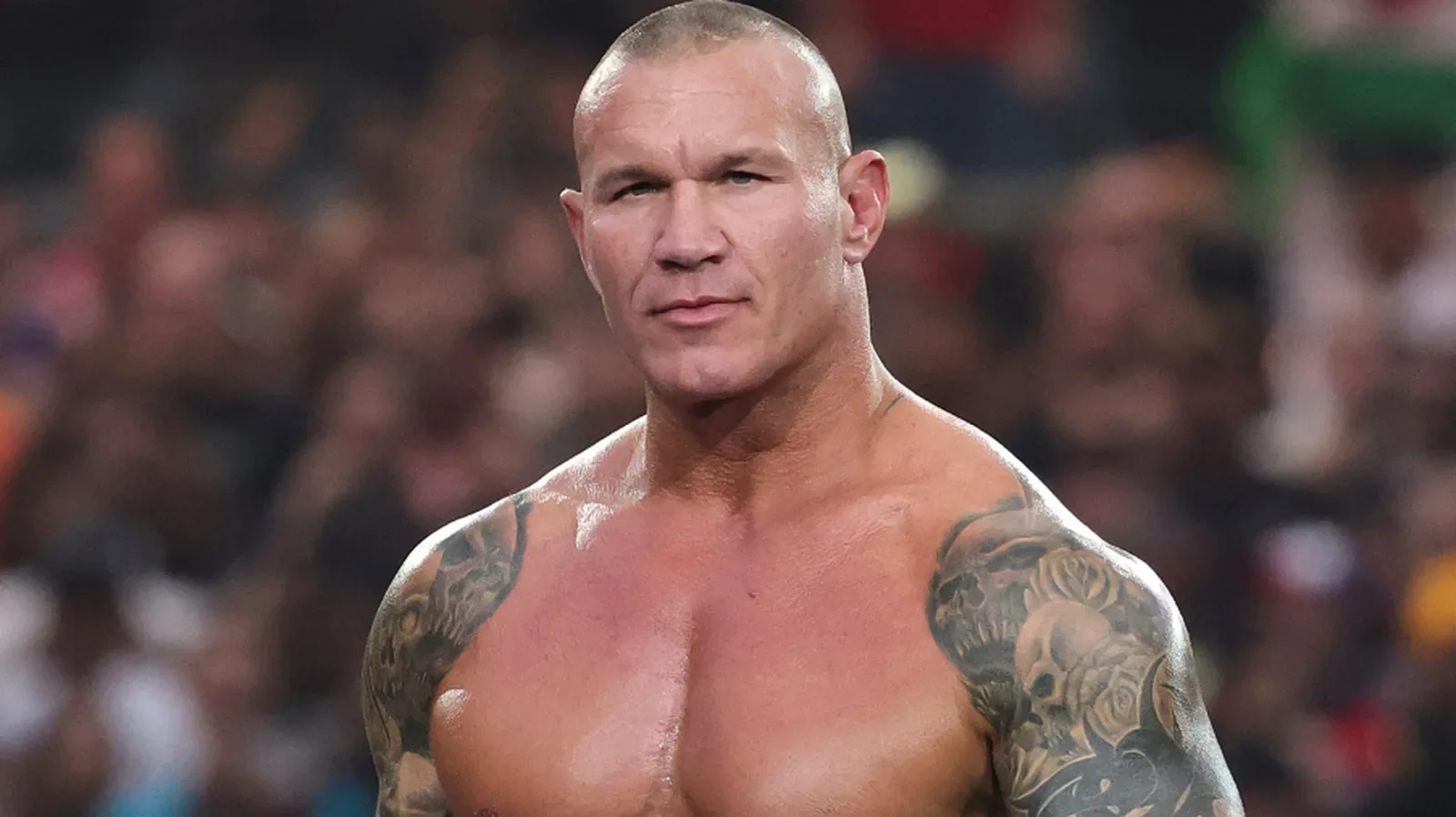
Randy Orton has built a WWE career that is easy to measure in accolades, landmark matches and unforgettable acts of violence. He is a 14-time world champion, a central figure in Evolution, one half of the wildly popular RK-Bro team, and a wrestler whose RKO has become one of the company’s most recognizable finishing moves. Yet when the discussion turns from Orton’s body of in-ring work to his strongest verbal performances, one WWE Hall of Famer believes there is now a clear answer.
Speaking on Busted Open Radio, Bully Ray offered major praise for Orton’s November 2 appearance on WWE Raw, in which Orton addressed former Legacy stablemate Cody Rhodes before their scheduled Last Man Standing Match at WWE Crown Jewel. Bully Ray called the segment the finest promo Orton has delivered in his entire WWE run.
“The best promo I've ever heard Randy Orton cut in his entire career,” Bully Ray said. “Three minutes, short, sweet, to the point. Get in, get on, get off, get out. It made all the sense in the world.”
The assessment is notable because Orton’s career has featured no shortage of major angles and emotionally charged rivalries. He has worked opposite legends including Triple H, The Undertaker, John Cena and Shawn Michaels. He has played the entitled young star, the cold-blooded “Legend Killer,” the calculating face of WWE’s Authority era and, more recently, a veteran determined to prove that he remains among the most dangerous wrestlers on the roster. In Bully Ray’s view, though, Orton’s latest message to Rhodes combined the right material, timing and conviction in a way that elevated it beyond his prior speaking performances.
For more background on this topic, read Mick Foley Urges WWE Colleagues With Trump Ties to ‘Speak Up’ for Democracy.
Orton Focuses on Cody Rhodes’ Last Man Standing Experience
At the center of Orton’s Raw promo was the stipulation awaiting Rhodes at Crown Jewel. Orton zeroed in on the fact that Rhodes has never competed in a Last Man Standing Match. It was a concise point, but one that immediately gave Orton a tangible advantage going into the match rather than relying solely on broad claims about toughness or legacy.
“I’ll be damned if that promo didn’t land blow after blow after blow, starting with ‘You’ve been in zero Last Man Standing Matches,’” Bully Ray said. “If I didn’t know that, now I do, and I’m going, ‘Whoa!’”
Orton has considerably more familiarity with the environment. In televised Last Man Standing bouts, he holds a 2-2-1 record. That record does not guarantee a victory over Rhodes, but it supports Orton’s argument that he understands the particular demands of the match more completely than his opponent does. A Last Man Standing contest is not simply another singles match. It tests endurance, improvisation and a wrestler’s willingness to keep fighting after traditional pinfall and submission scenarios have been removed.
For Rhodes, the stipulation adds another challenge to an already personal rivalry. The feud between the two former allies began on the road to WrestleMania 42, when Orton betrayed Rhodes on WWE SmackDown. Rhodes later gained revenge by defeating Orton on WWE’s biggest stage. Orton responded with a victory at Sunday Night’s Main Event in September, bringing the rivalry level again as both men head toward Crown Jewel.
The Last Man Standing Match therefore offers more than a decisive ruleset. It is the latest chance for Orton and Rhodes to establish which man has truly moved beyond the history they share. Their connection goes back to Legacy, the faction where Rhodes worked under Orton’s leadership earlier in his career. That history has given Orton plenty of room to frame the conflict as a battle between an experienced mentor and a former protégé who now carries himself as WWE’s standard-bearer.
“I’m a Professional Wrestler”
Bully Ray was especially taken with another part of Orton’s promo: his insistence that wrestling, rather than Hollywood, has always been his priority. Orton referenced the celebrated WWE developmental class that included Brock Lesnar, John Cena and Dave Bautista, noting that he is the only member of that group still wrestling in WWE. He contrasted his own focus with the entertainment ambitions attached to several of his contemporaries and directed that criticism toward Rhodes as well.
“After all of that, the thing that I love the most about Randy’s promo: ‘Everybody else that came before me wants to be a movie star, including you, Cody. I don’t want to be a movie star, because I’m a professional wrestler,’” Bully Ray said.
The line worked because it was rooted in Orton’s long-term identity. Throughout his career, he has been presented as someone shaped by wrestling and consumed by it. He is a third-generation star, the son of WWE Hall of Famer Bob Orton Jr. and grandson of Bob Orton Sr. That family history does not automatically make every claim Orton makes correct, but it gives weight to an argument that he sees professional wrestling as more than a step toward another career.
It also provided a pointed contrast with Rhodes. Rhodes has embraced opportunities outside the ring while remaining one of WWE’s leading full-time performers, and Orton used that contrast to question whether his former ally’s commitments and priorities match his own. In a brief promo, Orton did not need to litigate every detail of either man’s career. He laid out a simple theme: Rhodes may be highly accomplished, but Orton believes his own devotion to being a professional wrestler is deeper and more singular.
That kind of clarity was a major reason Bully Ray felt the message succeeded. The promo established Orton’s experience in the upcoming stipulation, invoked the men’s shared past and made a statement about what Orton feels separates him from Rhodes. Rather than overexplaining any of those points, Orton moved through them quickly and left the audience with a direct challenge.
A Career Defined More by Actions Than Words?
Bully Ray acknowledged that Orton has produced many memorable WWE moments, but said those memories have often been connected to what Orton did rather than what he said. When asked to recall Orton’s standout promos before Raw, Bully Ray admitted that no particular speech immediately came to mind.
“I can’t think of anything that Randy Orton has said in the past that will be as memorable as that promo,” Bully Ray said. “I remember things that Randy has done, like kicking veterans like Dusty Rhodes in the head. I remember Randy being a part of the tag team with [Matt] Riddle. I remember certain things he has done in his career, certain championships he’s won, being a part of Evolution, all that stuff.”
Orton’s attack on Dusty Rhodes remains an infamous image from his early rise as the Legend Killer, while RK-Bro revealed a different side of Orton alongside Riddle. Evolution cemented him as part of an influential group with Triple H, Ric Flair and Batista. His championship success and longevity have made him one of the defining WWE names of his generation.
But Bully Ray’s larger point was that even a wrestler with Orton’s extensive résumé can still discover a new gear as a talker. He went as far as saying that, if pressed to name Orton’s most memorable promo before this one, he would not have had an answer. After the Raw segment, he did.
“After last night, I have an answer,” Bully Ray said. “Last night was the promo of Randy Orton’s career.”
The Language Reflects WWE’s Current Direction
One additional detail stood out to Bully Ray: Orton’s use of the phrase “professional wrestler.” The terminology carries significance within WWE, where “sports entertainer” was heavily emphasized during the Vince McMahon era. Bully Ray noted that he believes Orton likely would have used that preferred wording under the previous regime.
With Paul “Triple H” Levesque leading WWE creative, the company’s presentation has increasingly been more comfortable embracing wrestling language. Wrestlers, wrestling and championships are regularly part of the on-screen vocabulary, a shift that has helped performers frame their rivalries around competition and ring identity without avoiding the terms most familiar to wrestling audiences.
For Orton, calling himself a professional wrestler was not merely a change in phrasing. It was the central declaration of his promo. It gave him a way to define his place in WWE, cast doubt on Rhodes’ motivations and reinforce why he believes he is better equipped for a violent, career-altering stipulation such as Last Man Standing.
Whether Orton’s words translate into a Crown Jewel victory remains to be seen. Rhodes has already defeated him at WrestleMania 42, and Orton’s September win means neither man enters their next encounter with a clear permanent edge. What is clear is that Orton has added a sharp new layer to the conflict. In Bully Ray’s estimation, he did so with the most memorable promo of his career.
In pictures
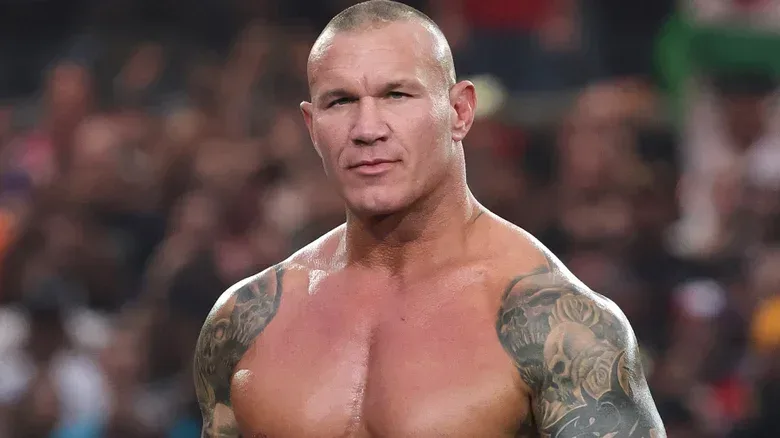
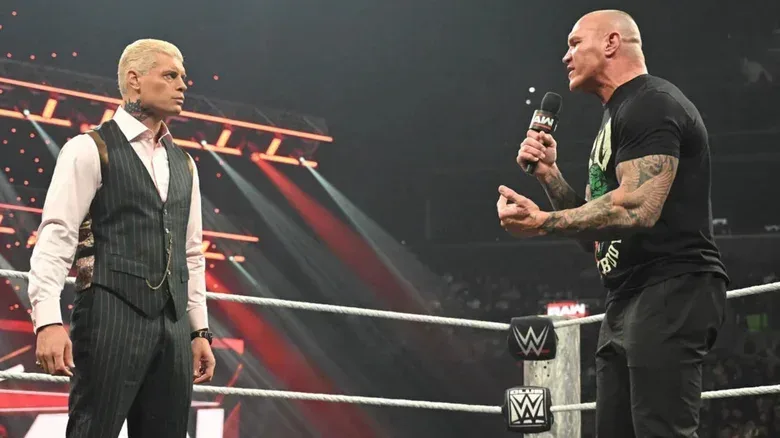

Darryl Polo
Darryl Polo is a passionate wrestling fan covering WWE, AEW, TNA and beyond. He loves great rivalries, breakout stars and the moments that keep fans talking long after the bell. How we work.