
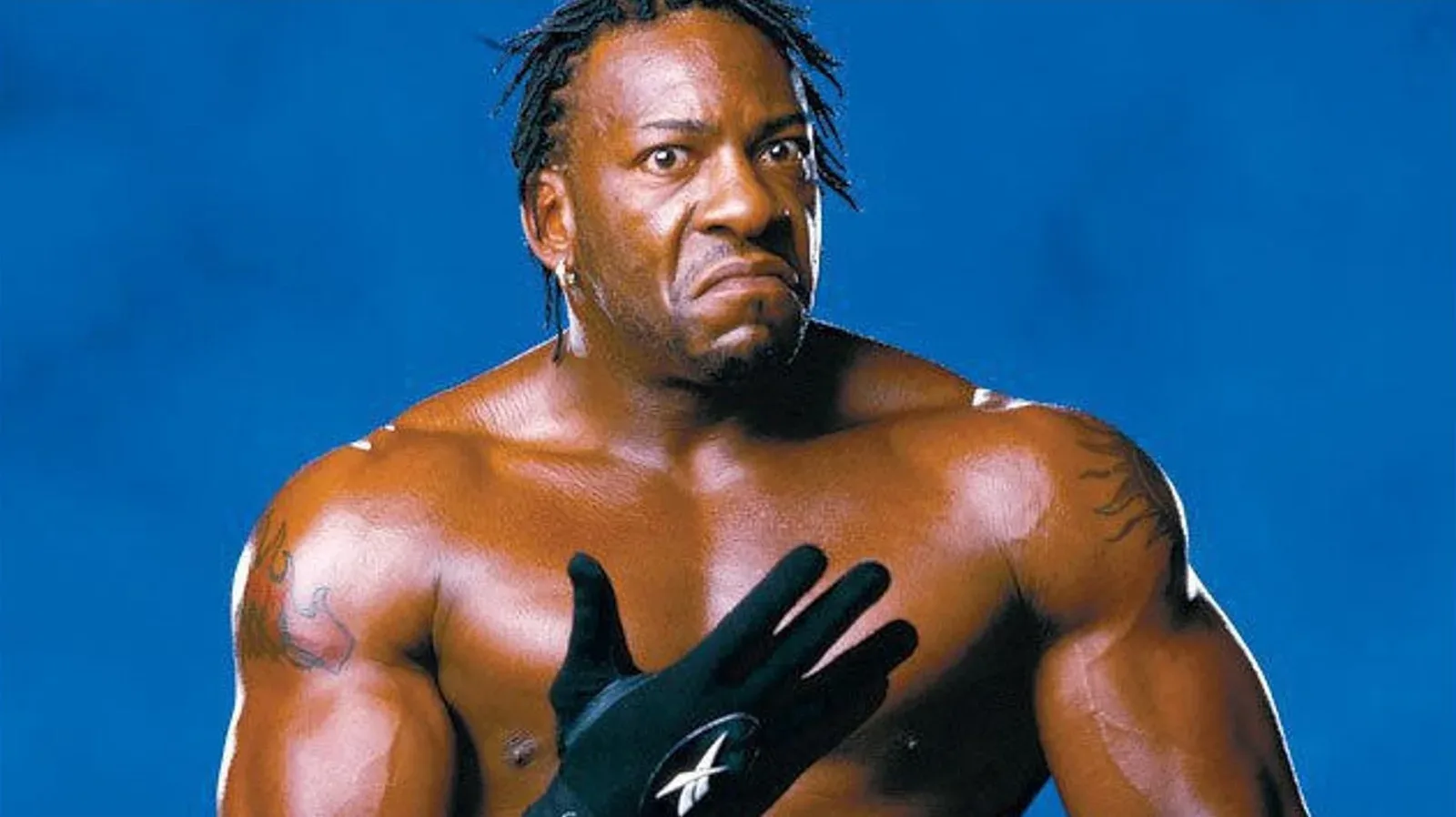
Booker T says he did not experience the kind of backstage resistance that has often been associated with wrestlers arriving in WWE from WCW following WCW’s closure.
During an episode of The Hall of Fame podcast, Booker reflected on entering an established WWE environment after spending years as one of WCW’s prominent names. The transition from WCW to WWE has long been discussed through the lens of competition, locker-room politics and the difficult adjustment faced by talent moving from one major company to another. Booker’s recollection, however, is that he was able to navigate that environment without developing heat with the WWE roster.
“Nah, I never got heat. I always understood, you know, the locker room etiquette and stuff like that,” Booker said on The Hall of Fame. “I was always, you know, one of the guys you know, I always thought the guys could turn to as far as that goes.”
Booker’s comments offer a personal perspective on a period that remains a significant part of wrestling history. When WCW closed, many wrestlers who had built their careers there entered a WWE system that already had its own hierarchy, traditions and relationships. For performers making that move, professional success was not simply about what happened in front of the cameras. It also meant adapting to a new locker room and a new set of expectations behind the scenes.
For more background on this topic, read WWE Crown Jewel 2026 Moves Indoors to Riyadh’s Kingdom Arena.
That larger transition did not produce identical results for every former WCW talent. Booker noted that performers such as Rey Mysterio, Goldberg and himself were among the names whose careers prospered after arriving in WWE. Still, the possibility of friction between established WWE talent and wrestlers from the former rival promotion has remained a frequent subject in discussions of the era.
Booker T points to locker-room awareness
For Booker, the key was understanding how to conduct himself in a shared workplace. His use of the phrase “locker room etiquette” suggests that he saw the adjustment as a matter of respect and awareness rather than as a political contest. A wrestler entering a new company has to learn its rhythm, identify how colleagues communicate and recognize that a locker room is made up of people with different standing, experiences and responsibilities.
Booker did not portray himself as someone who tried to arrive and immediately challenge the culture around him. At the same time, he did not describe himself as passive. His view was that he could be available to the people around him while still being direct and prepared to defend himself when necessary.
That balance is central to the way Booker framed his WWE experience. He said he was viewed as somebody others could turn to, which speaks to the importance he places on being a dependable presence among peers. Rather than emphasizing former promotional allegiances, Booker presented his approach as one based on fitting into the professional environment while keeping his own identity intact.
His concern was management, not gossip
Booker also made clear that he did not place the same importance on locker-room heat that many wrestling conversations do. In his view, the more consequential relationship was the one with the person in charge.
“I always thought if I didn’t got heat with the boss, I was okay, and I don’t remember ever getting heat with the boss,” Booker said on The Hall of Fame.
The point was not that relationships with coworkers were unimportant. Booker had already stressed the value of understanding etiquette and being someone other wrestlers could approach. But he drew a distinction between ordinary tension, criticism or gossip among talent and a genuine problem with the company’s decision-makers.
Wrestling locker rooms are often discussed as environments where personal disputes can become exaggerated. Terms such as “heat” can cover a wide range of situations, from a disagreement over conduct to a major issue that affects creative direction or job security. Booker’s comments suggest that he did not let every rumor or personality clash carry the same weight. He judged the situation through the working relationship that mattered most to his employment.
That is also why his recollection is notable. Booker did not merely say that he escaped conflict by staying quiet or avoiding attention. He said he remained outspoken, while maintaining that he never remembers having a serious problem with the boss. In his telling, being candid and being professional were not opposing ideas.
Speaking up against bullying and hazing
The former world champion also addressed a broader issue: the reluctance some wrestlers had to challenge hazing or bullying in the locker room. Booker’s position was direct. He believes people who continue to push others around are encouraged when nobody confronts them.
“A bully would keep messing with you if you don’t fight back,” Booker said on The Hall of Fame.
His comments were aimed at the culture of silence that can surround backstage problems. Booker argued that heat became such a heavily debated topic partly because some wrestlers were afraid to call out behavior they considered unacceptable. The concern, as he described it, was that speaking up could lead to being fired.
Booker did not endorse needless confrontation. Instead, he questioned why a wrestler should feel unable to set a boundary when being mistreated. He expressed frustration with the idea that talent should simply endure hazing or intimidation because of the potential professional consequences of objecting.
“That irks me, man, it really irks me. Why not, you know, tell somebody to, you know, take a hike? Go jump in a lake?” Booker said on The Hall of Fame.
The remarks underline Booker’s belief that respect has to be mutual. His argument is that a performer can understand locker-room customs without accepting behavior that crosses the line. In other words, learning how a workplace functions should not require surrendering the ability to speak up for oneself.
A different perspective on job security
Booker also pushed back on the logic of remaining silent solely to protect a job. He noted that wrestlers who kept negative experiences private out of fear of being released often ended up getting fired under other circumstances anyway. That observation shaped his frustration with the idea that talent should tolerate treatment they find unfair simply because they believe it is the safest way to remain employed.
His comments do not minimize the pressures wrestlers may feel when they are trying to maintain a position in a highly competitive industry. Rather, Booker’s position is that fear can give bullies too much influence. If a person believes there will never be a response, the behavior can continue. By contrast, Booker feels that directly addressing the issue can prevent it from becoming an ongoing pattern.
It is a viewpoint rooted in personal agency. Booker’s description of his own experience indicates that he believed he could be outspoken without allowing backstage noise to dictate his career. He placed value on professional conduct, but he also placed value on having enough confidence to reject mistreatment.
What Booker T’s experience says about the WCW transition
The legacy of the WCW-to-WWE transition is often told through broad narratives: former rivals entering the same company, shifts in status, competition turning into coexistence and the challenges of finding a place in a new system. Booker’s remarks add an individual account that does not fit neatly into the harshest version of that story.
He acknowledged the importance of entering a locker room with established norms, but he said he never encountered heat himself. His explanation was not that the environment lacked potential difficulties. It was that he knew how to handle himself within it. He understood etiquette, saw himself as a person others could rely upon, kept his focus on his relationship with management and refused to treat intimidation as something that had to be accepted.
That combination helps explain why Booker views the subject differently from wrestlers who may have experienced the transition in another way. His remarks are not a sweeping claim about every performer’s situation. They are a clear statement about his own time in WWE and the principles he believes helped him avoid the issues that are so often associated with backstage heat.
For Booker, the lesson is straightforward: respect the room, do the job professionally and do not be afraid to stand up for yourself. In his account, that approach allowed him to move from WCW into WWE without carrying the kind of locker-room conflict that can overshadow a wrestler’s work.
In pictures

Darryl Polo
Darryl Polo is a passionate wrestling fan covering WWE, AEW, TNA and beyond. He loves great rivalries, breakout stars and the moments that keep fans talking long after the bell. How we work.