
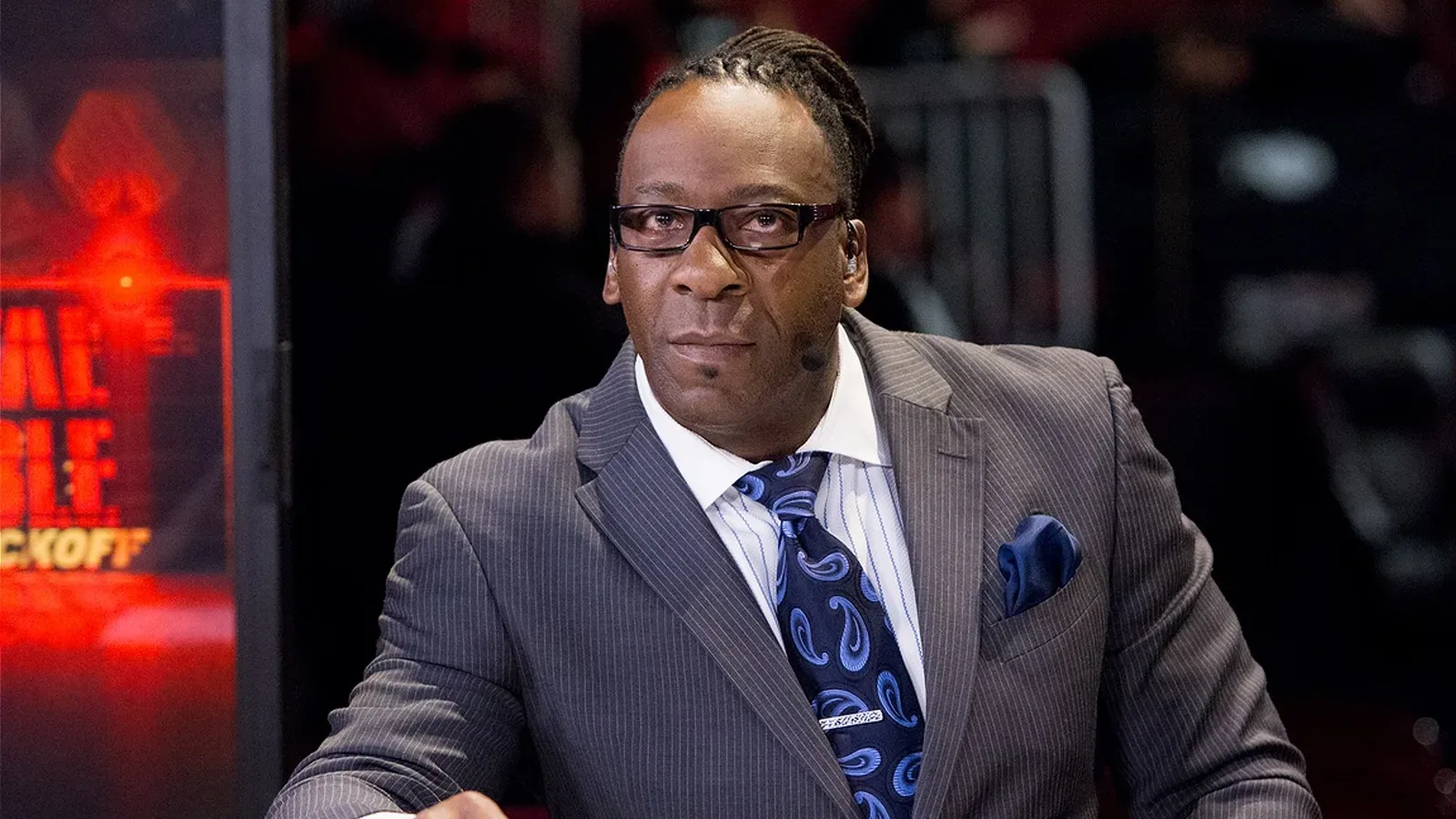
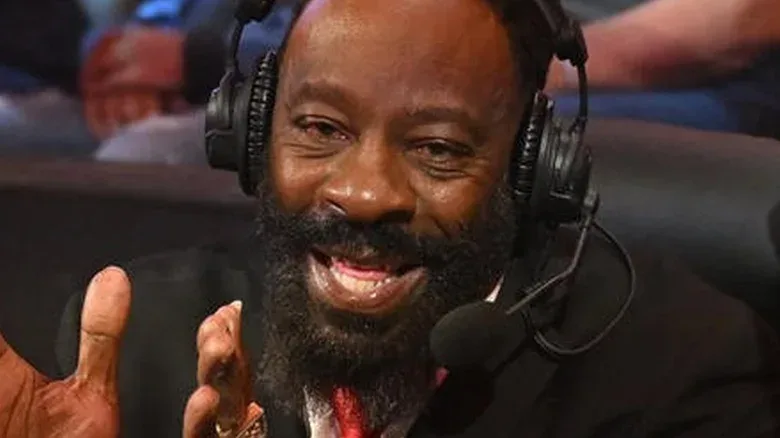
Booker T’s voice has become one of the defining sounds of WWE NXT. Whether he is reacting to a breakout performance, offering perspective from a veteran’s point of view, or delivering one of his characteristically animated calls, the WWE Hall of Famer has developed a commentary style that stands apart from a conventional broadcast presentation.
That style, Booker explained during an appearance on INSIGHT with Chris Van Vliet, did not begin when he was handed a headset on WWE television. Its roots stretch back to his active wrestling days in WCW, when he would entertain fellow wrestlers by calling matches from the locker room. What started as a way to fill time eventually revealed a knack that would help shape the next chapter of his career after retirement.
Booker’s transition from ring competitor to broadcaster was not immediate or seamless. He recalled learning through mistakes, questioning whether he belonged in the position, and ultimately stepping away from the role before later returning in a setting where he felt more comfortable. Now, as a major part of NXT’s commentary team, Booker sees the job as an opportunity not only to call matches but also to support the development of WWE’s next generation.
Locker-room commentary in WCW planted the seed
Before he became an established television commentator, Booker was a performer entertaining the locker room. He said he would call matches for the wrestlers around him rather than for an audience watching at home. The goal was simple: make the other talent laugh.
For more background on this topic, read LA Knight Embraces ‘Louisiana Knight’ Nickname Ahead Of Roman Reigns Challenge At Money In The Bank.
Booker would deliberately change wrestlers’ names and invent alternate names for their finishing moves. The approach was not meant to be a polished audition for a television role. It was spontaneous locker-room humor from someone enjoying the moment and keeping his peers amused during downtime.
“This thing goes back to WCW,” Booker said on INSIGHT with Chris Van Vliet. “It was just something I did to pass time, and the boys liked it!”
That informal experience matters because it helps explain the personality-first approach Booker brings to commentary today. His delivery has never been built solely around reciting move names, tracking statistics, or maintaining a rigid broadcast rhythm. Booker’s calls are often rooted in instinct, reactions, humor, and an obvious emotional investment in what he is watching.
He continued the locker-room routine after arriving in WWE. By the time his in-ring career had concluded, the possibility of taking that instinct into a formal commentary position emerged. Booker credited Michael Cole as the person who gave him the opportunity and remained in his corner during the difficult early stages.
Michael Cole’s support helped launch a second WWE career
Michael Cole has played a significant role in the careers of numerous WWE broadcasters, both in front of the camera and behind the scenes. For Booker, Cole was the key supporter who saw potential in him as a commentator after his retirement from active competition.
“I love Michael Cole, he’s been my biggest supporter. I wouldn’t be doing commentary if it wasn’t for Michael Cole,” Booker said on INSIGHT with Chris Van Vliet.
Booker did not portray his initial run on commentary as an instant success. He openly acknowledged that he made plenty of errors while learning the demands of live WWE television. The transition from performer to commentator can be challenging even for a former world champion. A wrestler understands the physical stakes and the emotional rhythm of a match, but commentary requires a different kind of discipline: listening to producers, working with broadcast partners, following stories, enhancing the action without distracting from it, and adjusting in real time when plans change.
For Booker, those demands created uncertainty. He recalled believing that his mistakes would eventually cost him the job, even while Cole advocated for him. In time, Booker was taken off the commentary team, a development he said he welcomed at that point in his career.
That reaction was not rooted in a lack of appreciation for the opportunity. Instead, Booker felt he was not yet ready for the responsibility of being in that weekly role. He had been considering approaching WWE about moving in another direction anyway, making the removal something of a mutual fit rather than a purely negative moment.
The experience also gave Booker a clearer understanding of what he needed from a commentary environment. The issue was not simply learning technical aspects of broadcasting. It was whether he could sound natural and retain the personality that had made him a compelling figure throughout his wrestling career.
The Vince McMahon era and the challenge of sounding natural
Booker described one early WWE commentary moment that illustrated his discomfort with trying to fit into a voice that did not feel like his own. He recalled working under Vince McMahon and being instructed through his headset to use a phrase that was outside his normal vocabulary.
“Book, say: much to his chagrin!” Booker recalled McMahon telling him, adding that he did not know what the expression meant before repeating it on television.
For a commentator, especially one whose appeal is tied to authenticity, moments like that can be difficult. Booker said he worried that speaking in a way that felt overly removed from his own personality would affect how viewers perceived him. His concern was not about refusing direction; it was about preserving the voice that audiences had come to know from his decades as a wrestler, including his time as one half of Harlem Heat and as a multiple-time world champion.
That tension between structure and individuality is central to the art of wrestling commentary. Broadcasters must advance stories, reinforce characters, and provide clarity for the audience. At the same time, the strongest commentary teams usually have identifiable personalities. The audience should be able to recognize not only the voices, but also the perspectives behind them.
Booker’s current NXT work suggests he has found a balance that suits him. He can offer the perspective of a veteran who understands the pressure of performing in WWE while still reacting with the enthusiasm and unpredictability that have long been part of his public persona.
Shawn Michaels gave Booker room to be Booker
Booker identified NXT, led creatively by Shawn Michaels, as the place where his commentary work found its most natural form. He said the atmosphere was different from his first run behind the desk, particularly in the freedom he felt to speak in his own voice.
After Booker’s first night working NXT commentary, he recalled Michaels responding positively even without necessarily knowing exactly what Booker had said.
“Shawn goes, ‘I don’t know what you said, but I liked it!’” Booker said on INSIGHT with Chris Van Vliet.
That response made an immediate impression. Rather than feeling pressure to conform to a narrow idea of what a commentator should sound like, Booker felt encouraged to bring his own energy to the program. For a performer with his background, that freedom is significant. Booker has always been at his best when his charisma, humor, confidence, and intensity are allowed to come through without being overly restrained.
NXT’s weekly presentation also benefits from that dynamic. The brand is built around wrestlers working to establish themselves, develop their characters, and prove they are ready for larger opportunities. Booker’s reactions can make a milestone feel bigger, while his occasional criticism can reinforce the idea that young talent is still learning what it takes to reach the top.
His presence also connects NXT’s emerging roster to WWE history. Booker knows the demands of television wrestling, the significance of championship opportunities, and the mental adjustment required when a promising athlete moves into a higher-pressure environment. That experience gives weight to his analysis when he discusses what a competitor must improve or what they have done to stand out.
Commentary and teaching now go hand in hand
Beyond the broadcast desk, Booker said one of the reasons he enjoys working in NXT is the chance to observe and help rising talent. He contrasted that environment with the main roster, where many performers have already reached a more established stage of their WWE careers.
Booker views himself as a teacher at heart. His interest is not limited to calling moves or presenting a match as it unfolds. He wants to help wrestlers understand the larger strategy involved in the business and in their own performances.
“I’m a teacher at heart; I love teaching and explaining and trying to get you to understand, you know, what chess is all about,” Booker said on INSIGHT with Chris Van Vliet.
The chess comparison reflects a familiar idea in professional wrestling: success depends on more than athletic ability. Wrestlers must understand pacing, character, crowd reaction, timing, television presentation, and the purpose behind every major moment. A veteran who has worked at the highest level can offer insights that are not always obvious from simply watching matches.
Booker’s role in NXT therefore extends beyond being a recognizable commentator. His enthusiasm for the brand is tied to the developmental process itself. He gets to watch wrestlers grow in front of the audience and, when appropriate, provide guidance based on his own journey through WCW and WWE.
That journey has taken Booker from locker-room jokes in WCW to major championship success, Hall of Fame recognition, and a distinctive place on WWE television as an analyst. His road to commentary included uncertainty and growing pains, but it also led him to a role that appears to fit both his personality and his interest in helping future stars.
In NXT, Booker T is not merely calling the action. He is bringing the experience of a career spent learning the game, surviving its changes, and passing those lessons to the performers now trying to make names for themselves.
In pictures

Darryl Polo
Darryl Polo is a passionate wrestling fan covering WWE, AEW, TNA and beyond. He loves great rivalries, breakout stars and the moments that keep fans talking long after the bell. How we work.