
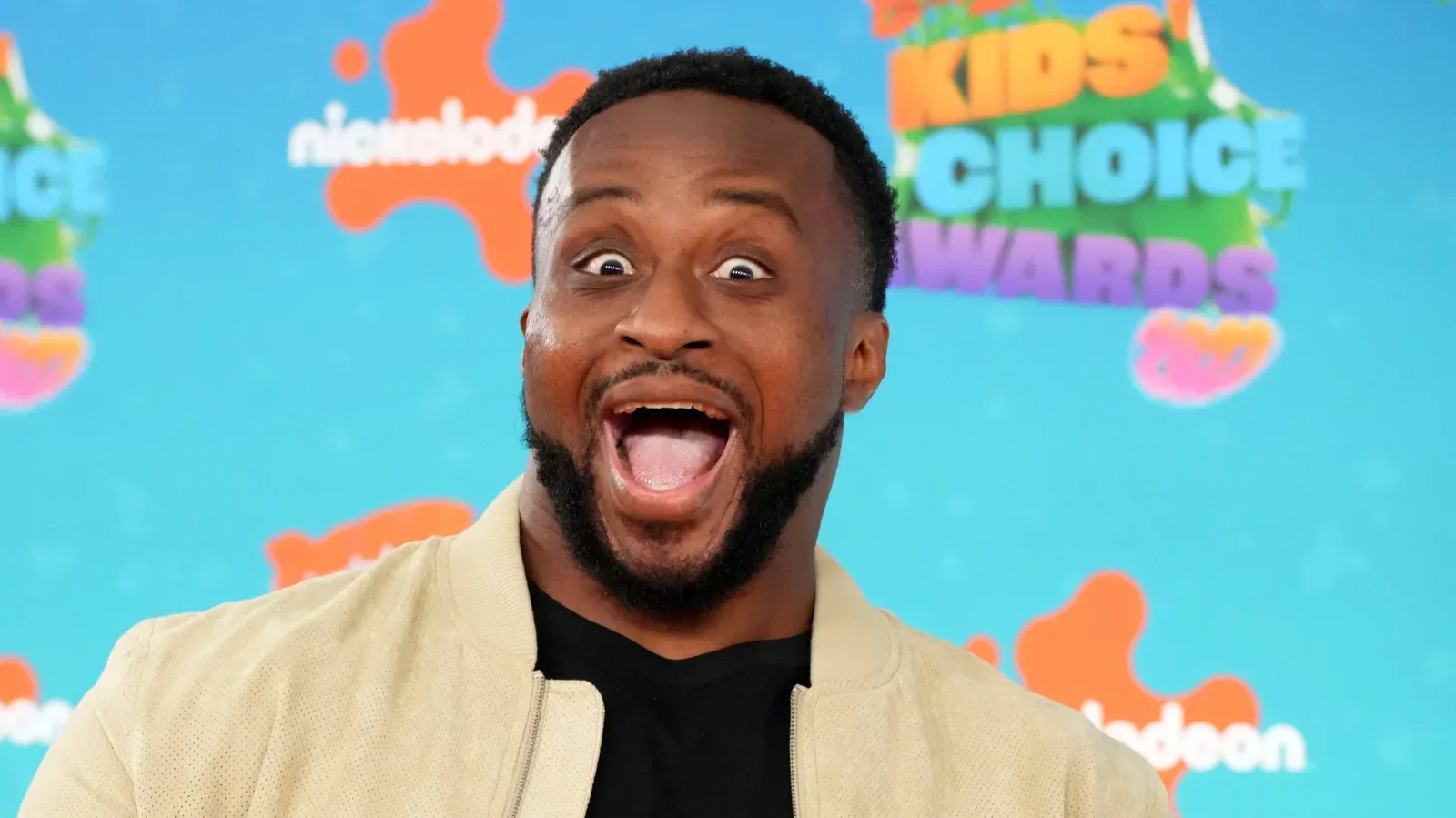
Big E has explained why accepting an in-ring retirement has been a manageable and ultimately peaceful process, even after a wrestling career he describes as the time of his life.
It has now been four years since Big E last competed in a match following the neck injury that ended his active career. For many performers, the prospect of leaving the ring after a serious injury can lead to a long and difficult effort to return. Big E, however, has taken a different path. While he remains closely connected to WWE and clearly values everything professional wrestling gave him, he says he has been able to recognize that closing the door on one chapter can also make room for another.
Speaking with HaangEmHiigh, Big E discussed the personal work he had already undertaken before the injury and why it has influenced the way he views his future. He pointed to the period in 2020 when he began placing greater focus on meditation, mindfulness and self-reflection.
“Honestly, because of my time in 2020, really working on myself, getting into meditation and mindfulness, it really was not a hard decision for me, because I just, I’d gotten to a point where I think I was just able to accept that this was the right decision,” Big E said.
For more background on this topic, read WWE Sets 11 New Raw, SmackDown and Live Event Dates for Early 2027.
That perspective is important when considering the emotional weight of a decision to stop wrestling. Big E did not frame retirement as a rejection of the business or as a sign that he no longer loved performing. In fact, he made clear that his wrestling years were deeply meaningful. Instead, he described a process of recognizing what best serves his life now, especially after a career defined by physical sacrifice and an injury history that stretches back well beyond WWE.
Mindfulness Helped Big E Accept Change
Meditation has become a central part of the way Big E processes difficult circumstances. He explained that the practice has taught him about release: not simply giving up on something, but letting go of what is no longer beneficial or sustainable. That distinction has helped him look at the end of his active in-ring run with a sense of acceptance rather than resentment.
“Meditation is really just a lot about letting go,” Big E said. “A lot of what guided meditation teaches you is letting go of things that don’t serve you anymore.”
For a wrestler whose identity was so visibly built around strength, charisma and connection with crowds, that outlook offers a revealing glimpse into how he has handled a major life transition. Big E’s WWE journey included developmental years in NXT, a dominant run alongside Kofi Kingston and Xavier Woods in The New Day, championship success as a singles star, and a place as one of the company’s most recognizable personalities. He also became a beloved figure to fans because of the joy and generosity he brought to virtually every role.
Those achievements can make an abrupt end to competition especially difficult to reconcile. Yet Big E’s comments suggest he has worked to ensure that wrestling is a major part of his story without allowing it to be the only part of his identity. That mindset has enabled him to assess the risks of a comeback with a broader view of the life he wants to build over the coming years.
A Career Marked By Physical Demands
The neck injury that sidelined Big E was not an isolated obstacle. During his conversation, he acknowledged the extensive list of injuries he has dealt with across football and professional wrestling. Those physical setbacks have included torn ACLs, torn meniscus injuries, herniated discs and a broken patella. Taken together, that history naturally factored into his thinking when weighing whether another in-ring return was worth the potential consequences.
Professional wrestling demands a remarkable level of physical resilience even under ideal circumstances. Athletes routinely absorb impact, travel extensively and perform while managing the accumulated wear of years in the ring. A broken neck, however, changes the nature of the conversation. Even for wrestlers who pursue a comeback after a severe injury, the decision involves substantial medical, personal and professional considerations.
Big E did not suggest that every wrestler facing a similar situation should make the same choice. Instead, his remarks focused on his own body, his own injury background and his own priorities. The possibility of further risk, combined with his ability to remain part of WWE in other capacities, gave him reasons to be at peace with moving forward.
That is an especially notable point because Big E has never sounded detached from the industry. His affection for wrestling remains apparent, and he has continued to contribute to WWE outside the ropes. Rather than presenting retirement as disappearance, he sees it as a shift in how he participates in the company and the wider wrestling world.
A New Role Within WWE
Big E has found that continued place through broadcasting. Though it was not a role he expected when he first began training to become a wrestler, he said he has enjoyed the opportunity and appreciates being able to stay involved with the product.
“I never foresaw myself in this broadcasting role when I first started wrestling, but it’s something that I’ve enjoyed and I’m grateful for the opportunity,” Big E said.
Broadcasting is a natural extension of many of the qualities that made Big E successful as a performer. He has always possessed a distinct voice, quick comedic instincts and the ability to communicate emotion. Those traits can translate effectively to analysis and presentation, while his years of experience offer valuable context for viewers. His move into that space also illustrates that an in-ring retirement does not necessarily mean the end of a meaningful WWE career.
For wrestlers forced to reconsider their futures because of injury, the availability of other roles can be significant. WWE’s ecosystem includes commentary, analysis, hosting, ambassador work, coaching and other media opportunities. Big E’s situation demonstrates how remaining with the company can provide a continued connection to the audience and locker room while allowing a performer to protect their health.
He emphasized that there are still meaningful ways to contribute once the physical demands of wrestling are no longer the right fit. That realization has been a key component of his decision-making process.
Looking Beyond The Ring
Big E’s thinking is not limited to what he can do in WWE today. He has also considered the larger shape of his life over the next five years, 10 years and beyond. That longer view helped him conclude that it was time to fully embrace a new phase rather than remain emotionally tethered to the possibility of returning to the ring.
“So for me, when I really thought about it and when trying to forecast what I wanted life to look like in the next five, ten years and beyond, I just thought, ‘You know what? It is time. It’s time to put that chapter to bed, and to build a new chapter. To start working on the next phase of my life,’” Big E said.
There is a groundedness in that assessment. Big E is not minimizing the importance of wrestling, nor is he pretending the decision carries no emotion. He is acknowledging that an athlete’s career can end before the love for the work does. The challenge then becomes deciding whether holding onto a past role is worth the risk of compromising the future.
For Big E, the answer appears clear, at least for now. He is content with retirement, grateful for his broadcasting opportunities and focused on what comes next. His approach is shaped by mindfulness, informed by his injury history and supported by the knowledge that he still has a place in the WWE landscape.
That outlook should resonate beyond wrestling. Retirement from competition is often discussed as an ending, particularly when injury takes away the chance for a performer to choose a final match on their own terms. Big E instead sees an opportunity to build. The in-ring chapter may be complete, but his relationship with WWE and his pursuit of a fulfilling future are continuing in a different form.
After four years away from active competition, Big E’s words make one thing clear: he has not lost appreciation for the career he had. He has simply found peace in the belief that the next chapter deserves his full attention.
In pictures

Darryl Polo
Darryl Polo is a passionate wrestling fan covering WWE, AEW, TNA and beyond. He loves great rivalries, breakout stars and the moments that keep fans talking long after the bell. How we work.