
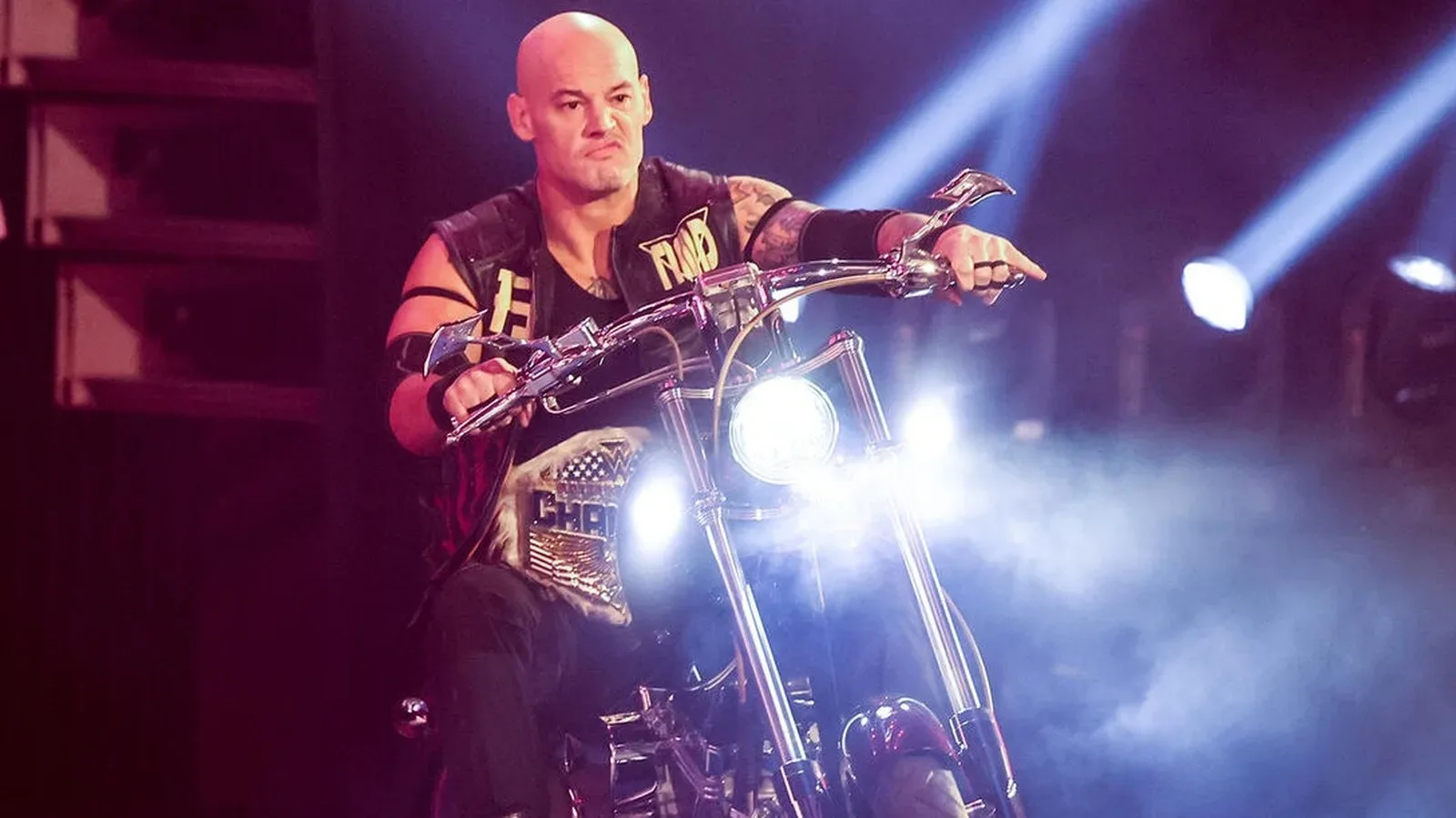
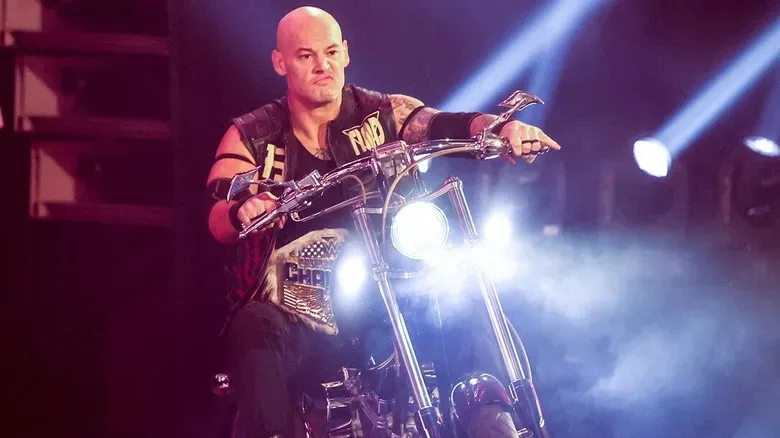
Baron Corbin may no longer hold the WWE Men’s United States Championship after losing the title to Trick Williams at Sunday Night’s Main Event, but the former champion has made clear that his return to WWE itself remains a far bigger point of appreciation.
Speaking on Busted Open Radio, Corbin discussed the process that brought him back to the company following roughly a year and a half away. The wrestler, who worked as Bishop Dyer during his time outside WWE, said he never tried to force the issue or directly lobby for another opportunity. Instead, he maintained personal relationships while leaving the professional decision entirely in WWE’s hands.
“The coming back process was awesome, because I never once in that year-and-a-half that I was gone reached out,” Corbin said. “You saw that interview with Hunter [Triple H], where he was like, ‘Guys are always texting me, ‘I wanna come home.’’ I never did that. If they want me back, they’ll call me. I’m not going to beg for a job.”
That stance is particularly notable in an industry where a wrestler’s availability, public momentum, and personal communication can all play a role in opening doors. Corbin did not describe a total separation from WWE during his time away. He explained that he remained in contact with Triple H, but emphasized that their exchanges were personal rather than an attempt to negotiate his way back onto the roster.
For more background on this topic, read Tommaso Ciampa Says Shaving His Beard Led To a Week of Complete Anonymity.
“I love that place, and I had communication through the time I was gone with Hunter,” Corbin continued. “But it was never like work. Like, I’d text him, ‘Hey, congrats on this,’ or like, ‘How’s the family? How are the girls,’ like those kinds of things. I stayed in touch with a couple of the talent. That line was never crossed of like, ‘Hey, what would you think about me coming back?’ Eventually, they did reach out.”
Corbin’s Approach Was Built on Patience
Corbin’s comments frame his WWE comeback as something that developed organically rather than through a public campaign or persistent private requests. He kept an open line of communication with people he knew in the company, including Triple H and members of the locker room, but did not turn those conversations into an effort to secure employment.
That distinction mattered to Corbin. He was not distancing himself from WWE out of resentment, nor was he presenting his absence as a bridge he had burned. His description instead suggests that he wanted the company to decide whether there was a meaningful place for him on the roster. If WWE believed there was value in bringing him back, he expected that call would come. If it did not, he was prepared to continue working elsewhere.
For Corbin, that meant spending his time away continuing to wrestle and establishing himself in another environment. Rather than waiting for a return offer, he entered Major League Wrestling and became part of a prominent tag team act with another former WWE name, Dijak. Dijak competed in MLW as Donovan Dijak, while Corbin adopted the Bishop Dyer name.
Their pairing became known as The Skyscrapers, and the duo quickly rose to the top of MLW’s tag team division. Their run gave Corbin a chance to work in a different setting while remaining active at a high level, and it also put him alongside a familiar contemporary whose own career had moved beyond WWE.
The Skyscrapers’ MLW Championship Run
Corbin and Donovan Dijak captured the MLW World Tag Team Championship in their first and only reign together. The Skyscrapers established themselves as a dominant force in the division, with Corbin’s size and experience complementing Dijak’s athletic style and power.
That success was significant because Corbin was not merely making appearances during his time outside WWE. He was part of a championship act and helped anchor a major division for MLW. His work as Bishop Dyer showed that, while the WWE door remained closed at that stage, his in-ring career had not paused.
The team’s title run eventually came to an end once Corbin knew that a WWE return was ahead. In May, The Skyscrapers dropped the MLW World Tag Team Championship to The Good Brothers, Doc Gallows and Karl Anderson, in a Tennessee Tornado Match. Corbin took the deciding pinfall in the bout, bringing the championship reign to its conclusion.
While the match took place in May, it did not air until the August 15 edition of MLW Fusion because of tape delay. The timing created a notable overlap between the real-world conclusion of Corbin’s MLW obligations and the audience’s eventual opportunity to see the title change play out on television.
The decision for Corbin to take the pinfall also provided a clear ending for The Skyscrapers’ run as champions. With WWE bringing him back, he had to close that chapter in a way that allowed MLW’s tag division to move forward. The Good Brothers emerged with the titles, while Corbin prepared to return to the company where he had previously become a two-time United States Champion.
A Return Followed by Another United States Title Run
Corbin’s comments arrive shortly after another major turn in his WWE career. He entered Sunday Night’s Main Event as the WWE Men’s United States Champion but lost the championship to Trick Williams. Although championships are a central measure of success in WWE, Corbin’s perspective makes it clear that the broader context of being back with the promotion remains meaningful to him.
He has now experienced both sides of the relationship: a lengthy run within WWE, a departure that led to championship success elsewhere, and a return that happened only after the company decided to contact him. That journey gives added weight to his insistence that he did not ask to be brought back.
Corbin’s career has included a wide range of roles and presentations, and his time under the Bishop Dyer name offered another example of his ability to adjust to a new environment. Returning to WWE meant once again stepping into a landscape that had continued to evolve during his absence, with new champions, new rivalries, and new performers claiming prominent spots.
The United States Championship loss to Williams does not erase the importance of Corbin having held the title again. It instead places him at another transition point. Williams leaves Sunday Night’s Main Event with the championship, while Corbin moves forward without the belt but with a stated appreciation for the opportunity WWE gave him.
Respect for the Opportunity
Corbin’s interview did not focus on disappointment over the title change. His central message was gratitude. He described the return process as “awesome” and indicated that being welcomed back by WWE meant something to him precisely because it was not something he pushed for.
There is also a professional confidence in the way Corbin recounts the situation. He did not shut the door on WWE, and he did not sever relationships with people there. At the same time, he did not want those personal connections to become a means of requesting a job. He continued working, stayed in touch on a human level, and waited to see whether WWE would reach out.
Eventually, it did.
That call led Corbin from MLW’s tag team championship picture back to WWE, where he would once again reach the top of the United States Title division before Trick Williams ended his latest reign at Sunday Night’s Main Event. The immediate championship picture has changed, but Corbin’s account of his comeback underscores that his current WWE run represents more than a single title defense or one loss.
It is the result of a return that he says was never requested, but was ultimately offered. For Corbin, that distinction remains central to how he views his place back in WWE.
In pictures
Darryl Polo
Darryl Polo is a passionate wrestling fan covering WWE, AEW, TNA and beyond. He loves great rivalries, breakout stars and the moments that keep fans talking long after the bell. How we work.