
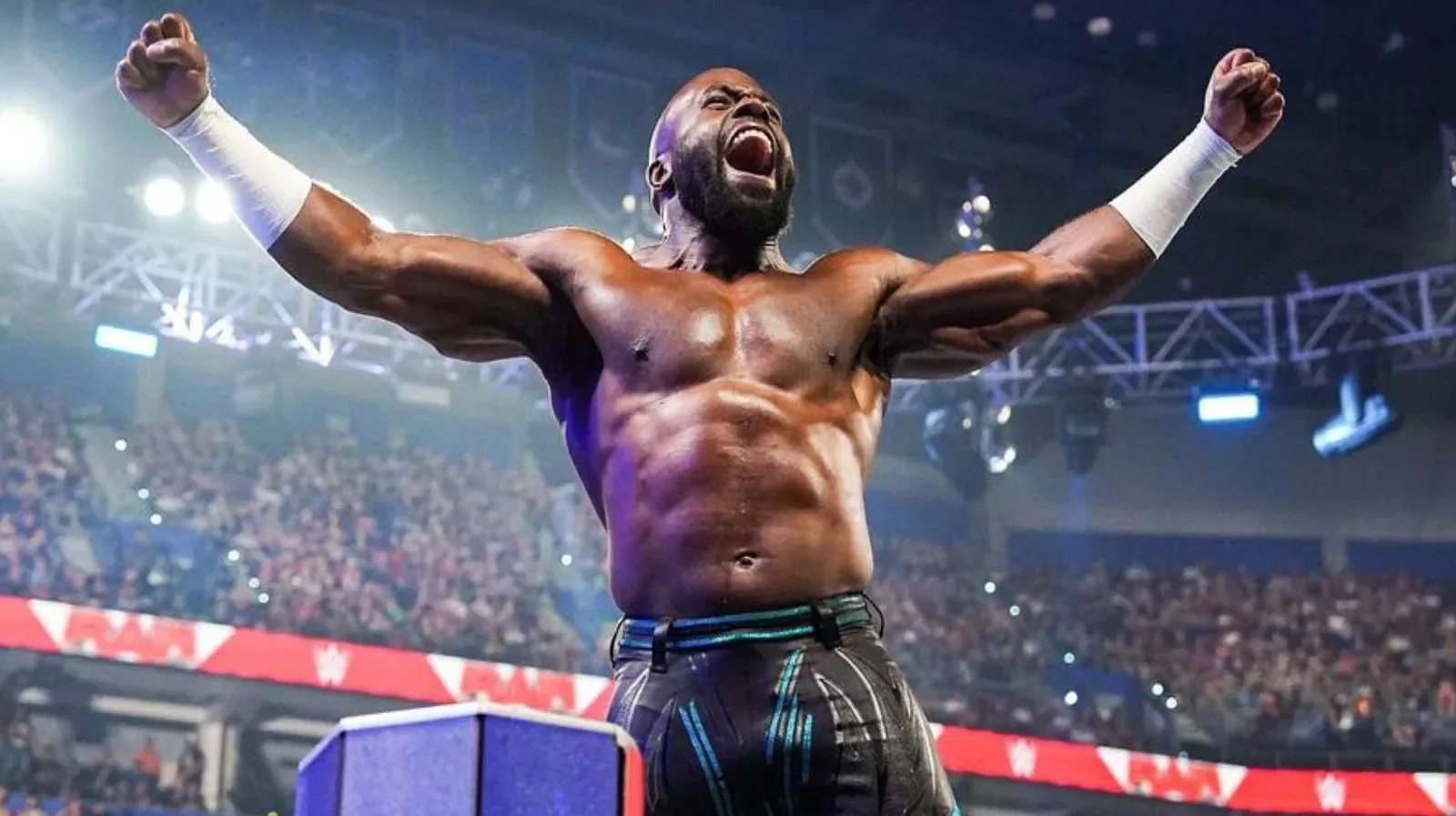
Apollo Crews’ surprise arrival at TNA Slammiversary 2026 raised an immediate question among wrestling fans: how was he able to compete for another major promotion so soon after his WWE departure?
Crews, wrestling under his pre-WWE name Uhaa Nation, entered the TNA International Championship picture at Slammiversary and challenged Mustafa Ali and Rich Swann in a triple-threat match. Ali retained the title, with Crews coming up short in his first prominent post-WWE match. The timing of the appearance drew particular attention because Crews was still within the 90-day period that followed his release from WWE after WrestleMania 42.
Speaking on Insight with Chris Van Vliet, Crews explained that the appearance came together only after communication between TNA and WWE. It was not simply a case of Crews deciding to take an outside booking while waiting for his release terms to expire.
“TNA got in contact with WWE,” Crews said on Insight with Chris Van Vliet. “Moose may have been the first one to call me and told me that TNA was looking to bring me in for Slammiversary. My first thought was, ‘Man, I’m still in my 90 days. No way that’s going to happen.’ So, I kind of brush it off.”
For more background on this topic, read Kevin Owens Claims Final Men’s Money in the Bank Ladder Match Spot on SmackDown.
The situation was significant for a performer who had spent nearly 12 years with WWE. Crews’ release was part of a group of departures following WrestleMania 42, ending a lengthy run in which he worked across the company’s system and on its main roster. While wrestlers leaving WWE often become the focus of immediate speculation about where they may appear next, Crews initially did not view a TNA appearance during that window as realistic.
That is why the Slammiversary match landed as a genuine surprise. The Uhaa Nation name brought Crews back to an identity associated with his career before WWE, while the setting gave him a high-profile platform opposite two established TNA names in Ali and Swann. Rather than making a quiet appearance or waiting until the end of his release period, Crews was positioned directly in a championship match at one of TNA’s biggest events.
The Match Was Not Initially an Easy Decision
Crews also revealed that the terms of the proposed match mattered to him. Mustafa Ali contacted him about the potential Slammiversary appearance, but the original conversation included a straightforward question about whether Crews would be willing to lose. At that point, Crews said, roughly a month had passed since his WWE release, and he was not even certain that continuing to wrestle was what he wanted.
“My response to him was, ‘You know. I spent my whole career losing at WWE. The first thing outside of WWE that I don’t want to do is lose,’” Crews said. “He respected my answer. He’s like, ‘I completely respect that. I would have said the same thing.’”
It was an unusually candid explanation of the mindset Crews carried into the opportunity. A wrestler’s first appearance after a long run with one company can heavily shape how audiences view the next stage of that performer’s career. For Crews, stepping into a new environment immediately after leaving WWE was not just about having a match on a major show. It also involved deciding what kind of presentation he wanted for himself as he moved forward.
His response did not mean that he was unwilling to take part in the match or that he was demanding a championship victory. Instead, it reflected a desire to avoid beginning his post-WWE chapter with another loss, particularly after a career stretch that he personally characterized as being defined by losses. That distinction ultimately helped shape the format TNA used for Slammiversary.
Why the Triple-Threat Format Worked
The solution was to make the TNA International Championship bout a triple threat involving Ali, Swann, and Uhaa Nation. That structure allowed Ali to retain the championship without Crews being pinned. Crews could return to the ring in a prominent title setting, participate in the finish without being the deciding loser, and leave room for his involvement in the TNA landscape to develop beyond one match.
In championship triple threats, the titleholder does not have to pin or submit every challenger to retain. Likewise, one challenger can take the loss without the other challenger being directly defeated. In this case, the format addressed the concerns Crews had expressed while preserving Ali’s reign and providing Swann with a meaningful role in the contest.
Crews described the experience as welcome exposure after his WWE exit. Being featured at Slammiversary placed him back in front of a large wrestling audience quickly, and doing so as Uhaa Nation emphasized that this was not merely a continuation of his previous WWE presentation. The appearance gave fans a look at a familiar athlete through a name and identity that had not been at the center of his WWE career.
At the same time, Crews made clear that a return to regular wrestling activity is not necessarily the central priority in his life at the moment. While he appreciated having the spotlight on him again, he said wrestling is not his main focus after WWE. That leaves his longer-term direction open, even after a highly visible TNA appearance.
A Different Kind of Post-WWE Beginning
There is often an expectation that a released wrestler will immediately pursue the next contract, the next title program, or a rapid series of independent appearances. Crews’ comments suggest a more measured approach. His decision-making process was influenced by both the practical issue of his WWE release period and the personal question of whether he wanted to continue wrestling at all.
That context makes his Slammiversary role stand out. He did not portray the TNA match as an automatic next step that was already in motion. His initial reaction was skepticism because of the 90-day timeframe. Then, once the possibility became real, he had to consider whether the creative direction was one he wanted to accept. The eventual triple-threat arrangement created a way for the appearance to happen without asking him to immediately absorb a direct defeat.
For TNA, the use of Uhaa Nation added another recognizable element to a championship match already featuring Ali and Swann. For Crews, it offered visibility without requiring him to define his entire future in wrestling on one night. The match result kept the TNA International Championship with Ali, but it also ensured that Crews’ first post-WWE bout did not end with him taking the pinfall.
The appearance also illustrates that a 90-day release period is not always a simple, one-size-fits-all barrier to any outside activity. Crews’ account centered on contact between TNA and WWE, which enabled the Slammiversary opportunity to move ahead. His experience should not be treated as a blanket indication of what every released WWE talent can do, but it explains why this particular appearance was able to take place when it did.
What Comes Next for Uhaa Nation Remains Open
Crews’ Slammiversary outing did not result in a championship win, but it accomplished several important things. It reintroduced Uhaa Nation to a major wrestling audience, put him in a featured match with the TNA International Championship at stake, and allowed him to return to the ring on terms that did not involve taking the deciding fall.
Most importantly, Crews’ comments show that the appearance was shaped by more than surprise value. There were discussions about the release window, conversations about the planned result, and a format adjustment that addressed his concerns. His perspective on the situation also makes clear that he is weighing his next steps from a broader life standpoint rather than treating wrestling as an automatic priority.
For now, the defining image of his immediate post-WWE period remains Uhaa Nation walking into TNA Slammiversary and entering the TNA International Championship match against Mustafa Ali and Rich Swann. Ali left with the title, but Crews left with renewed attention and without taking the pinfall. Whether that moment becomes the start of a larger TNA run or simply a notable chapter in a more selective wrestling schedule remains to be seen.
Quotes credited to Insight with Chris Van Vliet.
In pictures

Darryl Polo
Darryl Polo is a passionate wrestling fan covering WWE, AEW, TNA and beyond. He loves great rivalries, breakout stars and the moments that keep fans talking long after the bell. How we work.