
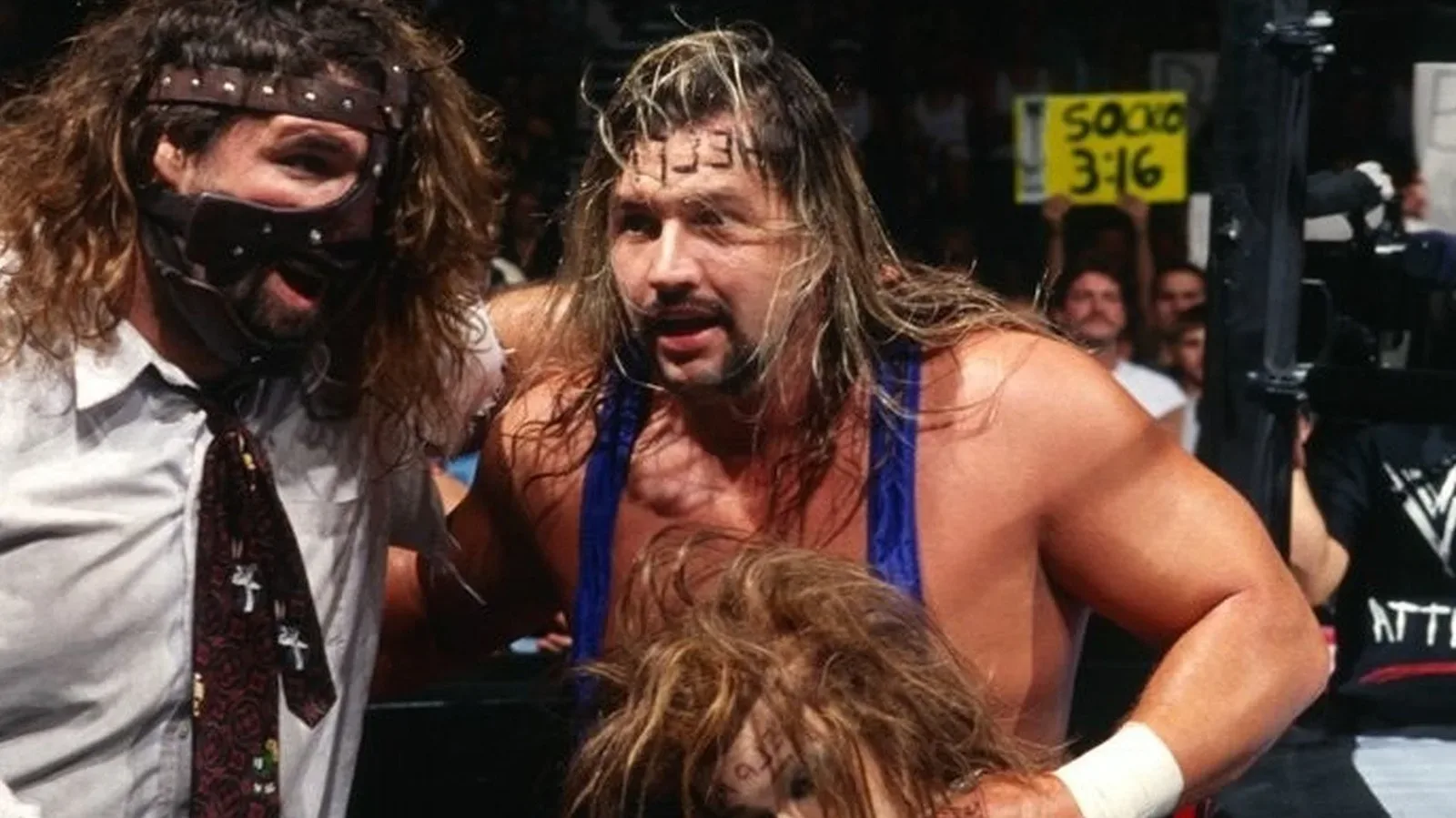
Al Snow has spent more than four decades absorbing the physical toll that comes with professional wrestling, and the veteran has no shortage of stories about the pain that can come from one mistimed landing or an unexpectedly unforgiving ring surface. Still active at 63 and occasionally wrestling for Ohio Valley Wrestling, Snow recently discussed both the injuries that stand out most from his career and the personal standard he will use in deciding when to retire.
Snow began his wrestling career in 1982 and went on to work across several major stages of the industry. His path included notable runs in Smoky Mountain Wrestling, ECW, and WWE, where he became one of the more distinctive personalities of the Attitude Era. He has also remained heavily involved in developing talent and operating Ohio Valley Wrestling, the promotion he purchased in 2018.
Despite his longevity, Snow did not frame retirement as a decision tied to a specific birthday, a number of matches, or an arbitrary deadline. Instead, he said he will leave the ring once his performances no longer meet the standard he expects from himself.
“When the day comes that I’m an embarrassment,” Snow said during an appearance on the Maven Huffman YouTube channel.
For more background on this topic, read Brie Bella Says Gail Kim Made Wrestling ‘Look So Easy’ During Their WWE Years.
That answer speaks to the mentality that has carried Snow through an unusually long career. Wrestling is an industry in which performers frequently continue well beyond the point when their bodies have endured years of punishment. For Snow, the central issue is not merely whether he can still physically participate, but whether he can do so without diminishing the quality of what fans see in the ring.
At his age, Snow’s continued appearances are particularly notable because he is not simply a retired name making occasional ceremonial appearances. He has remained connected to the active side of the business through OVW, balancing ownership responsibilities with selective in-ring work. That keeps him close to the daily realities of wrestling even as his role in the industry has expanded beyond being a full-time performer.
A Painful Elbow Drop Gone Wrong
When asked to look back at the most painful injuries of his career, Snow described an incident from a match in Lafayette that illustrates how quickly a routine move can turn into a serious problem. The injury occurred as he attempted an elbow drop, a maneuver that is designed to be delivered with control and timing but still carries considerable risk for the wrestler taking the landing.
Snow explained that wrestlers are generally taught to keep their hands tucked while lying on their backs. The practice helps prevent an opponent from landing on an exposed hand or fingers. In this case, however, Snow’s opponent had his fist positioned out rather than tucked away as Snow came down for the elbow.
The result was a direct and agonizing collision. Snow said his tailbone landed squarely on the other wrestler’s fist. The impact broke the bones in his opponent’s hand while also cracking Snow’s tailbone.
“I land with my tailbone directly on his fist,” Snow recalled on the Maven Huffman YouTube channel. “Break all the bones in his hand, and I cracked my tailbone.”
Tailbone injuries can be especially difficult for wrestlers because nearly every part of a match can aggravate the affected area. Bumps, falls, sit-out maneuvers, driving, and even sitting still can become painful. Snow said the injury was made worse by the demands of continuing to work regularly. Rather than taking an extended break from the ring, he had to keep wrestling on a day-to-day basis.
He also remembered relying on pillows while driving in an attempt to make the discomfort more manageable. It is a detail that underlines the less glamorous side of wrestling life, particularly for performers who work frequent dates and spend long stretches traveling between towns. The match ends, but the pain follows a wrestler into the car, the hotel, the next venue, and the next bout.
Neck Injury Led to a Frightening Moment
Snow also recalled a separate incident that was painful in a much more alarming way. During a small-package pinning sequence, the back of his head rolled over on a mat that had limited padding. The movement pinched a nerve in the back of his neck.
What followed was far more than ordinary soreness. Snow said the pain was intense enough to affect his vision immediately.
“I couldn’t see; I went blind,” Snow said. “It burned and hurt so bad that I had to roll underneath the ring and I threw up three times.”
Neck injuries remain among the most serious risks in professional wrestling, where athletes take impacts to the back, shoulders, and head on a regular basis. Snow’s recollection also highlights the importance of ring construction and padding. While a wrestling ring is built to absorb some impact, it is still a hard structure, and inadequate padding can make a dangerous difference when a wrestler’s head or neck hits at an awkward angle.
The fact that Snow had to retreat beneath the ring after the sequence captures the severity of the moment. A match can require wrestlers to work through discomfort, but the sudden loss of vision and nausea he described were signs of a frightening situation. It is one of the starkest examples of the physical danger that can arise from a sequence as seemingly basic as a pin attempt.
A Career Defined by Endurance and Reinvention
Snow’s memories carry added weight because of the length and variety of his career. He entered professional wrestling in 1982, wrestling through multiple eras as the business changed around him. He worked in regional systems, found exposure through ECW, and became widely recognized during his WWE run, where the “Head” character and his offbeat presentation made him one of the era’s memorable figures.
His career was never confined to one role. Snow has been a wrestler, trainer, producer, television personality, and promoter. His purchase of OVW in 2018 gave him a new set of responsibilities, while also allowing him to remain involved in developing the next generation of talent. That broader perspective likely informs his retirement outlook as well. Snow has an identity within wrestling that extends beyond taking bumps, but he has made clear that he will judge his own in-ring future honestly.
The veteran’s willingness to continue wrestling occasionally does not erase the cumulative damage described in his stories. On the contrary, the cracked tailbone and neck nerve injury are reminders of what is carried forward by performers who remain active over decades. Many wrestling injuries do not come from a spectacular high-risk stunt. Sometimes they happen on an elbow drop, a cradle, or a basic exchange where one person is just slightly out of position.
Snow’s comments also offer a practical definition of longevity. Continuing to wrestle is one thing; continuing to wrestle at a level that respects both the audience and the craft is another. His answer on retirement suggests he will not be guided solely by nostalgia or by the desire to extend a career for its own sake.
Snow’s Standard for the Final Match
There is no announced final match, retirement date, or indication that Snow is preparing to stop in the immediate future. His comments instead establish a clear threshold: he will continue as long as he can avoid becoming what he considers an embarrassment in the ring.
That is a subjective benchmark, but it is also a demanding one. For a wrestler who started in 1982 and has endured the kind of injuries he described, the ability to make that assessment may be as important as any physical test. Snow’s career has already included reinvention, survival, and a transition into ownership. When he does decide the time has come to step away from active competition, it appears the decision will be based on preserving the standards he has carried throughout his career.
For now, Snow remains part of the wrestling landscape, still connected to the ring while guiding OVW from a leadership position. His recollections serve as an honest reminder that behind a career spanning more than 40 years are countless hard landings, long drives, and moments when getting through the next match required an extraordinary level of toughness.
In pictures

Darryl Polo
Darryl Polo is a passionate wrestling fan covering WWE, AEW, TNA and beyond. He loves great rivalries, breakout stars and the moments that keep fans talking long after the bell. How we work.