
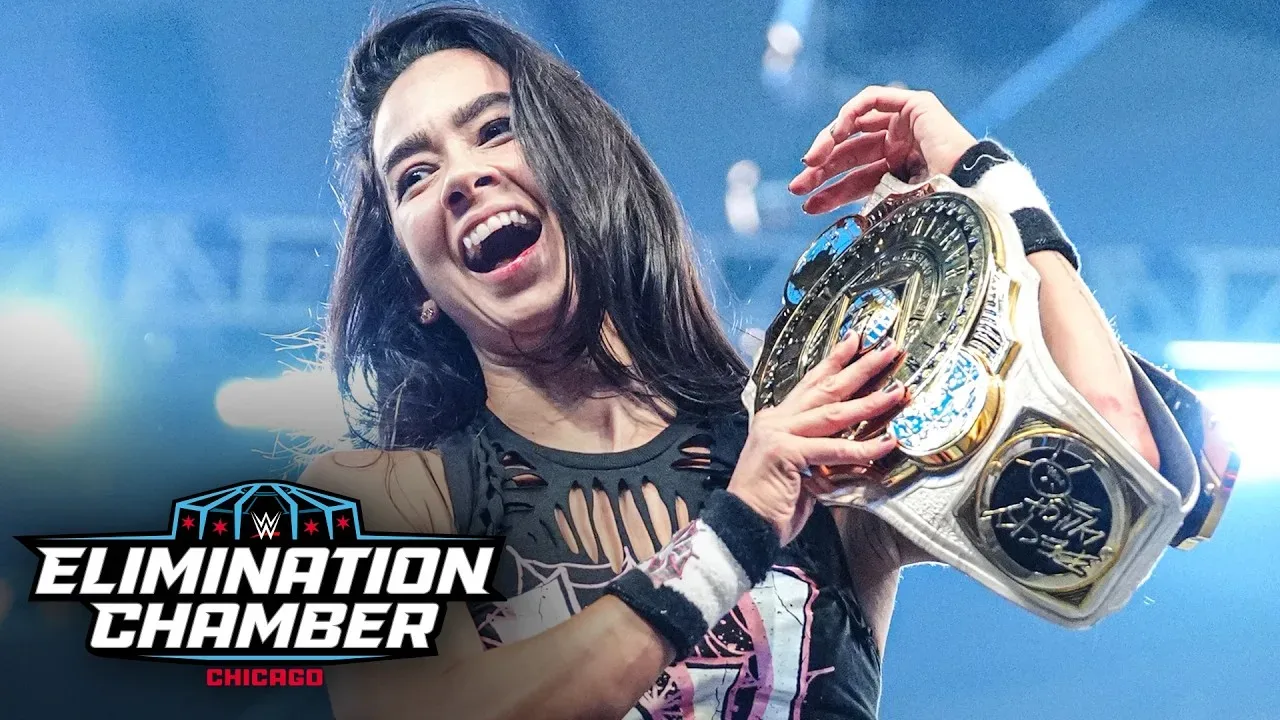
AJ Lee’s return to WWE in August 2025 was one of the company’s most talked-about comebacks in years, but the decision was not as simple as stepping back into a familiar role. After spending roughly a decade away from the ring, Lee had built a life outside wrestling and did not view herself as someone waiting for a call to return.
Speaking on Mind Over Mountain with Cheryl Strayed, Lee explained that her first instinct had been to see WWE’s modern opportunities as something for the performers who came after her. She had made peace with the idea that the timing of her original career had passed, even if the industry continued to change in ways she once hoped to see.
That perspective made the eventual outreach from WWE more complicated than a straightforward nostalgia-driven comeback. Lee said she had felt fulfilled by the career she already had, while also being deeply aware that the final stretch of her original run had been difficult for her mental health. Before agreeing to return, she needed to know that re-entering wrestling would not undo the progress she had made during her time away.
AJ Lee Saw Wrestling’s Progress as a Win for Others
Lee used an analogy from her school years to describe how she processed the evolution of women’s wrestling after she left. She recalled attending a poorly funded high school that did not even have its own field for sports, requiring students to use other schools’ facilities. When a field was finally added after she graduated, she did not feel tempted to go back and experience what she missed.
For more background on this topic, read AJ Lee Keeps WWE Return Open While Waiting for the Right Story.
Instead, Lee said she was happy that the students who followed her would have something better. That, she explained, was how she approached wrestling for much of the past decade. She did not see the expanded opportunities, increased television time, and broader platforms available to women in WWE as a reason to reclaim a place for herself. She was content to know that the fight for greater recognition had helped create more possibilities for others.
“My time passed,” Lee said in explaining that outlook, adding that she hoped younger athletes could enjoy the benefits that had not been there for everyone in earlier eras.
That is an important part of what separates Lee’s return from many conventional comeback stories. Her comments do not suggest an unfinished chase for one specific accolade, position, or moment. Rather, she described a mindset in which she did not believe WWE needed her, and she did not initially feel that she needed WWE.
The Call Came With a Clear Story
WWE’s interest eventually grew into a serious conversation, and Lee said there was a story already in place. Her return took place on SmackDown in Chicago, where she aligned with her husband, CM Punk, against Seth Rollins and Becky Lynch. The program immediately gave Lee a prominent place in one of WWE’s biggest rivalries.
Lee acknowledged that there was a practical business case for bringing back a character with a dedicated audience. WWE was entering a period that included a new television show and a new relationship with ESPN, and Lee believed the company recognized the reliability of her connection with fans.
She pointed to the ratings and merchandise performance associated with her character during her first WWE run, while also crediting the loyalty of the audience that continued to support her after she left the company. Lee said those fans had followed her into other ventures and remained consistent over the years.
From Lee’s point of view, the business reasoning was understandable: WWE had a major event and a ready-made storyline, while she brought a recognizable identity and an audience that had never fully stopped caring about her work. Still, understanding why the call came was different from being ready to accept it.
Why Her Initial Answer Was Not an Immediate Yes
Lee said she “took a second” before committing. In fact, she described the proposal as being close to a no for a period of time. She felt she had already had a wonderful career and worried that returning could disrupt the way she viewed that body of work.
There was also an element of disbelief around the first contact. Lee recalled receiving one call while recovering from dental surgery and questioning the surreal nature of the moment. After being gone for 10 years, the idea that WWE was again asking her to be part of a major story took time to process.
The hesitation was not about whether wrestling could offer her a high-profile stage. Her comments instead centered on whether the experience would be healthy for her. Lee said the final year of her first run had been especially hard on her mental health, and the prospect of revisiting that environment naturally raised concerns.
“The biggest hesitation on my part was my mental health was so bad that last year,” Lee said. “I was really afraid of backsliding.”
That concern carried added weight because Lee had spent the decade away doing what she described as extensive work to become healthier and happier. She did not want a return to undo the stability she had built. For Lee, the question was not whether a comeback could generate a reaction or create a compelling television moment. The question was whether it could fit into a life in which she already felt secure.
Mental Health Became the Decisive Issue
Lee said her eventual willingness to return came from approaching the opportunity from a place of wholeness rather than desperation. She felt complete, happy, and safe enough in her life to make a decision based on what she wanted rather than what she believed she needed to prove.
That distinction changed the equation. Lee was not looking to check off an unfulfilled item from a list, nor was she trying to recover something she believed had been taken from her. By her own account, she was in the right headspace to consider wrestling again because she had already found fulfillment away from it.
Just as significant was WWE’s response to her concern. Lee said the company told her that her mental health would be treated as a priority. That assurance was a central factor in making the return feel workable after such a long absence.
“They very much told me that my mental health was going to be a priority,” Lee said.
The statement gives considerable context to the measured way Lee discussed her comeback. WWE’s presentation of her return could easily be viewed through the lens of the Punk-Rollins-Lynch conflict, Chicago, nostalgia, and the immediate crowd response. Lee’s own explanation places the emphasis elsewhere: she needed confidence that she could participate without sacrificing the well-being she had fought to protect.
A Successful Second WWE Run Included Championship Gold
Lee’s second stint went beyond one appearance or one storyline. She went on to win the WWE Women’s Intercontinental Championship, adding a championship achievement to a return that initially seemed unlikely even to her.
Her most recent match came at WrestleMania 42, where she lost the Women’s Intercontinental Championship to Becky Lynch. The loss also placed a fitting competitive punctuation mark on the rivalry that helped bring Lee back into WWE in the first place. Lee has not wrestled since that WrestleMania defeat.
There is understandable curiosity about what comes next, particularly after a return that demonstrated she can still make an immediate impact in a major WWE program. Yet Lee’s comments make clear that any discussion of her future should not be reduced to title opportunities or dream matches. Her decision to return was rooted in conditions that allowed her to feel supported and protected.
That perspective also offers a more complete explanation for why the comeback took 10 years. The time away was not simply an absence waiting to be reversed. It was a period in which Lee built a healthier and more satisfying life, then evaluated WWE’s offer on her own terms.
For Lee, the return became possible when the story made sense, the business circumstances were clear, and—most importantly—her mental health was treated as non-negotiable. That combination turned what had once felt like a closed chapter into a meaningful second run.
Darryl Polo
Darryl Polo is a passionate wrestling fan covering WWE, AEW, TNA and beyond. He loves great rivalries, breakout stars and the moments that keep fans talking long after the bell. How we work.